

Key Takeaways
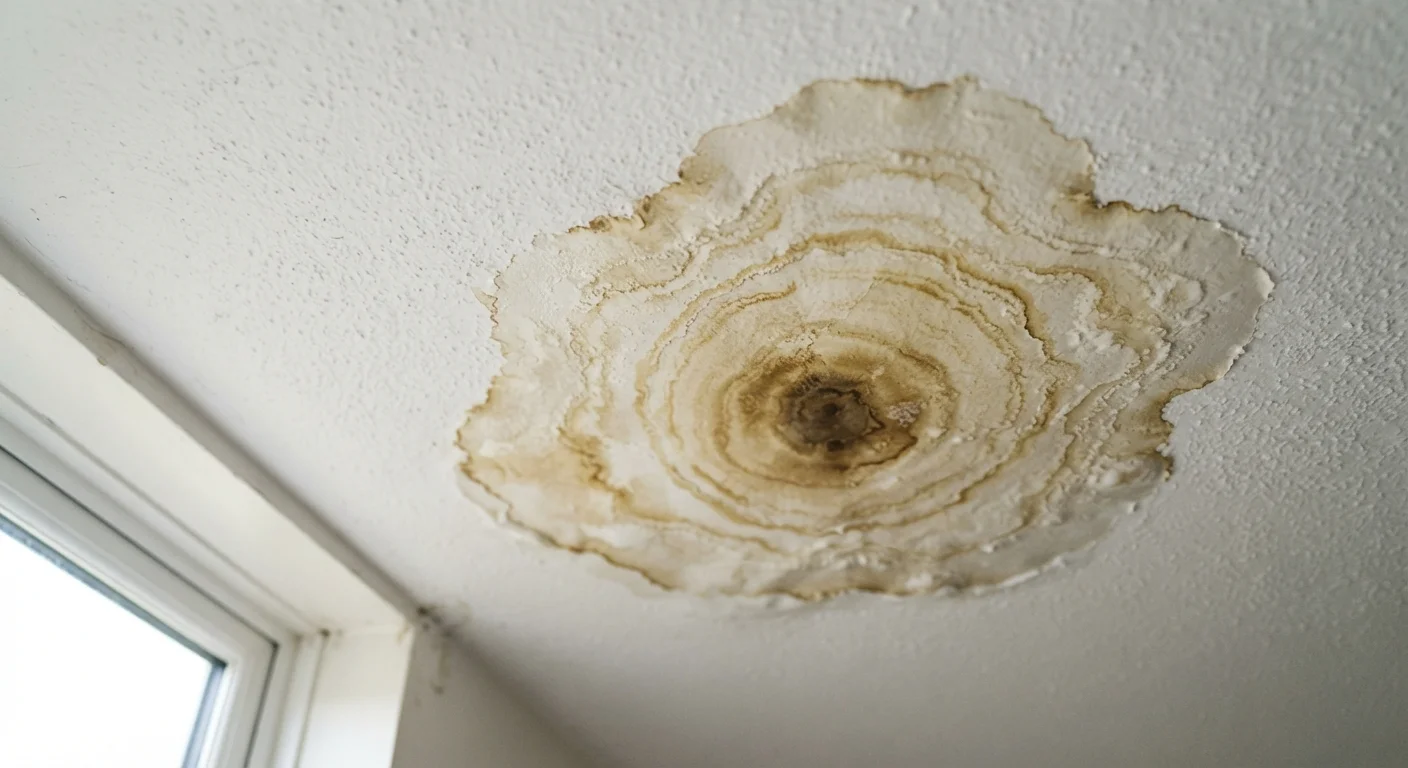
- A stain's colour, ring pattern, and location all carry diagnostic clues about the moisture source.
- Yellow-brown rings typically indicate slow, intermittent leaks that have dried and rewetted multiple times.
- Dark gray or black discolouration suggests mold growth and warrants prompt attention.
- Stains directly below a bathroom or kitchen are more likely plumbing-related than roof-related.
- A fuzzy or spreading edge pattern often means active moisture, while a crisp ring usually means the leak has stopped.
- Always resolve the source of moisture before repainting or patching the stain.
Ceiling Water Stain
A ceiling water stain is a discoloured patch caused by moisture that has soaked through the ceiling material from above. It forms when water - from a leak, condensation, or plumbing issue - evaporates and leaves behind minerals, dust, or organic residue. The stain itself is not the damage; it is a visible signal that something is allowing moisture to enter where it should not.
Gypsum drywall (the most common ceiling material in US homes) absorbs water readily and can harbor mold growth within 24-48 hours of sustained moisture exposure, making prompt diagnosis important.
Why the Stain Is Not the Problem
When a water stain appears on your ceiling, the instinct is to grab a paint roller and cover it up. That approach addresses the symptom while leaving the cause completely untouched. A ceiling stain is your home's way of communicating that moisture has travelled through a surface it was never meant to cross.
Before you can fix anything, you need to understand what the stain is telling you. The colour, the shape of its edges, and its position in the room each narrow down the list of likely causes - and that diagnosis determines what kind of repair actually needs to happen.
When to Involve a Professional
If a stain appears near any electrical fixture, recessed light, or ceiling fan, do not attempt inspection yourself - turn off the circuit at the breaker panel and consult a licensed electrician before proceeding. Similarly, if you suspect widespread mold, structural softening, or cannot locate the moisture source after checking the obvious candidates, a licensed home inspector or contractor can perform a more systematic assessment.
Reading the Colour
Colour is one of the most immediate diagnostic clues a ceiling stain offers:
- Light yellow or tan: Usually an older, dried stain. Minerals and tannins from wood framing have been deposited and the moisture source may be intermittent or already resolved.
- Dark brown with a distinct ring: Classic sign of a slow, recurring drip. Each wet-dry cycle adds another layer to the ring, similar to tree rings. Common with slow roof nail pops or a pinhole supply line leak above.
- Copper or rust tint: Points toward metal pipe corrosion or a rusted flashing component. The discolouration comes from oxidised metal residue carried by the water.
- Gray or black discolouration: A strong indicator of mold growth. This needs to be addressed promptly, not painted over, and may require professional mold remediation depending on the extent.
- Bright white chalky residue: Often a calcium or mineral deposit from a condensation issue, not always a leak. Common near HVAC ducts or poorly insulated ceiling sections.
Press-Test Before You Paint
Before assuming a stain is old and harmless, press the ceiling gently with one finger. If the drywall feels firm and dry, the stain is likely historical. If it feels soft, spongy, or crumbles, moisture is still present - do not paint yet. Sealing wet drywall traps moisture and accelerates mold growth behind the surface.
Reading the Shape and Edges
The boundary of a stain is just as informative as its colour:
- Crisp, well-defined ring: The leak has likely dried. Moisture soaked in, settled, and evaporated - leaving a sharp mineral outline. The underlying structure may still have residual damage worth checking.
- Fuzzy or blurred edges: Moisture is still moving. A soft, spreading edge means water is currently wicking outward through the ceiling material. Act quickly - drywall saturated for more than a day or two becomes a mold risk.
- Long, narrow streak: Water is following a path - typically a rafter, a pipe run, or a valley in the roof decking. The actual entry point may be several feet away from where the stain appears.
- Circular with a central low point: Often a standing water issue above, such as a clogged drain pan on an HVAC unit or a pooling problem in a flat roof section.
Using Location to Narrow the Source
Where the stain sits in your home's layout eliminates several possibilities immediately:
98%
Of basements experience water intrusion
According to the American Society of Home Inspectors, nearly all basements will experience some form of water intrusion over the life of the structure.
24-48 hrs
Time for mold to begin growing on wet drywall
The EPA notes that mold can begin to develop on wet building materials within 24 to 48 hours under the right conditions, underscoring the importance of quick diagnosis.
~40%
Of home insurance claims involve water damage
Water damage and freezing consistently rank among the most common homeowner insurance claim categories, according to industry loss data.
- Directly below a bathroom or kitchen: High probability of a plumbing leak - supply lines, drain connections, wax ring failures, or overflow from a fixture above.
- Below an attic space: Roof leak or condensation from inadequate attic ventilation are both candidates. Check whether the stain appears or grows after rain.
- Near the center of a room on an upper floor: May indicate an HVAC condensate drain that has clogged or a drip pan that has overflowed.
- Along an exterior wall or corner: Could be roof flashing, ice dam damage (in colder climates), or siding gaps that allow wind-driven rain to infiltrate.
- Near a light fixture or ceiling fan: Stop using that fixture immediately. Water and electrical components are a safety hazard. Have a licensed electrician assess before doing anything further.
Once you have matched colour, edge pattern, and location, you can approach the right part of your home for inspection - rather than opening up every ceiling looking for the culprit.