

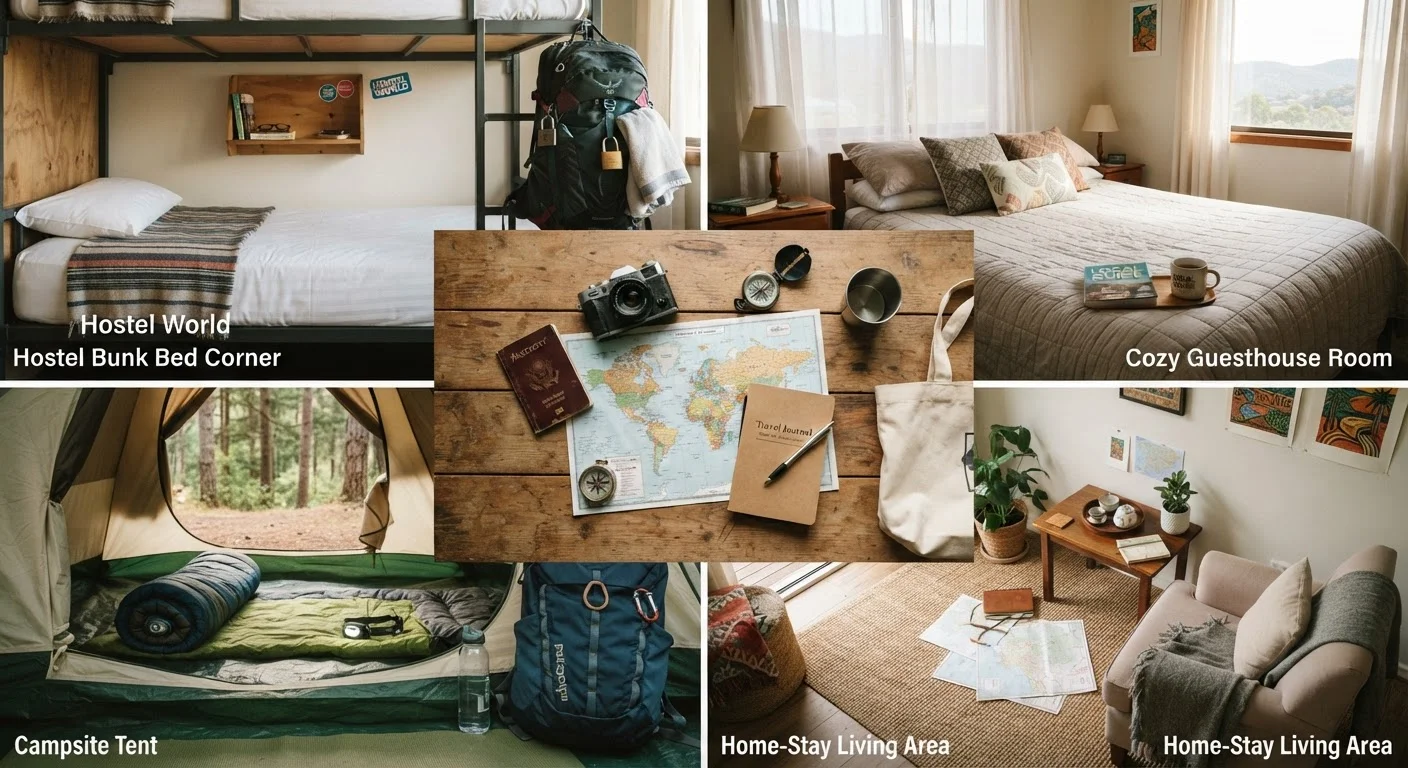
Key Takeaways
- Hostels offer the lowest nightly cost but trade privacy for community and shared facilities.
- Guesthouses and home-stays often include meals or local insight that hotels rarely provide.
- Camping can dramatically cut accommodation costs but requires upfront gear investment.
- Your destination heavily influences which option delivers the most value per dollar.
- Hidden costs - fees, linen charges, or meal gaps - can quietly erode apparent savings.
Our Verdict
No single accommodation type wins for every traveler. Hostels suit social, light-packing travelers on tight budgets; guesthouses and home-stays suit those who want local character without sacrificing comfort; camping rewards travelers willing to invest in gear for long or recurring trips. The right choice depends on your destination, travel style, and how you weigh privacy against price.
| Best for | Recommended |
|---|---|
| Travelers prioritizing the lowest nightly spend | Hostels (dormitory beds) |
| Those wanting local atmosphere and possible meal inclusion | Guesthouses or home-stays |
| Frequent or long-haul travelers comfortable with outdoor living | Camping |
| Families or groups needing space and kitchen access | Vacation rentals or home-stays |
Why Your Accommodation Choice Matters More Than You Think
For most travelers, accommodation is the single largest line item after flights. Shave $40 per night off a two-week trip and you've freed up more than $500 - enough to fund several days of food, transport, or experiences. Yet the decision often defaults to hotels out of habit rather than deliberate comparison.
Budget travel is really about spending smarter, not simply spending less. That framing matters here: a $15 hostel bed that leaves you exhausted and food-insecure isn't always a win, while a $60 guesthouse with breakfast and a welcoming host can represent exceptional value. This breakdown helps you evaluate each option on its real-world merits.
$40/night
Average savings vs. budget hotel
Travelers who switch from budget hotels to hostel dorms or guesthouses in popular destinations commonly report nightly savings in this range, though figures vary widely by location.
$500+
Two-week accommodation savings potential
Consistently choosing lower-cost accommodation over a 14-night trip at $40 less per night adds up to more than $500 redirected toward experiences or extended travel.
Hostels: Lowest Floor, Highest Social Return
Dormitory beds in hostels typically range from $15-$45 per night in most US-accessible destinations (Latin America, Southeast Asia, and Europe). Private rooms in the same hostel usually run $40-$80 - still often below comparable hotel rates. What you give up is straightforward: privacy, quiet, and control over your schedule.
What hostels offer beyond a cheap bed is less obvious until you've used them. Common areas, communal kitchens, and organized social events can meaningfully reduce your food and entertainment spend. Cooking your own meals in a hostel kitchen versus eating out every night can save $15-$25 daily on its own.
Use Hostel Common Areas Strategically
Hostels with communal kitchens let you prepare breakfast and lunch at minimal cost, reserving restaurant spending for dinners or special meals. Many hostels also post local tips, free walking tour schedules, and transport advice on common-area boards - resources that can save both time and money. Engage with staff and fellow travelers early in your stay for the best insider knowledge.
Watch for hidden charges: some hostels bill separately for linen, lockers, or towels. Always confirm what's included before booking. Also factor in sleep quality - a noisy dorm room on a red-eye arrival night has real costs in energy and mood the following day.
Guesthouses and Home-Stays: Local Value With More Comfort
Guesthouses - small, owner-operated properties with fewer than 20 rooms - typically price between $30-$90 per night depending on destination and amenities. Home-stays, where you rent a room inside a host family's residence, often fall in a similar range or lower, particularly in rural or emerging destinations.
The value proposition here extends beyond the room rate. Many guesthouses include breakfast; a host-cooked meal can be worth $8-$15 that you'd otherwise spend at a café. Hosts frequently provide reliable local guidance - which markets to use, which transport routes to avoid - that no hotel concierge can match. For travelers building a realistic travel budget, these inclusions are worth pricing out explicitly.
Home-stays in particular suit travelers who want cultural immersion alongside affordability. The trade-off is reduced anonymity; you're a guest in someone's home, which comes with social expectations around mealtimes, noise, and shared spaces.
Camping: Highest Upfront Cost, Lowest Nightly Rate
Established campgrounds in national and state parks across the US charge roughly $15-$35 per night for a tent site; dispersed camping on public land is often free. International campgrounds vary widely. The math looks compelling - until you account for gear.
A functional camping setup (tent, sleeping bag, pad, cooking equipment) can run $300-$700 or more if purchased new. That investment breaks even only after multiple trips. For travelers who camp regularly or already own gear, nightly costs are genuinely minimal. For a one-time trip, renting gear or considering cheaper alternatives may make more sense.
| Hostels | Guesthouses | Home-Stays | Camping | |
|---|---|---|---|---|
| Typical nightly cost | $15-$45 (dorm) | $30-$90 | $25-$75 | $0-$35 |
| Privacy level | Low (shared room) | Moderate | Low-Moderate | High (site-dependent) |
| Meals typically included | Rarely | Often breakfast | Often 1-2 meals | No |
| Kitchen access | Usually communal | Sometimes | Sometimes | Bring your own |
| Upfront investment required | Minimal | Minimal | Minimal | Moderate-High (gear) |
| Best suited for | Solo, social travelers | Couples, culture-seekers | Immersive travelers | Outdoor, road-trip travelers |
| Noise and sleep quality risk | Higher | Low-Moderate | Low | Weather-dependent |
Beyond cost, camping demands logistical planning: food storage, weather contingencies, distance from destinations, and physical fitness for site access. It pairs naturally with road trips and national park itineraries, less naturally with city-based travel. Check commonly overlooked trip costs - camping has its own hidden line items, including park reservation fees and fuel for remote sites.
Making the Right Call for Your Trip
Destination matters as much as preference. In Southeast Asia, a clean guesthouse with breakfast may cost less than a hostel dorm in Scandinavia. In the US, camping in a national park might be your only affordable option in high-demand areas where hotels and rentals spike seasonally.
A useful exercise: map your accommodation costs across your full itinerary before booking. A pre-trip budget checklist can surface where you have flexibility and where costs are fixed. Mixing types often yields the best outcome - a hostel for city nights, a guesthouse for slower-paced legs, camping where scenery justifies it.
Also consider what accommodation replaces. A home-stay that includes two meals replaces restaurant spending. A hostel with a kitchen replaces takeout. Evaluate the full daily spend at each property, not just the room rate, for an accurate comparison.
This article provides general travel information for educational purposes. Prices and availability vary by destination, season, and provider. Always verify current conditions and entry requirements with official and provider sources before traveling.