

Key Takeaways
- Most car batteries last 3-5 years, after which failure risk increases significantly.
- Short trips and extreme temperatures are among the biggest factors that accelerate battery degradation.
- A failing battery often shows warning signs before it completely dies - knowing them helps you act early.
- Battery testers at many auto parts stores can check your battery's health for free.
- Replacing a weakening battery proactively is almost always cheaper than a roadside breakdown.
Battery Health
Battery health refers to a car battery's current ability to hold and deliver a charge compared to when it was new. A healthy battery starts your engine reliably and powers electronics under varying conditions. As a battery ages, internal chemical changes reduce its capacity and output, eventually causing it to fail - often without much warning.
Battery health is measured in two key metrics: Cold Cranking Amps (CCA), the power available to start a cold engine, and State of Health (SoH), a percentage expressing remaining capacity relative to original rated capacity.
Why Batteries Fail - and Why It Catches Drivers Off Guard
Car battery failure consistently ranks among the top causes of roadside breakdowns in the US. Yet most drivers pay little attention to their battery until the moment the engine won't turn over. Unlike a flat tyre or an empty fuel tank, battery degradation is gradual and largely invisible - which is exactly what makes it such a common problem.
Inside every conventional lead-acid battery, chemical reactions between lead plates and sulfuric acid convert stored energy into electrical current. Each charge and discharge cycle slowly corrodes those plates and allows sulfate crystals to build up, reducing the battery's ability to hold a full charge. Over time, this process is irreversible - it's normal wear, not a flaw.
The trouble is that a battery can appear to function fine until it crosses a threshold where it simply can't deliver the power a cold engine or a heavily loaded electrical system demands. That threshold can arrive without much notice, particularly in aging batteries.
Modern Vehicles Rely More Heavily on the Battery
Vehicles with start-stop systems, advanced driver-assistance electronics, and multiple onboard computers place considerably higher demands on the battery than older cars did. If your vehicle uses AGM (Absorbent Glass Mat) technology - common in newer models with start-stop - it requires a battery of the correct specification and type when replaced. Installing a standard lead-acid battery in an AGM-equipped vehicle can cause premature failure and charging system errors.
What Shortens Battery Life
Several everyday factors accelerate battery degradation well beyond the typical 3-5 year lifespan:
- Short trips: Engines require a significant burst of power to start, and the alternator needs sustained driving time to replenish what was drawn. Frequent short drives - under 15-20 minutes - can leave the battery in a chronic state of partial charge, which gradually damages its internal structure.
- Extreme temperatures: Heat accelerates the internal corrosion of battery components, while cold weather thickens engine oil and increases the cranking load, demanding more from a battery that simultaneously delivers less output at low temperatures.
- Parasitic drain: Small, continuous draws from electronics - clocks, alarm systems, onboard computers - slowly drain a battery when the vehicle sits unused for extended periods.
- A weak charging system: If the alternator isn't keeping the battery properly topped up while driving, the battery compensates and wears faster.
Being aware of these factors is the first step. See our common habits that quietly damage cars for a broader look at overlooked wear patterns.
Keep Terminals Clean to Extend Battery Life
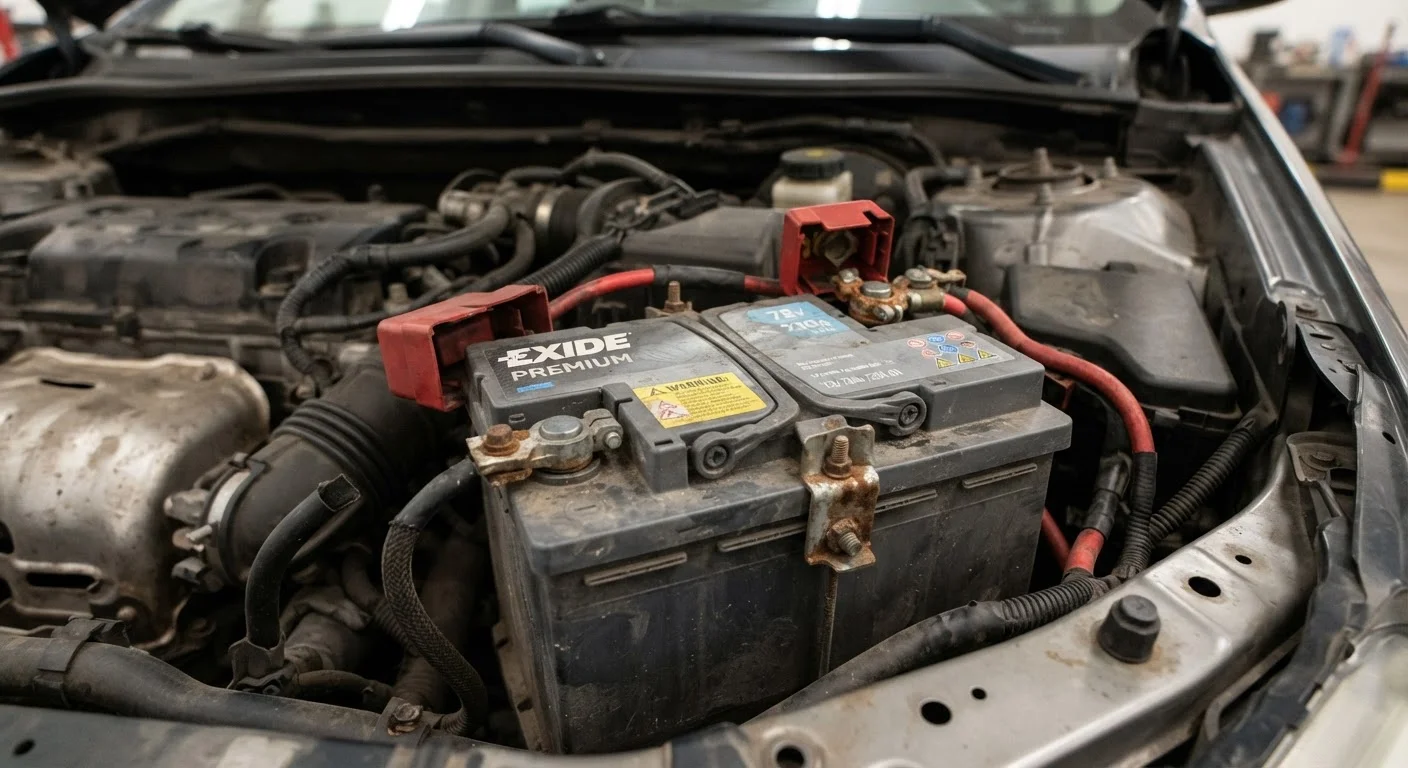
Corrosion on battery terminals - the white or blue-green buildup around the posts - increases resistance and makes the battery work harder. Cleaning terminals with a mixture of baking soda and water, applied carefully with a wire brush, is a simple task that can noticeably improve electrical contact. Always disconnect the negative terminal first and reconnect it last when working near a battery.
Recognising the Warning Signs
Batteries rarely fail without some advance notice. Learning to spot these signals gives you time to act before you're stranded:
- Slow or labored cranking - the engine turns over sluggishly, especially on cold mornings
- Dimming headlights at idle or when other electronics are running
- A battery warning light on the dashboard, which may also indicate a charging system issue
- Needing a jump-start more than once in a short period
- Swollen battery case - a sign of internal heat damage and a clear indicator the battery needs immediate replacement
If your vehicle is four or more years old and you notice any of these, it's worth having the battery tested rather than hoping it holds out. Pairing this attention with routine checks on under-the-hood items that often go unexamined can prevent a cascade of related issues.
~40%
Roadside breakdowns attributed to battery failure
Battery-related failures are widely cited by roadside assistance organizations as one of the single most common call-out reasons.
3-5 years
Typical lead-acid car battery lifespan
Actual longevity varies by climate, driving habits, and whether the charging system keeps the battery adequately topped up.
50%+
Reduction in CCA output in freezing temperatures
A battery already at 70% health can lose more than half its cold cranking amp output when temperatures drop well below freezing.
Checking Battery Health and Planning Ahead
Battery testing doesn't require specialized knowledge. Many auto parts stores offer free load tests that measure actual performance under simulated starting conditions - more informative than a simple voltage reading alone. A basic multimeter check at home (target: around 12.6 volts resting, engine off) gives a rough snapshot but won't catch all failing batteries.
If a test reveals your battery is below roughly 70-75% of its original rated capacity, replacement is worth planning soon rather than later. Factoring battery replacement into your regular maintenance budget - typically every 4-5 years - avoids the surprise cost. Our guide on building a realistic maintenance budget can help you slot this in alongside other predictable expenses.
Proactive habits also help extend life: taking longer drives periodically if you mostly do short trips, disconnecting a battery maintainer when storing a vehicle, and keeping terminals clean and corrosion-free with a wire brush are all low-effort measures with meaningful impact. For a full picture of how driving and maintenance habits affect ownership costs, see our habits that keep car costs under control.