

Key Takeaways
- The one-in-one-out rule requires removing one item every time a new one enters your home.
- It works best as a maintenance habit after a major decluttering effort, not as a starting point.
- Rigid application can create unnecessary stress, especially for households with changing needs.
- Adapting the rule - rather than following it strictly - often produces better long-term results.
Prevents gradual accumulation without big declutter sessions
By addressing incoming items one at a time, the rule eliminates the cycle of large, draining periodic cleanouts that many households find overwhelming.
Encourages more deliberate purchasing decisions
Knowing you'll need to let go of something else prompts a natural pause before buying, which can reduce impulse purchases over time.
Works well in small or storage-limited spaces
Apartments, smaller homes, or shared living spaces benefit particularly from a consistent cap on possessions since storage is genuinely finite.
Easy to remember and requires no special tools
Unlike complex organizing systems, this rule has zero setup cost and can be started immediately without purchasing bins, labels, or storage products.
Builds a long-term decluttering habit gradually
Repeated small decisions train the habit of regular assessment, making it easier to let go of items over time rather than developing emotional attachment to possessions.
Doesn't reduce existing clutter - only maintains it
If a home is already overcrowded, one-in-one-out simply preserves that state. A dedicated decluttering effort is still needed before the rule becomes effective.
Can feel arbitrary for households in transition
Families with young children, people recovering from illness, or anyone whose needs are actively changing may find that swapping items one-for-one doesn't reflect reality.
Creates pressure during gift-giving seasons
When gifts arrive in volume - holidays, birthdays - strictly enforcing the rule means discarding sentimental or useful items under time pressure, which can cause stress rather than ease it.
Doesn't account for different item sizes or value
Replacing a large piece of furniture with a small accessory still counts as 'one out,' which can distort the actual footprint of possessions in your home.
May encourage premature disposal of still-useful items
Feeling obligated to discard something in good working order just to justify a new purchase can feel wasteful - and sometimes is, if the outgoing item had remaining useful life.
Our Verdict
The one-in-one-out rule is a genuinely useful tool for maintaining an organized home once clutter has already been addressed. It works best when applied flexibly rather than as a strict law - households that adapt it to their routines and life stages tend to find it more sustainable. For those still working through significant clutter, it may be better treated as one habit among several rather than the primary strategy.
Homeowners who have already done a baseline declutter and want a low-effort system to keep accumulation in check going forward.
What Is the One-In-One-Out Rule?
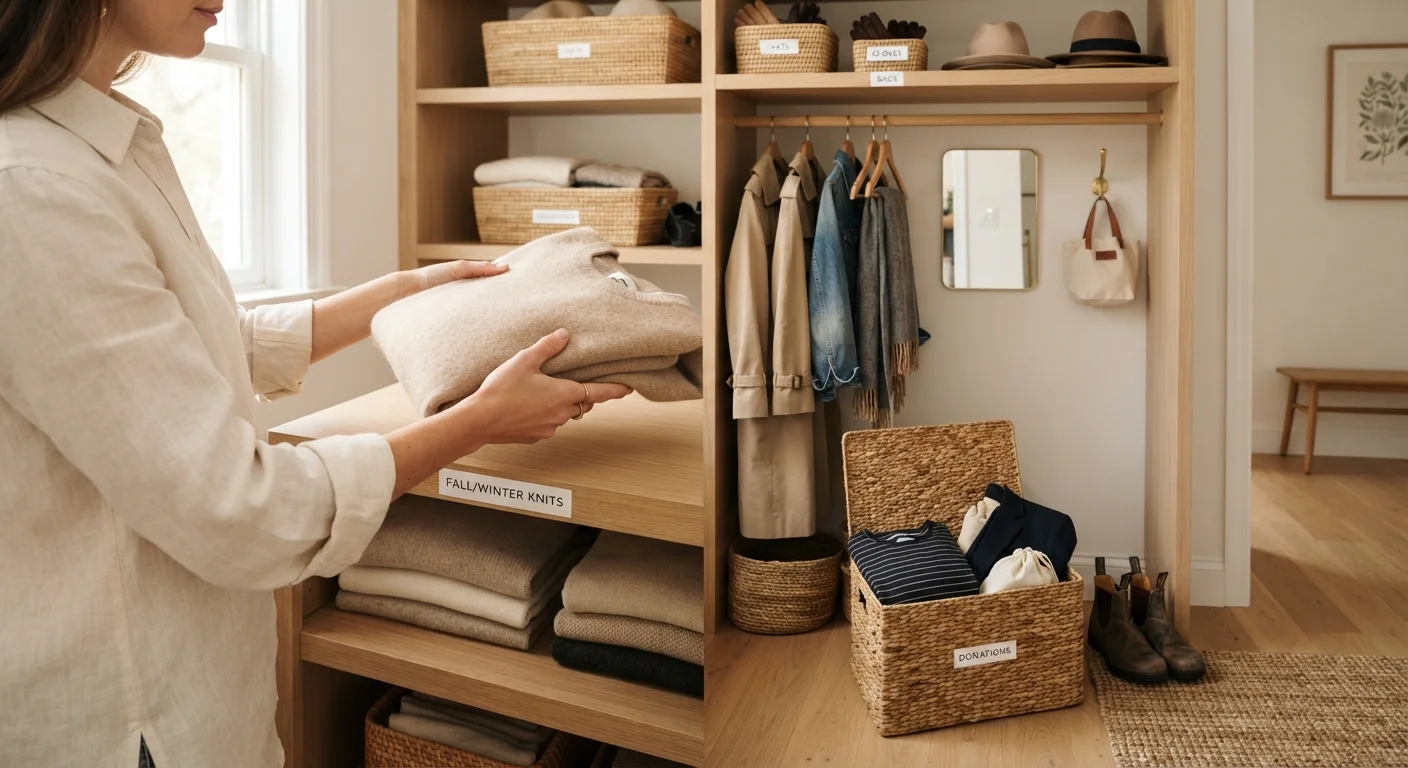
The one-in-one-out rule is straightforward: whenever something new comes into your home, something existing leaves. Buy a new jacket, donate an old one. Bring in a new kitchen gadget, pass along one you no longer use. The logic is simple - by keeping a consistent ceiling on what you own, clutter never gets a foothold.
For many households, the appeal is obvious. It removes the need for periodic, exhausting purges by building a small decision into every purchase. Over time, that habit is meant to keep living spaces comfortable without requiring heroic organizational efforts. The rule is often recommended alongside intentional shopping habits, since both approaches encourage pausing before adding new items to your life.
But as with most simple rules, the real-world picture is more nuanced. Understanding where this method genuinely helps - and where it falls short - lets you decide how (or whether) to use it in your own home.
The Advantages Worth Considering
When it fits naturally into daily life, the one-in-one-out rule offers several practical benefits that go beyond just reducing stuff.
Prevents gradual accumulation without big declutter sessions
By addressing incoming items one at a time, the rule eliminates the cycle of large, draining periodic cleanouts that many households find overwhelming.
Encourages more deliberate purchasing decisions
Knowing you'll need to let go of something else prompts a natural pause before buying, which can reduce impulse purchases over time.
Works well in small or storage-limited spaces
Apartments, smaller homes, or shared living spaces benefit particularly from a consistent cap on possessions since storage is genuinely finite.
Easy to remember and requires no special tools
Unlike complex organizing systems, this rule has zero setup cost and can be started immediately without purchasing bins, labels, or storage products.
Builds a long-term decluttering habit gradually
Repeated small decisions train the habit of regular assessment, making it easier to let go of items over time rather than developing emotional attachment to possessions.
1 in 4
U.S. households affected by clutter problems
A commonly cited estimate from organizational research suggests roughly one in four American households report that clutter is a persistent challenge in their home.
~$10B
Annual U.S. self-storage industry revenue
The self-storage industry generates an estimated $10 billion or more annually in the U.S., reflecting how many households accumulate more than their living spaces can hold.
Perhaps most importantly, the rule creates a built-in moment of reflection before any purchase. That pause - what will I let go of to make room for this? - can reduce impulse buying without requiring a strict budget framework. In that sense, it functions as a behavioral check rather than a financial one.
The Drawbacks That Often Go Unmentioned
Despite its appeal, the one-in-one-out rule has real limitations that tend to surface quickly once households try to apply it consistently.
Doesn't reduce existing clutter - only maintains it
If a home is already overcrowded, one-in-one-out simply preserves that state. A dedicated decluttering effort is still needed before the rule becomes effective.
Can feel arbitrary for households in transition
Families with young children, people recovering from illness, or anyone whose needs are actively changing may find that swapping items one-for-one doesn't reflect reality.
Creates pressure during gift-giving seasons
When gifts arrive in volume - holidays, birthdays - strictly enforcing the rule means discarding sentimental or useful items under time pressure, which can cause stress rather than ease it.
Doesn't account for different item sizes or value
Replacing a large piece of furniture with a small accessory still counts as 'one out,' which can distort the actual footprint of possessions in your home.
May encourage premature disposal of still-useful items
Feeling obligated to discard something in good working order just to justify a new purchase can feel wasteful - and sometimes is, if the outgoing item had remaining useful life.
It's also worth noting that the rule assumes your current possessions are at the right level to begin with. If you're starting with a home that already feels overcrowded, enforcing a strict one-for-one swap won't reduce the backlog - it just maintains it. In those cases, a more deliberate decluttering effort is likely needed first.
A Good Starting Point, Not a Complete Solution
The one-in-one-out rule works best as a maintenance habit after a home has been intentionally organized. If you're dealing with significant clutter, consider starting with a room-by-room assessment to establish a baseline before layering in this kind of ongoing discipline. Think of the rule as a tool in a broader approach to home organization, not a standalone fix.
How to Adapt the Rule So It Actually Works
Rather than treating one-in-one-out as an absolute law, most households benefit from a more flexible interpretation. A few practical adjustments tend to improve both compliance and results:
- Use category-specific rules. Apply the rule to high-accumulation areas - clothing, books, kitchen tools - rather than every object in your home. This keeps it manageable without abandoning the concept.
- Allow a grace period. Instead of removing an item the moment something new arrives, give yourself a week to identify what goes. This reduces the pressure of an immediate decision.
- Scale up for seasonal transitions. When putting away winter or summer items, take it as a natural prompt to do a two-for-one clear-out, which gradually reduces excess over time.
- Acknowledge life changes. Growing families, health changes, or a new hobby legitimately require adding more without an equal removal. The rule should flex for real life, not the other way around.
The goal isn't perfect adherence - it's a home that feels comfortable and manageable. Much like rigid personal finance frameworks that fail when life gets complicated, the one-in-one-out rule is most useful as a guideline rather than a rule.