

Key Takeaways
- Switching to bi-weekly payments adds one full extra payment per year without requiring a budget overhaul.
- Directing windfalls - tax refunds, bonuses - straight to principal can shave months off a loan.
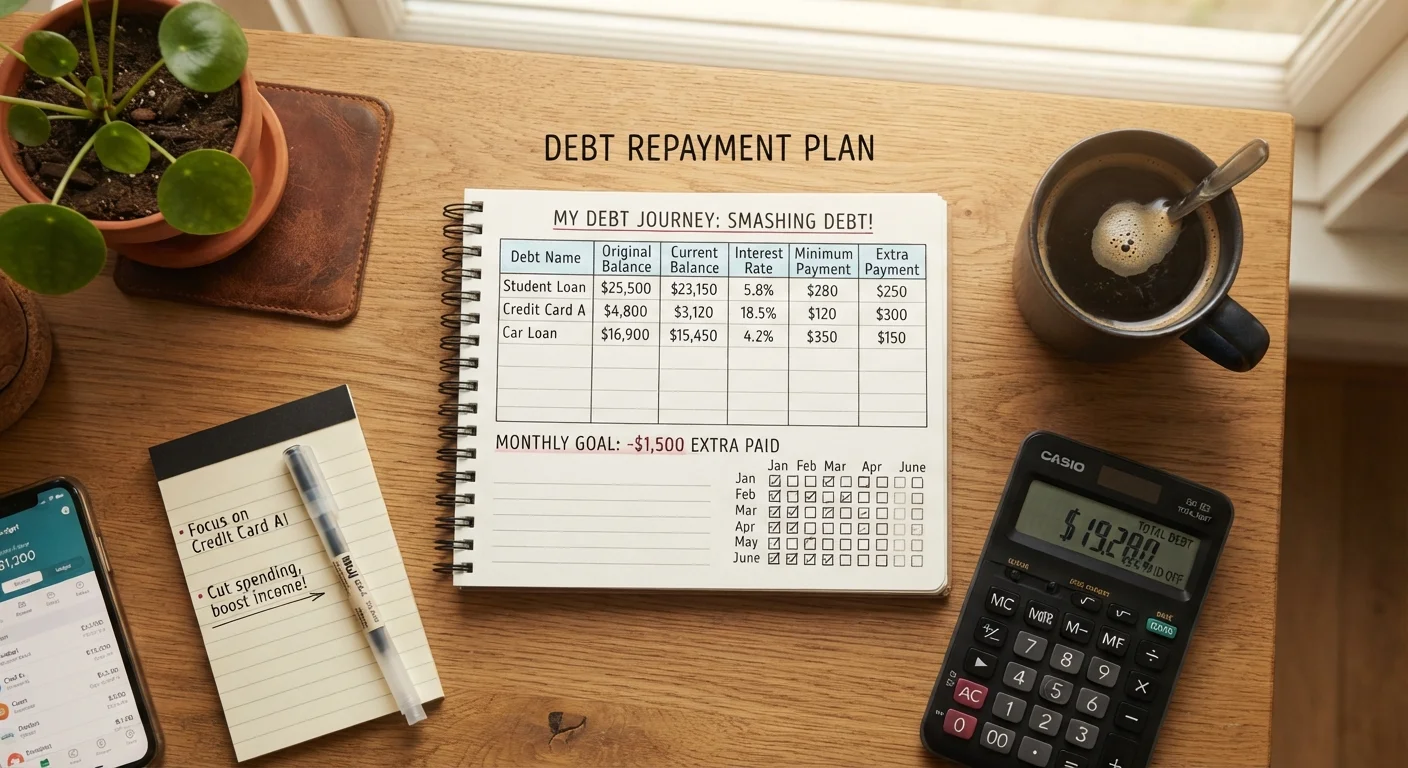
- Targeting the highest-interest debt first typically minimizes total interest paid over time.
- Rounding up monthly payments is a low-friction habit that meaningfully reduces principal faster.
- Refinancing to a lower rate only helps if you keep the same or shorter repayment timeline.
Why Paying Ahead of Schedule Is Worth the Effort
Most loan structures are front-loaded with interest - meaning early payments go mostly toward the lender's fee, not your balance. Paying down principal faster flips that math in your favor, shrinking the base that interest is calculated on. Even modest changes to payment timing or amount can compress a 30-year mortgage or a 5-year car loan by years.
This article covers the practical methods borrowers commonly use to get out from under debt ahead of schedule. None of these strategies constitute personalized financial advice - your situation will depend on your loan terms, income stability, and overall financial picture. For decisions specific to your circumstances, consult a licensed financial professional. If you're still building the foundation, a solid budgeting framework is the right starting point.
Switch to bi-weekly payments
Instead of making one monthly payment, split it in half and pay every two weeks. Because there are 52 weeks in a year, this schedule produces 26 half-payments - the equivalent of 13 full monthly payments instead of 12. That one extra payment per year goes directly toward principal and can cut years off a standard mortgage or auto loan.
Before switching, confirm with your lender that they accept bi-weekly payments and that the additional amount is applied to principal, not held until the next billing cycle. Some servicers require a formal enrollment; others accept the change informally.
Bi-weekly payments produce one extra full payment each year with no budget overhaul required.
Direct windfalls straight to principal
Tax refunds, work bonuses, inheritance distributions, and proceeds from selling unused items are all forms of income that don't appear in your regular budget. Rather than absorbing them into everyday spending, routing even a portion directly to a loan's principal balance can produce an outsized impact - especially early in a loan's life when principal reduction lowers the interest calculated in every subsequent period.
When making a lump-sum payment, specify in writing (or through your lender's payment portal) that the funds are to be applied to principal only, not toward future scheduled payments.
A single tax refund applied to principal can eliminate months of interest charges on a long-term loan.
Round up every payment
If your minimum payment is $347, pay $400. If it's $212, pay $250. Rounding up to the nearest $25 or $50 increments requires minimal friction once it's built into a budget, but over time it meaningfully reduces the outstanding principal. The smaller your balance, the less interest accrues each cycle - so every extra dollar compounds in your favor.
This method works especially well for people who can't commit to a large fixed increase but can absorb a modest one without stress.
Rounding up payments is a low-friction habit that steadily erodes principal over time.
Target the highest-interest balance first
When carrying multiple debts - credit cards, student loans, a car payment - allocating any extra funds toward the account charging the highest interest rate reduces the total cost of your debt over time. This is the core logic behind the debt avalanche method. Once the highest-rate balance is eliminated, redirect that full payment toward the next most expensive debt.
The math strongly favors this approach for minimizing total interest paid, though it can take longer to experience the psychological win of eliminating a balance. For a detailed comparison of structured payoff strategies, see The Debt Avalanche and Debt Snowball Explained.
Targeting the highest-rate debt first is the most cost-efficient path through multiple balances.
Refinance only if you keep the timeline tight
Refinancing to a lower interest rate can reduce monthly payments - but if borrowers extend the repayment term at the same time, total interest paid often increases despite the lower rate. The strategy pays off most reliably when refinancing results in a lower rate and the borrower keeps the remaining repayment timeline the same or shorter.
Before pursuing refinancing, account for closing costs or origination fees, which can offset interest savings if you don't hold the loan long enough to recoup them. Debt Consolidation: What It Actually Does - and What It Doesn't walks through where this approach works and where it can backfire.
Refinancing only accelerates payoff if you hold the rate savings without extending your timeline.
Automate a small monthly increase over time
Some borrowers set a calendar reminder to increase their monthly debt payment by a fixed small amount - say $10 or $20 - every few months. As income gradually rises or small expenses drop away, incremental increases feel manageable but stack up meaningfully over a multi-year loan. Automation removes the decision friction that often causes well-intentioned plans to stall.
Pair this approach with a periodic review of your long-term debt management principles to ensure your payment increases don't crowd out emergency savings or essential expenses.
Automating small, periodic payment increases compounds quietly into substantial principal reductions.
Putting It Together
Most people who successfully pay off debt ahead of schedule don't use just one strategy - they combine two or three that fit their cash flow and temperament. A bi-weekly payment structure paired with directed windfalls and rounded-up monthly amounts can produce compounding gains without requiring a dramatic lifestyle change.
It's also worth understanding the broader strategic picture. Two of the most well-established structured approaches - the avalanche and snowball methods - are explained in detail in The Debt Avalanche and Debt Snowball Explained. And if you're weighing debt payoff against building savings simultaneously, Paying Off Debt While Still Saving offers a framework for doing both without sacrificing either goal.
Always confirm how extra payments are applied
Before making any additional payment, contact your loan servicer or check your online account settings to verify that extra funds are applied to principal - not to future scheduled payments. Some servicers default to advancing your next due date instead, which doesn't reduce the interest-bearing balance. A quick written confirmation can protect the full benefit of your extra payment.
This article is for general informational and educational purposes only and does not constitute personalized financial, tax, or legal advice. Consult a qualified financial professional before making decisions about your specific debt situation.