

Key Takeaways
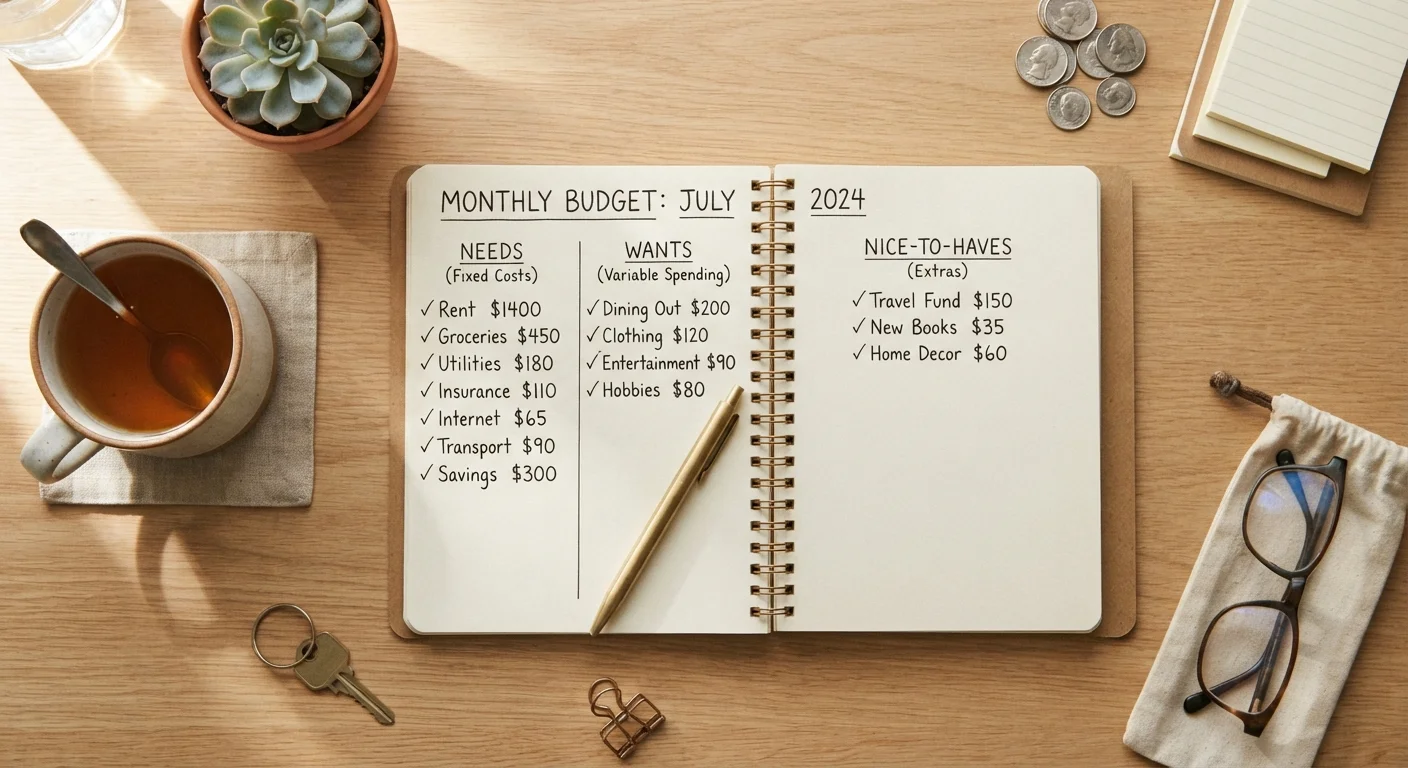
- Needs are expenses essential for basic functioning - housing, food, utilities, and necessary healthcare.
- Wants add comfort or enjoyment but can be reduced or cut without harming your core wellbeing.
- Nice-to-haves are discretionary upgrades that offer diminishing returns when money is tight.
- Many expenses sit in grey zones - context and income level determine which category they belong in.
- Sorting spending is not about shame but about making deliberate trade-offs that reflect your actual priorities.
Start here
Why the Distinction Matters
Next
Defining the Three Categories
Go deeper
The Grey Areas: When a Want Feels Like a Need
Apply it
Applying the Framework to Your Real Spending
Wrap up
Moving Forward With Intention
Why the Distinction Matters
Most people don't overspend because they're careless - they overspend because they've never clearly defined where one spending category ends and another begins. Without a framework, every purchase justifies itself in the moment. The coffee becomes a mood stabiliser; the upgraded phone becomes a productivity tool; the premium cable plan becomes "basically a need."
Sorting your spending into needs, wants, and nice-to-haves gives you a decision-making lens rather than a rigid rule. It doesn't require a perfect budget or tracking every cent. It simply asks: does this purchase belong in my life right now, and at what priority level?
This framework pairs naturally with broader budgeting work. If you want to put it into practice with actual numbers, the step-by-step guide to building a monthly spending plan is a logical next step.
Defining the Three Categories
Need
An expense required for basic safety, health, or functioning - something whose absence would directly harm your wellbeing or ability to work and live.
Want
An expense that adds comfort, enjoyment, or convenience but that you could reduce or cut without putting your core wellbeing at risk.
Nice-to-have
A discretionary upgrade on top of a functional baseline - choosing a premium version when a standard one would fully meet your actual needs.
Lifestyle creep
The gradual tendency for spending to rise as income increases, often converting former wants or nice-to-haves into expenses that feel essential.
Discretionary spending
Any spending that is not required for basic survival or contractual obligations - the portion of a budget where you have the most control.
Once you have working definitions, categorising most expenses becomes straightforward.
Needs
Needs are expenses that maintain your basic safety, health, and ability to participate in everyday life. These typically include:
- Rent or mortgage payments
- Groceries (basic, not premium)
- Utilities - electricity, water, heat
- Essential medications and healthcare
- Minimum debt payments
- Basic transportation to work
Wants
Wants are things that genuinely improve your quality of life but that you could reduce or eliminate without serious harm. Dining out, streaming subscriptions, gym memberships, and clothing beyond functional basics fall here. Wants aren't bad - but they're negotiable.
Nice-to-Haves
Nice-to-haves are upgrades: choosing the premium version when a standard one works fine. The extra channels on a TV package, a subscription box, or a name-brand item when a generic version is equivalent. These are the first things to revisit when your budget is under pressure.
The Grey Areas: When a Want Feels Like a Need
The hardest part of this framework isn't the obvious cases - it's the grey zones where lifestyle and necessity blur together. A few common examples:
Avoid Rationalising Wants as Needs
One of the most common budget pitfalls is convincing yourself that a want has become a need simply because you've had it for a long time. Longevity doesn't change the category - a subscription you've held for three years is still a want if you could function without it. Be honest during the labelling process, even when it's uncomfortable.
Internet Service
For most working Americans, a reliable internet connection is effectively a need - especially for remote work, job searching, or managing finances online. However, a gigabit-speed plan when a basic tier meets your usage is partly a nice-to-have.
Clothing
Functional clothing is a need. A new seasonal wardrobe or brand-name purchases when affordable alternatives exist? Those slide into want territory.
Coffee
Home-brewed coffee that helps you function is a reasonable need-adjacent expense. A daily café habit is a want. Neither is morally loaded - it's about recognising the distinction so you can make an informed choice.
If lifestyle creep has quietly blurred these lines in your household, the article on spending categories most people ignore is worth a read - it covers how small recurring expenses accumulate unnoticed.
Applying the Framework to Your Real Spending
Theory is only useful if it changes behaviour. Here's a practical process for applying the framework to your actual expenses:
- Pull up last month's bank and card statements. Don't edit or judge yet - just list what you spent.
- Assign a category to each line item: N for need, W for want, or NH for nice-to-have.
- Look at the totals by category. This alone is often eye-opening. Most people find their nice-to-haves are larger than expected.
- Identify one or two wants or nice-to-haves to reduce or pause. You don't have to eliminate them - even cutting back creates breathing room.
- Redirect that freed-up money deliberately - toward a savings buffer, a debt payment, or a spending category you've been underfunding.
Make Categorising a Regular Habit
Set a recurring monthly reminder - even 20 minutes - to review your last month's spending and re-label any categories that have drifted. This keeps your awareness current and prevents needs-inflation from happening silently. Over time, the habit becomes second nature and takes less effort.
For a fuller picture of how this exercise fits into a structured spending plan, the complete guide to spending with intention covers the broader budgeting process from setup to ongoing management.
Moving Forward With Intention
Sorting spending into categories isn't a one-time exercise - it's an ongoing habit. Your needs, wants, and nice-to-haves will shift as your income, family situation, and goals change. A framework like this works best when it's revisited regularly, not just during a financial crisis.
The goal isn't to strip pleasure out of your spending. It's to make sure your money is doing what you actually want it to do, rather than disappearing into expenses you never consciously chose. When you know which category something falls into before you spend, you've already made a more intentional financial decision.
If you're also navigating a windfall or a larger sum of money, the framework for handling lump-sum windfalls can help you apply similar intentional thinking to one-time decisions.
This article is for general informational and educational purposes only and does not constitute personalised financial advice. Consider consulting a qualified financial professional for guidance specific to your situation.