

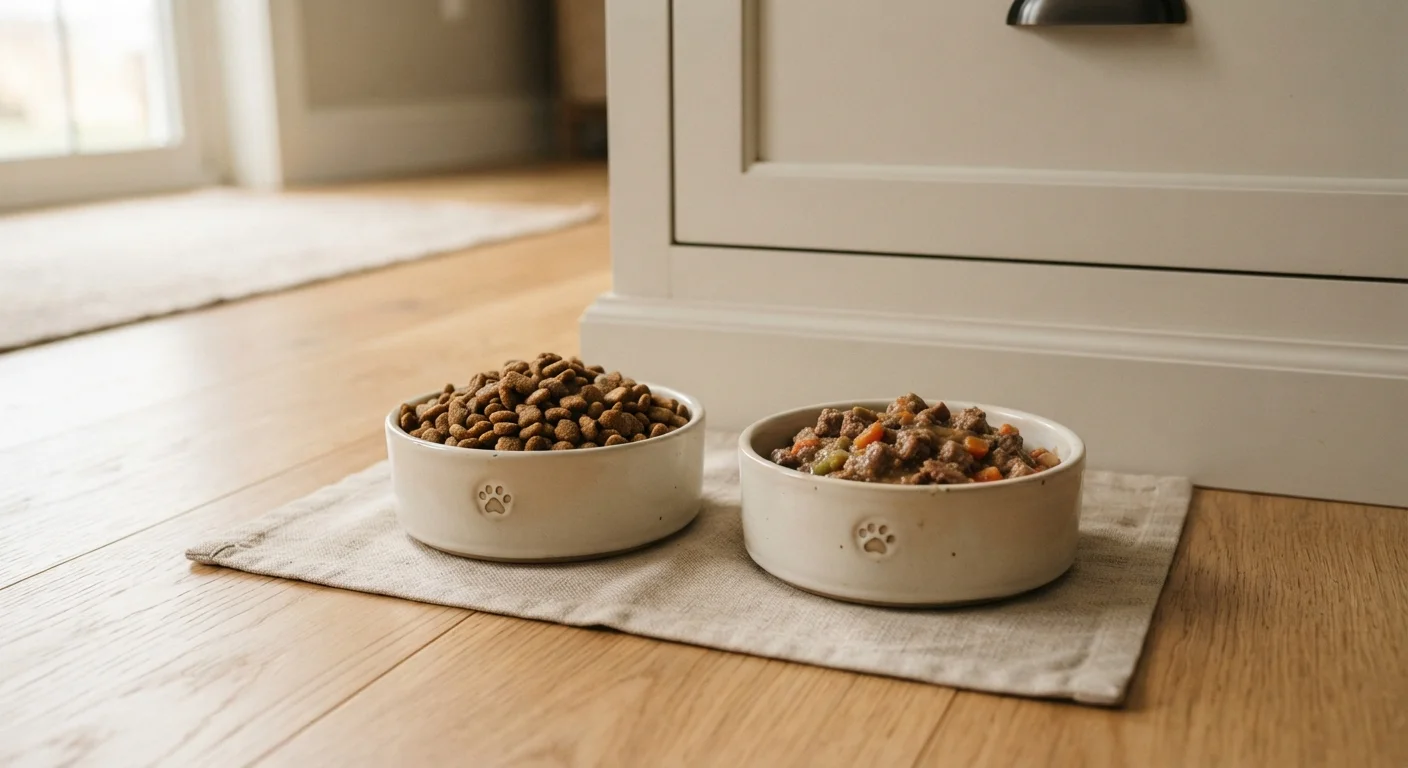
Key Takeaways
- Dry food is generally more cost-effective and easier to store than wet food.
- Wet food provides significantly more moisture, which can support urinary and kidney health.
- Neither format is universally superior - the right choice depends on your pet's age, health, and preferences.
- Mixing both types is a common and often effective feeding strategy.
- Always consult your veterinarian before making significant changes to your pet's diet.
Option A
Dry Food (Kibble)
The convenient, shelf-stable everyday staple.
Best for: Pet owners looking for affordable, easy-to-store nutrition that supports dental health and fits a consistent feeding schedule.
Option B
Wet Food (Canned)
The moisture-rich option for picky eaters and hydration needs.
Best for: Pets with low water intake, dental sensitivities, or those who need higher palatability to maintain a healthy appetite.
If you're managing a tight pet care budget
Dry Food (Kibble)
Kibble typically costs less per serving and has a long shelf life, reducing waste and making it easier to buy in bulk.
If your pet drinks very little water
Wet Food (Canned)
Canned food is roughly 70-80% moisture, helping offset low water intake and reducing the risk of urinary tract issues.
If your pet has dental health concerns
Dry Food (Kibble)
The mechanical action of chewing kibble can help reduce plaque buildup, though it is not a substitute for regular dental care.
If your pet is a senior or has difficulty chewing
Wet Food (Canned)
Softer texture makes wet food easier and more comfortable for older pets or those with dental pain or missing teeth.
If you want flexibility and maximum nutrition coverage
Dry Food (Kibble)
Kibble as a base with occasional wet food topper is a widely used strategy that balances cost, convenience, and palatability.
What Actually Differs Between Kibble and Canned Food
The most fundamental difference between dry and wet pet food is moisture content. Kibble typically contains around 10% water, while canned food ranges from 70% to 80%. That gap has real downstream effects on caloric density, serving size, palatability, and how your pet stays hydrated.
Beyond moisture, the two formats differ in how they're processed and preserved. Kibble is cooked at high heat and extruded into shelf-stable pellets. Wet food is sealed in cans or pouches and sterilized, locking in freshness without artificial preservatives. For a closer look at how these processing differences affect nutrient profiles, see the nutritional breakdown of wet vs. dry food.
Cost is the other practical divide. Per calorie, dry food is almost always less expensive than wet. A bag of kibble stores easily, spoils slowly, and covers more meals per dollar - an important factor for budget-conscious owners. If you're actively working to manage pet care costs, stretching your pet care budget without compromising health is very achievable with the right strategy.
| Criterion | Dry Food (Kibble) | Wet Food (Canned) |
|---|---|---|
| Moisture content | ~10% | 70-80% |
| Cost per serving | Generally lower | Generally higher |
| Shelf life (unopened) | 12-18 months | 2-5 years |
| Shelf life (opened) | Weeks in sealed container | 3-5 days refrigerated |
| Dental health benefit | Mild abrasive action | Minimal |
| Palatability for picky eaters | Moderate | Higher |
| Ease of portion control | Easy to measure | Requires careful tracking |
| Best for hydration support | No | Yes |
Health Considerations That Should Guide Your Choice
Your pet's individual health status matters more than any general rule. For cats especially, wet food can play a meaningful role in preventing urinary tract problems, since cats have a low thirst drive and may not drink enough from a bowl. Dogs with kidney disease often benefit from increased fluid intake, making wet food a useful tool in diet management - though specific guidance should always come from a veterinarian.
Dry food has a modest edge when it comes to dental health. Chewing kibble creates mild abrasive action against tooth surfaces, which can slow plaque accumulation. That said, kibble alone is not sufficient dental care - brushing and professional cleanings remain important regardless of food type.
70-80%
Moisture content in typical wet pet food
Compared to roughly 10% in dry kibble, this difference is significant for pets with low voluntary water intake.
~3-4x
Cost difference per calorie: wet vs. dry
On a per-calorie basis, wet food commonly costs several times more than dry kibble, making format a meaningful budget variable.
Age and life stage are also worth factoring in. Puppies and kittens often benefit from the higher caloric density of wet food early on. Senior pets may find wet food easier to eat if they've developed dental issues or reduced appetite. Pets with obesity concerns may need careful portion management with wet food since its lower caloric density can make it easy to overfeed by volume.
It's also worth recognizing that your pet's lifestyle shapes nutritional needs more broadly. The differences between indoor and outdoor pet care extend to caloric needs and feeding frequency.
Mixing Both: A Middle-Ground Strategy
Many owners find that feeding a combination of dry and wet food addresses trade-offs on both sides. Using kibble as the foundation keeps feeding costs manageable, while adding a small portion of wet food improves palatability and bumps up moisture intake. This approach is widely used and generally well-tolerated by healthy adult pets.
If you're thinking about adjusting your pet's diet, introduce any new food gradually over seven to ten days to reduce the risk of digestive upset. Switching abruptly - even between two nutritionally complete foods - can cause loose stools or appetite changes in sensitive animals.
Transition Gradually When Changing Foods
When introducing a new food - whether switching formats or trying a different formula - mix a small amount of the new food with the old and gradually increase the ratio over seven to ten days. This allows your pet's digestive system to adjust and reduces the likelihood of stomach upset. If your pet shows persistent vomiting, diarrhea, or refuses to eat during a transition, consult your veterinarian.
Finally, be skeptical of sweeping claims about either format. Online pet nutrition advice is rife with oversimplification. Our guide to common pet nutrition myths can help you separate evidence-backed guidance from popular misconceptions.
This article is for general informational purposes only and does not constitute veterinary or dietary advice. Always consult a licensed veterinarian before making significant changes to your pet's feeding routine, especially if your pet has existing health conditions.