

Key Takeaways
- Brushing, bathing, and ear cleaning are generally safe for confident owners to do at home.
- Nail trimming carries real risk if done incorrectly - cutting the quick causes pain and bleeding.
- Anal gland expression and deep ear cleaning should almost always be handled by a veterinarian or groomer.
- Having the right tools and introducing grooming gradually reduces stress for both pet and owner.
- When in doubt, a single professional session can teach you the correct technique before you go solo.
Saves money on routine professional appointments
Tasks like brushing and bathing don't require specialist skills and can be done at home with basic, affordable tools. Over the course of a year, this can represent meaningful savings.
Strengthens the bond between owner and pet
Regular handling through grooming builds trust and helps pets become comfortable with touch - useful when a vet exam or treatment is needed.
Enables early detection of health issues
Hands-on grooming lets you notice lumps, skin changes, ear odor, or parasites before they escalate. Catching issues early typically means simpler, less costly treatment.
Flexible scheduling on your terms
Home grooming means no appointment booking, no transport stress for anxious pets, and sessions timed to suit your pet's mood and energy level.
Nail trimming risks cutting the quick
Cutting into the blood vessel inside the nail causes immediate pain and bleeding. Dark-nailed breeds make the quick impossible to see, raising the risk for inexperienced owners.
Improper clipping can injure skin or damage coat
Electric clippers and scissors move fast, and a wriggling pet increases the chance of accidental cuts. Shaving double-coated breeds incorrectly can cause long-term coat damage.
Missed signs can delay necessary veterinary care
Owners who aren't trained to distinguish normal variation from a health concern may overlook ear infections, skin conditions, or early dental disease during home grooming sessions.
Some pets resist home handling entirely
Pets with handling anxiety or a history of negative grooming experiences may be too stressed or reactive to groom safely at home without a behavior-management plan in place.
Our Verdict
Home grooming can be a practical, cost-effective part of regular pet care - but only for tasks that match your skill level and your pet's temperament. Brushing and bathing are well within most owners' reach; nail trimming takes practice and the right setup; and some tasks genuinely belong with a professional to avoid real harm.
Owners with calm, cooperative pets who are willing to invest time in learning proper technique and building their pet's comfort with handling.
The Case for Home Grooming
Routine grooming isn't just about appearance - it directly supports your pet's health. Regular brushing prevents painful matting, reduces shedding, and gives you a chance to spot lumps, skin irritation, or parasites early. Bathing keeps the coat and skin clean, and ear checks can catch infections before they worsen.
Doing some of this at home has clear advantages, particularly for budget-conscious owners. Professional grooming appointments add up quickly, and for many routine tasks, a confident owner with basic tools can achieve the same result. See our guide to stretching your pet care budget for more ways to manage costs without compromising your pet's wellbeing.
Saves money on routine professional appointments
Tasks like brushing and bathing don't require specialist skills and can be done at home with basic, affordable tools. Over the course of a year, this can represent meaningful savings.
Strengthens the bond between owner and pet
Regular handling through grooming builds trust and helps pets become comfortable with touch - useful when a vet exam or treatment is needed.
Enables early detection of health issues
Hands-on grooming lets you notice lumps, skin changes, ear odor, or parasites before they escalate. Catching issues early typically means simpler, less costly treatment.
Flexible scheduling on your terms
Home grooming means no appointment booking, no transport stress for anxious pets, and sessions timed to suit your pet's mood and energy level.
What You Can Safely Do at Home
The following tasks are considered low-risk for most owners, provided your pet is comfortable with handling and you use appropriate tools.
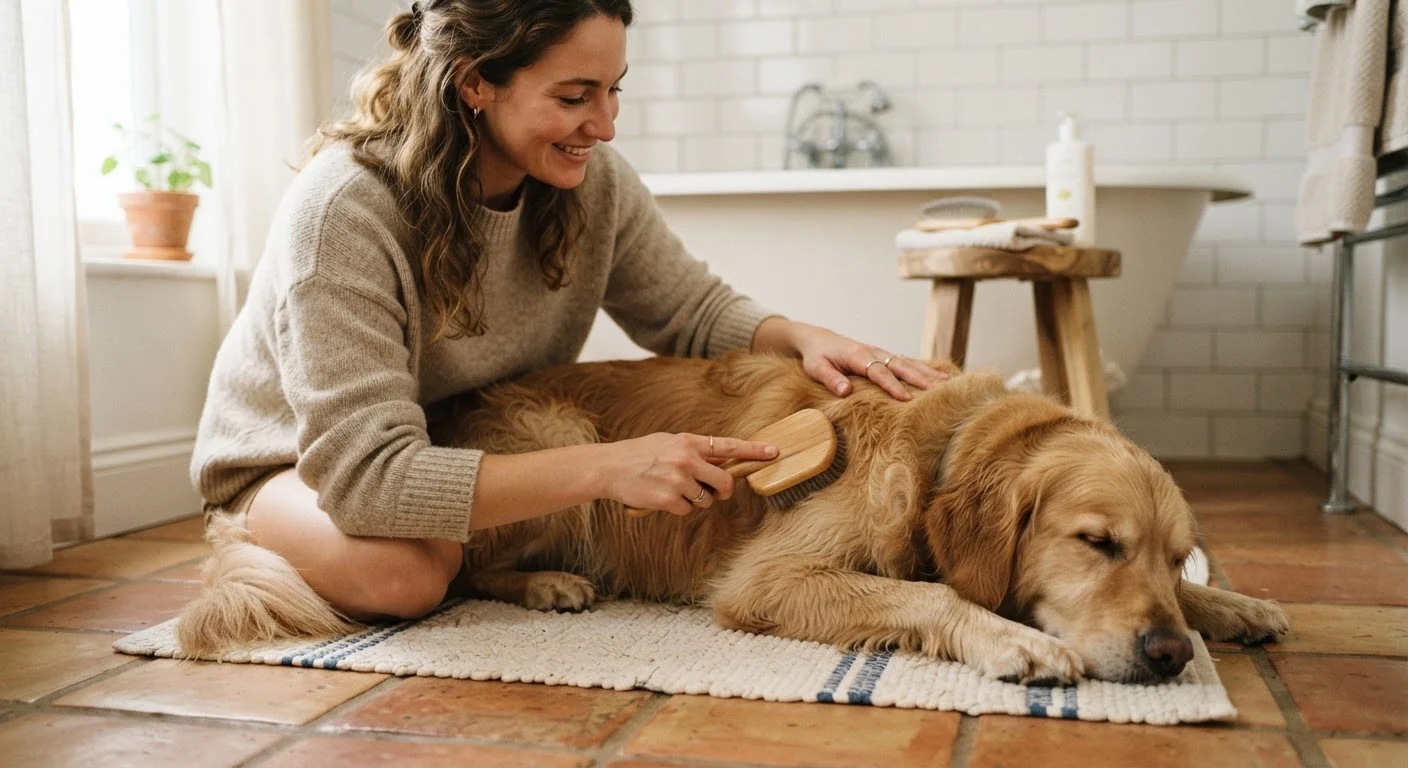
- Brushing and combing: Most dogs and cats tolerate regular brushing well when introduced gradually. Match the brush type to your pet's coat - a slicker brush for double-coated breeds, a fine-tooth comb for cats prone to tangles.
- Bathing: Use a pet-specific shampoo, keep water lukewarm, and protect ears from water entry. Short-coated pets often need bathing only every four to six weeks; consult your vet for guidance specific to your pet's coat and skin condition.
- Basic ear checks and cleaning: Gently wiping the visible outer ear canal with a cotton ball and a vet-approved ear cleaner is generally safe. Stop if you see redness, smell an unusual odor, or your pet shows discomfort - these are signs to see a vet.
- Eye area wiping: Breeds prone to discharge (flat-faced dogs and cats in particular) benefit from regular gentle wiping with a damp cloth. Never poke at or around the eye itself.
Pairing grooming sessions with your monthly at-home wellness check is a smart way to stay on top of your pet's overall condition.
Tasks That Carry Real Risk
Some grooming tasks look simple but have a meaningful margin for error. Understanding those risks helps you decide when professional help is worth the cost.
Nail trimming risks cutting the quick
Cutting into the blood vessel inside the nail causes immediate pain and bleeding. Dark-nailed breeds make the quick impossible to see, raising the risk for inexperienced owners.
Improper clipping can injure skin or damage coat
Electric clippers and scissors move fast, and a wriggling pet increases the chance of accidental cuts. Shaving double-coated breeds incorrectly can cause long-term coat damage.
Missed signs can delay necessary veterinary care
Owners who aren't trained to distinguish normal variation from a health concern may overlook ear infections, skin conditions, or early dental disease during home grooming sessions.
Some pets resist home handling entirely
Pets with handling anxiety or a history of negative grooming experiences may be too stressed or reactive to groom safely at home without a behavior-management plan in place.
Nail trimming is the most commonly misjudged task. Cutting too short into the quick - the blood vessel inside the nail - causes pain and bleeding. Dark-nailed pets are especially tricky because the quick isn't visible. If you want to learn, ask a vet or groomer to demonstrate the correct technique first, and always have styptic powder on hand to stop bleeding if needed.
Anal gland expression is not a DIY task for most owners. Improperly done, it can cause injury or infection. If your pet scoots or shows discomfort, have a vet assess and treat the issue rather than attempting this at home.
Shaving or clipping coats can go wrong in ways that are more serious than they appear. Shaving a double-coated breed can permanently damage the coat's insulating structure. Clipping around the face, paws, or genitals risks accidental cuts, especially if your pet moves suddenly.
Building a Safe Home Grooming Routine
Starting young, going slowly, and keeping sessions short makes grooming less stressful for everyone involved. Use treats and calm praise to build positive associations - a pet that tolerates grooming willingly is far easier and safer to work with than one that squirms or snaps.
When to Ask a Professional First
If you've never trimmed your pet's nails or cleaned their ears before, consider booking a single session with a groomer or vet tech and asking them to walk you through the process. Watching the correct technique - and having your pet handled by someone experienced - gives you a reliable baseline. This is especially worthwhile for pets with anxiety, unusual anatomy, or health conditions that affect grooming.
Even if you handle most grooming at home, scheduling a professional appointment once or twice a year has value. A groomer or vet tech can flag skin issues you may have missed and give you practical feedback on technique. Think of it as a skills check, not a failure to DIY. Grooming is one piece of the broader picture covered in everyday habits that support your pet's long-term wellbeing.
This article provides general pet care information and is not a substitute for guidance from a licensed veterinarian. Always consult your vet if you notice changes in your pet's skin, coat, ears, or behavior.