

Key Takeaways
- A home pet first-aid kit handles minor issues only - serious symptoms always need a vet.
- Keep your kit in a consistent, accessible location and check it every six months.
- Never give human medications to pets unless explicitly directed by your veterinarian.
- Include your vet's number and the ASPCA Animal Poison Control hotline in the kit.
- Species-specific needs differ - dogs, cats, and small animals may require different supplies.
Summary
22 items · 30-60 minutes to assemble
Why Every Pet Owner Needs a First-Aid Kit
Minor accidents happen with pets - a small cut from rough play, a paw pad scrape on pavement, or a splinter from outdoor adventures. Having a dedicated first-aid kit at home means you can respond quickly and calmly without scrambling through kitchen drawers or medicine cabinets. It also helps you stabilize your pet before a vet visit when something more serious occurs.
This checklist is designed to help you assemble a practical, budget-conscious kit that covers the most common situations pet owners face. It is not a substitute for professional veterinary care. If you are ever unsure about the severity of an injury or symptom, contacting your vet first is always the right call. See our guide to pet emergency signs for a reference on what cannot wait.
If you are brand new to pet ownership, our article on what first-time owners often overlook provides helpful context before you dive in.
Never Use Human Medications on Pets
Many common over-the-counter human medications - including ibuprofen, acetaminophen, and certain antihistamines - are toxic to dogs and cats. Do not administer any medication to your pet without explicit direction from a licensed veterinarian. When in doubt, call your vet before giving anything, even if the product seems harmless.
What to Stock: The Full Checklist
Organize your kit into a waterproof, clearly labeled container - a handled storage box or tackle box works well. Group supplies logically so you can find what you need quickly. Review expiration dates on any medical items every six months, and restock anything used after an incident.
Wound Care Essentials
Monitoring and Assessment Tools
Restraint and Handling
Additional Supplies
For guidance on managing overall pet care costs, including vet visits and supplies, see our pet care budget guide.
Tools and Supplies You'll Need
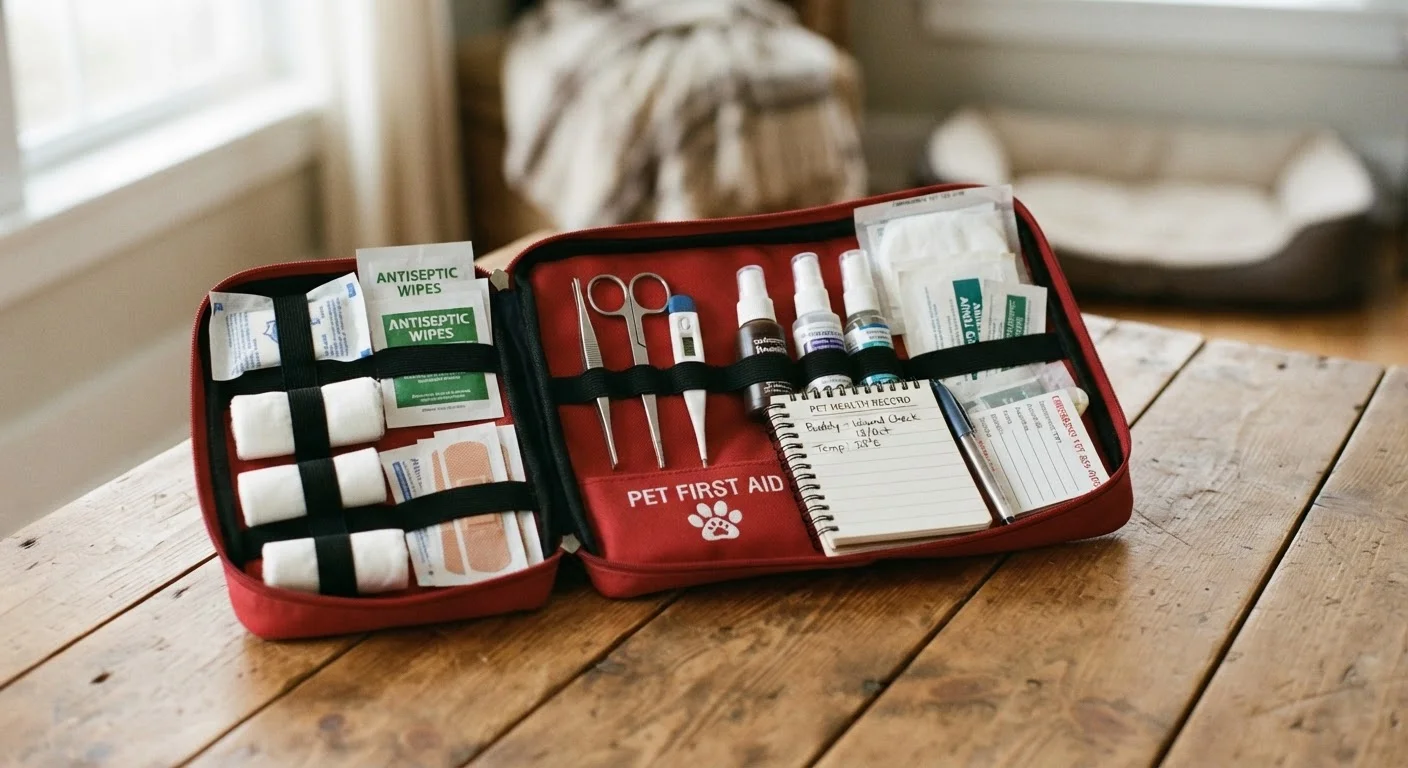
Beyond consumable medical supplies, certain reusable tools form the backbone of a functional pet first-aid kit. These are the instruments that allow you to assess, clean, and dress wounds effectively.
Digital Rectal Thermometer
Accurately measures your pet's body temperature to help assess fever or hypothermia.
Blunt-Tipped Scissors
Cuts gauze, bandaging wrap, and tape safely without risk of accidentally cutting skin or fur.
Tweezers (blunt-tipped)
Removes visible splinters, debris, or ticks from your pet's skin when done carefully.
Penlight or Small Flashlight
Illuminates ears, mouth, and wound sites for a clearer look during assessment.
Soft Muzzle
Helps safely restrain a pet in pain to prevent accidental biting during first-aid care.
Latex-Free Examination Gloves
Protects both you and your pet from cross-contamination during wound cleaning and dressing.
Keep a printed or laminated quick-reference card inside your kit listing your veterinarian's phone number, the nearest 24-hour emergency animal hospital, and the ASPCA Animal Poison Control Center (a fee-based service, phone number available on their official website). You can pair this kit with the monthly at-home wellness check to stay on top of your pet's overall health between vet visits.
Know When the Kit Isn't Enough
A home first-aid kit is for minor injuries and stabilization only. Symptoms such as difficulty breathing, uncontrolled bleeding, suspected poisoning, seizures, sudden collapse, or severe pain require immediate veterinary attention. Do not attempt to treat these situations at home. Having your vet's number and the nearest emergency clinic's address already in your kit - before an emergency occurs - can save critical time. You can also check common first-time owner health pitfalls to better understand situations that are often underestimated.
This article is for general informational purposes only and does not constitute veterinary or medical advice. Always consult a licensed veterinarian for diagnosis, treatment, or guidance specific to your pet's health needs.