

Key Takeaways
- A high discount percentage only means savings if the original reference price was fair and accurate.
- Retailers sometimes inflate 'original' prices to make markdowns appear more dramatic than they are.
- The absolute dollar amount saved often matters more than the percentage figure shown.
- Buying something you didn't need because of a deal is a net loss, not a win.
- Comparing final unit prices - not discount labels - is the most reliable evaluation method.
How Percentage-Off Promotions Work - and Where They Can Mislead
A percentage-off label is a simple calculation: the discount is expressed as a fraction of the stated original price. That sounds straightforward, but the stated original price is where the complexity lives. If the reference price is inflated, arbitrarily set, or rarely charged, then the percentage figure is measuring something that doesn't reflect real-world value. Understanding this dynamic is the foundation of smarter deal evaluation.
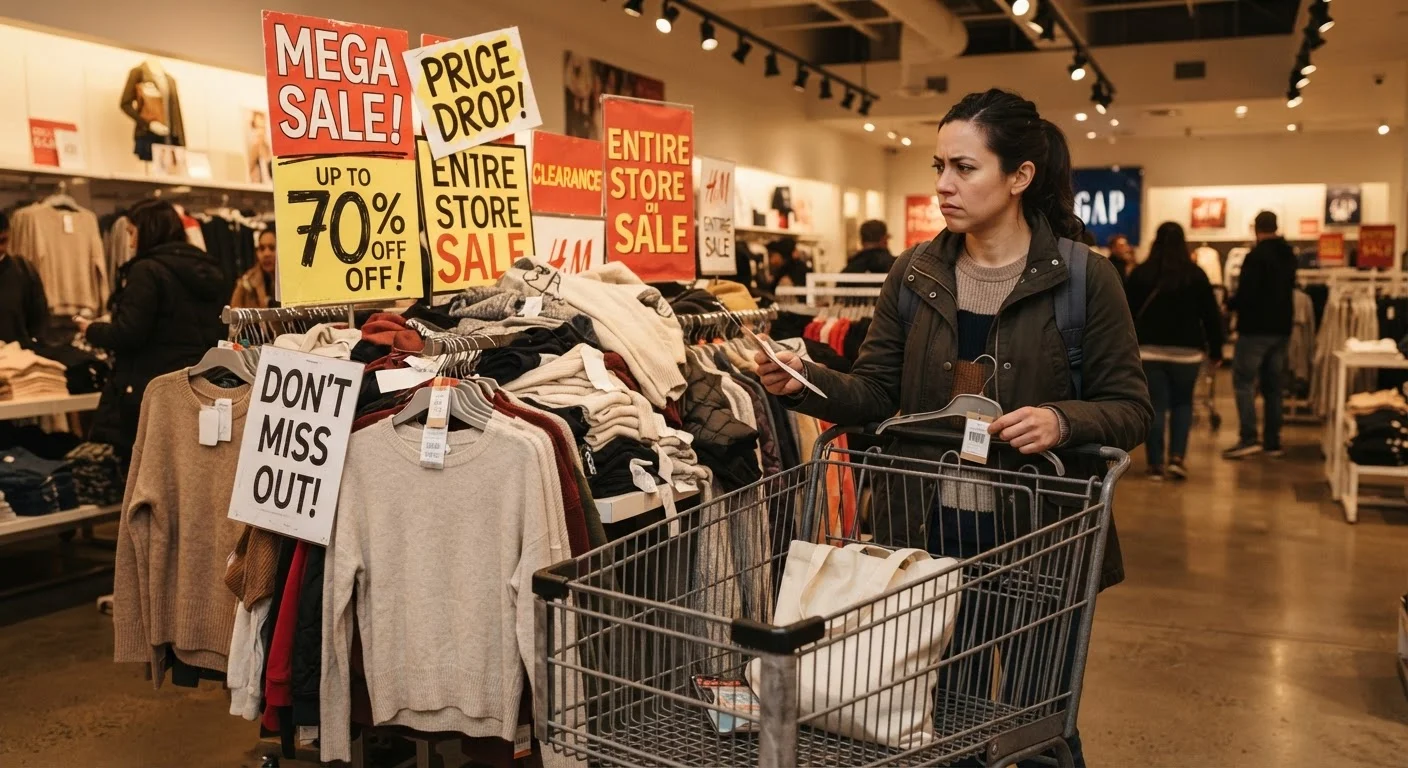
Retailers invest heavily in promotional design because discounts are proven purchase motivators. The percentage figure is prominent and emotionally compelling - it signals opportunity and scarcity in a way that a plain price tag doesn't. That's not an accident. It's by design. For shoppers trying to stretch a budget, recognizing this framing as a marketing tool - rather than a neutral financial fact - is essential. How retailers structure discounts provides a deeper look at the mechanics behind markdowns and promotional pricing.
Myth
A 50%-off label always means I'm paying half the fair market price for that item.
Fact
The discount percentage is calculated from the stated reference price, which may be inflated or rarely charged.
Retailers are legally required in most US states to have charged the reference price for a meaningful period before advertising a markdown - but enforcement varies, and the practice of setting an artificially high "original" price before discounting is well-documented. Consumer advocates often call this anchor pricing: the original figure anchors your perception of value, making the sale price feel like a bargain even when it isn't meaningfully lower than what competitors charge. Always check what other sellers are charging for the same item before treating a percentage label as a reliable signal of value. Anchor pricing and other retail tactics are covered in depth if you want the full picture.
Myth
The bigger the percentage off, the more money I save.
Fact
A 70% discount on a low-cost item can represent fewer dollars saved than a 10% discount on a high-cost one.
Percentages are relative - they tell you nothing about absolute dollar value without knowing the base price. A 70% markdown on a $5 item saves you $3.50. A 10% markdown on a $200 item saves you $20. When you're working within a household budget, the dollar amount retained in your account matters far more than the percentage label on the tag. Train yourself to calculate - or look up - the actual price difference, not just the promotional figure displayed. This habit alone can reshape how you evaluate promotions.
Myth
If I'm buying something anyway, I should stock up when it's on sale.
Fact
Stocking up only saves money if storage costs, spoilage risk, and cash flow impact are factored in.
Buying in bulk at a discount can be smart, but it isn't automatically so. Perishable goods may expire before use. Non-perishables take up storage space that has its own cost. Tying up cash in inventory also has an opportunity cost - that money can't be used for other needs in the meantime. A genuine stockpile deal requires a straightforward calculation: does the unit-price saving exceed any carrying costs, spoilage risk, or financial strain of the upfront spend? If the math doesn't clearly work out, the "deal" may cost more than it saves. See common couponing pitfalls for related traps.
Myth
Sale events like holiday weekends always offer the lowest prices of the year.
Fact
Widely promoted sale events frequently feature selective discounts, and some items are priced the same year-round.
Major promotional windows - end-of-year holidays, back-to-school periods, and similar retail events - do produce genuine markdowns on certain product categories. But research has repeatedly shown that not all items in a sale event are actually discounted relative to their average selling price over the prior months. Some are at their typical price; others carry a nominal reduction. Understanding the retail discount calendar can help you identify which categories typically see authentic reductions at which times of year, rather than assuming every "event sale" item is genuinely cheaper.
Myth
Getting a deal means I spent wisely, regardless of what I bought.
Fact
Any unplanned purchase - regardless of discount - reduces net savings if the item wasn't needed.
The framing of "I saved 40%" can mask a more important truth: you spent 60% of the price on something you may not have needed. Behavioral economists have long noted that the excitement of a perceived deal can override rational purchase evaluation - a pattern sometimes called the deal-seeking bias. Genuine spending discipline means asking whether you would have bought the item at full price. If the answer is no, the discount didn't save you money - it prompted you to spend it. Overlooked savings habits offers a useful counterbalance: focusing on savings you're missing rather than deals you're chasing.
A More Reliable Framework for Evaluating Any Deal
Rather than reacting to a percentage label, apply a consistent set of questions before any purchase:
- What is the item's price history? Free browser tools can show you price fluctuations over time at major retailers, giving you an objective baseline rather than relying on the store's stated original price.
- What is the final dollar cost - and can I afford it today? Calculate the actual out-of-pocket amount. If a discounted item still stretches your budget uncomfortably, the discount doesn't make it financially sound.
- Would I buy this at full price? If the honest answer is no, the discount has manufactured demand that wouldn't otherwise exist - a classic sign that the deal is working for the retailer more than for you.
- What is the per-unit or per-use cost? For consumables or multi-packs, divide the final price by quantity or estimated uses. This is the only number that allows meaningful comparison across different sizes and formats.
Don't Let Discounts Override Your Budget
Spending money on a discounted item you didn't plan to buy still reduces your available cash. Promotions are designed to trigger purchases - not necessarily to serve your financial priorities. If an item wasn't on your list before you saw the deal, pause and ask whether the purchase genuinely fits your needs and budget.
Developing these habits is less about distrust of retailers and more about building a decision framework that's grounded in your actual financial priorities. A pre-checkout deal verification checklist can help you apply these principles consistently before completing any online purchase. And if you want to connect these habits to broader financial goals, the Smart Spending hub offers additional practical frameworks.
Percentage Off Isn't a Price Guarantee
A discount is only meaningful when measured against a legitimate baseline price you could have actually paid. If a retailer routinely marks products up before advertising a markdown, the percentage figure is misleading. Before celebrating a percentage-off deal, verify the item's price history using tools like price-tracking browser extensions or retailer history data.
~60%
Shoppers who bought unplanned items due to a sale
A survey by the National Retail Federation found that a majority of US shoppers report making unplanned purchases specifically because an item was on sale.
3 in 5
Sale items not at their lowest recorded price
Price-tracking analyses across major US retail events have consistently found that a substantial share of 'sale' items are not at their actual historical low price during the promotional period.