

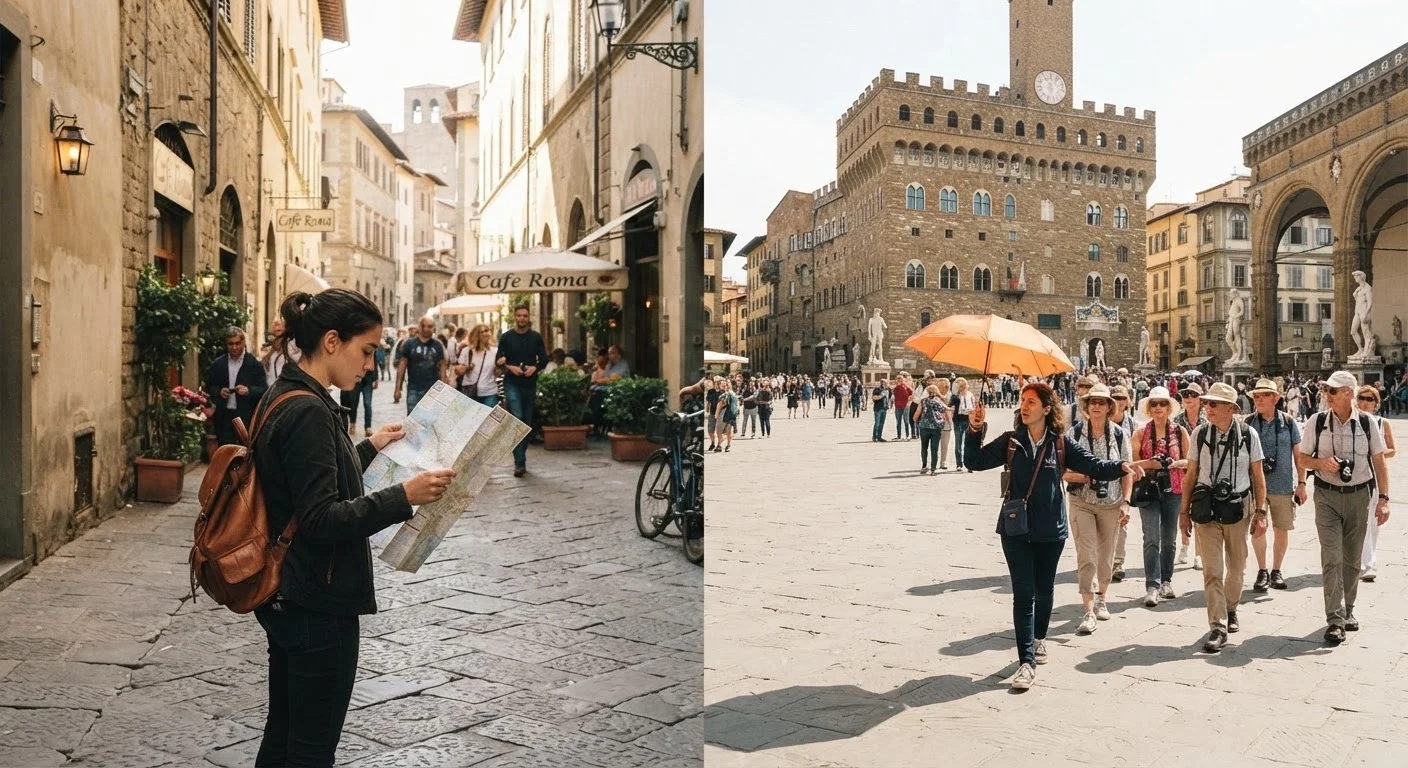
Key Takeaways
- Solo travel offers maximum flexibility but requires more pre-trip research and self-reliance.
- Guided tours reduce planning burden and provide built-in logistics support, often at a higher upfront cost.
- Neither approach is universally better - the right fit depends on your destination, travel style, and experience level.
- Cost comparisons between the two require looking beyond sticker price to what each actually includes.
- First-time international travelers may benefit from a guided tour to build confidence before going independent.
Our Verdict
Solo travel suits those who value autonomy, spontaneity, and the ability to adjust plans on the fly - but it demands time, research, and comfort with uncertainty. Guided tours work well for travelers who prefer structured itineraries, social connection, and expert-led access to destinations, particularly in unfamiliar regions. Neither approach is inherently cheaper or richer as an experience; they serve different traveler needs.
| Best for | Recommended |
|---|---|
| Experienced travelers who want full control over their itinerary | Solo Travel |
| First-time international travelers or those visiting complex or unfamiliar regions | Guided Tours |
| Travelers who want predictable, all-in budgeting with fewer surprises | Guided Tours |
| Those who prioritize off-the-beaten-path discovery and flexible pacing | Solo Travel |
What Solo Travel Actually Involves
Solo travel means you handle every decision independently - transportation, accommodation, meals, and daily itinerary. That autonomy is a genuine advantage: you can linger somewhere unexpected, skip a crowded attraction, or change your destination with no negotiation required.
But the freedom comes with real responsibilities. Before you leave, you'll need to research visa requirements, local transportation options, currency and payment norms, and health or safety considerations for your destination. You'll also need to stay organized on the road, manage your own luggage logistics, and troubleshoot when things go sideways - missed trains, full hotels, or language barriers included.
Costs in solo travel are entirely variable. Budget deeply and you can travel lean; spend liberally and costs climb fast. Our guide to what budget travel actually means breaks down how solo travelers can frame their spending approach realistically rather than optimistically.
One underappreciated factor: solo travel often has a higher time cost before departure. Planning a multi-stop trip independently can take dozens of hours. That investment pays off in a highly personalized experience - but it's real labor that guided tours absorb on your behalf.
What Guided Tours Actually Involve
A guided tour packages the core elements of a trip - transportation, accommodation, meals, and site visits - into a pre-arranged structure. A local or professional guide leads the group, provides historical and cultural context, and handles logistics that would otherwise fall to you.
The practical benefits are significant. You don't need to research every transit connection or worry about language barriers at every step. Group size varies widely, from intimate small-group tours of six to eight people to large coach-based operations with thirty or more. The experience differs substantially between those formats.
| Solo Travel | Guided Tours | |
|---|---|---|
| Itinerary flexibility | Full control, adjust anytime | Fixed schedule, limited deviation |
| Planning burden | High - research falls to you | Low - operator handles logistics |
| Upfront cost clarity | Variable, harder to predict | Bundled, easier to budget |
| Social interaction | Self-directed, requires effort | Built-in with group members |
| Local expertise access | Varies by traveler's research | Guide provides context and access |
| Suitable for complex destinations | Requires significant preparation | Operator manages complexity |
One common misconception is that guided tours are always more expensive. For destinations where independent logistics are complex - remote regions, countries with limited tourist infrastructure, or places requiring permits and local fixers - a tour can actually offer comparable or better value when you account for what's included. It's worth reviewing accommodation cost trade-offs to understand how lodging choices affect either approach.
Tours do constrain your pace. You'll move with the group's schedule, share experiences with strangers, and have limited ability to deviate. Travelers who find that frustrating tend to be poor fits for most group formats.
Consider a Hybrid Approach
Many experienced travelers combine both formats strategically - joining a guided tour for a challenging or unfamiliar leg of a trip, then traveling independently elsewhere. Some tour operators offer shorter day-tour options that fit neatly into a solo itinerary, giving you local expertise without surrendering your overall autonomy.
Key Trade-Offs to Weigh Before You Commit
The decision rarely comes down to one factor. Consider how each approach performs across the dimensions that matter most to your trip:
- Flexibility: Solo travel wins outright. Guided tours trade flexibility for convenience.
- Social experience: Tours create built-in social interaction; solo travel requires more deliberate effort to meet people, though many travelers find hostels and local meetups fill that gap naturally.
- Safety and support: In regions with complex logistics, language barriers, or elevated safety considerations, a reputable guided tour provides a meaningful support layer that solo travelers must replicate through thorough research.
- Cost predictability: Tours bundle costs upfront; solo travel costs fluctuate. Neither is categorically cheaper - it depends on your choices.
- Depth of experience: A knowledgeable local guide can unlock context and access that independent travelers rarely find. Solo travelers, however, often stumble into unplanned experiences that feel more personal and serendipitous.
If you're navigating this decision for your first independent trip, our first-time trip planning guide walks through the full planning process in plain terms. And regardless of which format you choose, understanding your travel insurance options is a step neither solo travelers nor tour participants should skip.