

Key Takeaways
- Brake pads typically wear out 2-3 times faster than brake discs and should be inspected more frequently.
- Ignoring worn pads leads to metal-on-metal contact that damages discs - turning a cheaper fix into a costly one.
- Squealing usually signals worn pads; grinding, vibration, or pulling often points to disc damage.
- Discs can sometimes be resurfaced rather than replaced, but only if enough metal thickness remains.
- Both components should always be replaced in axle pairs to maintain even braking force.
Option A
Brake Pads
The consumable friction material designed to wear down.
Best for: Understanding rapid wear cycles and the first line of brake system maintenance.
Option B
Brake Discs (Rotors)
The durable metal surface that pads clamp against to stop the vehicle.
Best for: Understanding longer-term wear, warping risks, and when full replacement is unavoidable.
If your brakes squeal but stopping feels normal
Brake Pads
Squealing is the classic wear indicator signal built into most brake pads. Replacing pads promptly can prevent disc damage entirely.
If you feel a pulsing or vibration through the brake pedal
Brake Discs (Rotors)
Pedal pulsation typically indicates disc warping or uneven wear. Pads alone won't resolve this - the discs need inspection and likely replacement.
If your car pulls to one side when braking
Brake Discs (Rotors)
Uneven disc wear or a stuck caliper causes imbalanced braking force. A qualified mechanic should assess both the disc and caliper before any part is replaced.
If you hear a harsh metal grinding noise
Brake Pads
Grinding means pad material is fully depleted and metal is contacting the disc. Replace pads immediately and have discs checked for scoring.
How Each Component Does Its Job
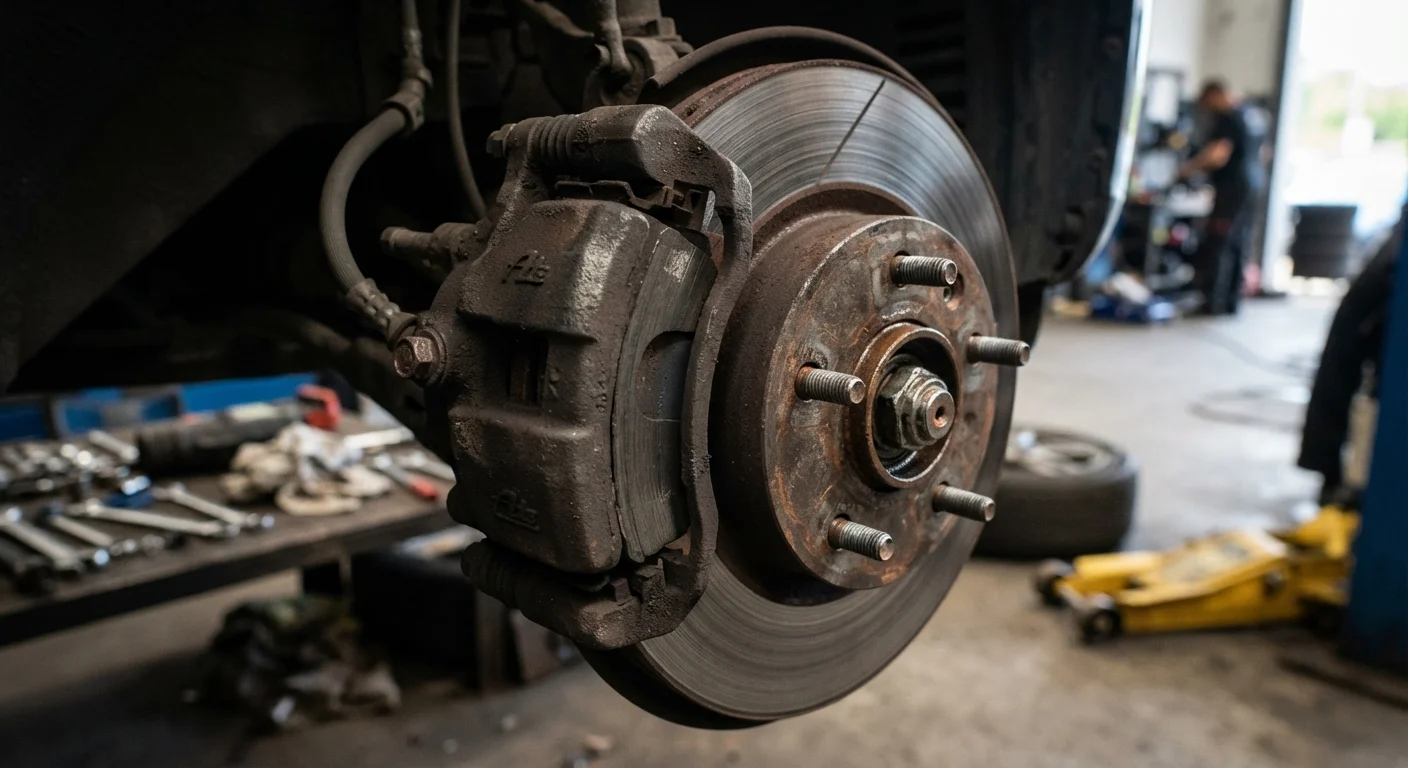
Your braking system relies on controlled friction. When you press the pedal, hydraulic pressure pushes the brake caliper, which squeezes the brake pads against a rotating metal disc - the brake rotor. That friction converts kinetic energy into heat, slowing the wheel.
Pads are made from friction material bonded to a metal backing plate. They are intentionally designed as the sacrificial component - they absorb wear so the disc doesn't have to. Discs are cast iron or composite metal and are built to last significantly longer, but they are not immune to wear, heat stress, or damage.
Understanding this relationship matters because neglecting pads long enough always puts discs at risk. A worn pad eventually exposes bare metal, which grinds directly into the disc surface - turning a routine pad swap into a more involved and expensive repair. For a broader look at how small oversights compound into bigger damage, see common habits that quietly damage your car.
| Criterion | Brake Pads | Brake Discs (Rotors) |
|---|---|---|
| Primary function | Friction material that clamps the disc | Rotating surface that pads grip |
| Typical lifespan | 25,000-65,000 miles | 50,000-70,000+ miles |
| Designed to wear | Yes - sacrificial component | No - but wears over time |
| Main failure mode | Friction material depletion | Thinning or heat warping |
| Key warning sign | Squealing or grinding noise | Pedal pulsation or vibration |
| Can be resurfaced? | No - replaced only | Sometimes, if above minimum thickness |
| Replacement frequency | More frequent | Less frequent |
Wear Patterns and Warning Signs
Brake pads wear predictably from the inside out. Most pads include a thin metal wear indicator tab that contacts the disc when material runs low, producing a deliberate high-pitched squeal - your cue to book an inspection. On average, pads last roughly 25,000 to 65,000 miles depending on driving style, vehicle weight, and pad compound, though city driving with frequent stopping accelerates wear considerably.
Discs wear more gradually but are vulnerable to two specific problems: thinning and warping. Thinning occurs from repeated pad contact over time. Warping - technically uneven thickness variation - results from heat stress, often caused by aggressive braking or allowing pads to wear completely through. A warped disc creates the tell-tale pedal pulsation many drivers mistake for a suspension issue.
~70%
Braking force handled by front brakes
Front brakes bear the majority of stopping load due to weight transfer during deceleration, which is why front pads and discs typically wear faster than rear ones.
3mm
Minimum safe pad thickness
Most automotive guidelines recommend replacing brake pads at or before 3mm of remaining friction material to avoid metal contact with the disc.
Additional disc warning signs include visible scoring (deep grooves on the disc face), a rust lip around the disc edge that extends unusually far inward, or a thickness measurement below the manufacturer's minimum specification stamped on the disc itself.
If warning signs are ignored and braking becomes compromised, the stakes move beyond maintenance costs. Understanding how to respond to brake failure before it happens can make a critical difference.
Replacement: What to Expect and When
Pads should be inspected at every tyre rotation - visually through the wheel spokes, most pads are visible without removal. A thickness of less than 3mm is generally considered the replacement threshold, though some mechanics recommend acting at 4mm for added safety margin.
Discs can sometimes be resurfaced (machined flat) rather than replaced outright, but only if the remaining metal thickness exceeds the minimum specification. Many modern discs are manufactured thinner than older designs, leaving little margin for resurfacing - replacement is often the practical outcome regardless.
Disc Resurfacing: Worth It?
Resurfacing (also called machining or turning) removes a thin layer of metal to restore a flat disc surface. It costs less than full replacement but is only viable if the disc is above its minimum thickness spec. Many mechanics measure disc thickness before recommending this option. If the disc is close to minimum, replacement typically offers better long-term value since resurfacing will bring it below spec sooner.
Always replace brake components in axle pairs - both front or both rear simultaneously. Replacing only one side creates unequal braking force, which can cause the vehicle to pull during stops. This applies to both pads and discs.
If you are unsure about your brakes' condition, a qualified mechanic can measure pad thickness and disc thickness with calipers and assess caliper function in a single inspection visit. Brakes are a safety-critical system - when in doubt, have them professionally checked rather than deferring the decision.