

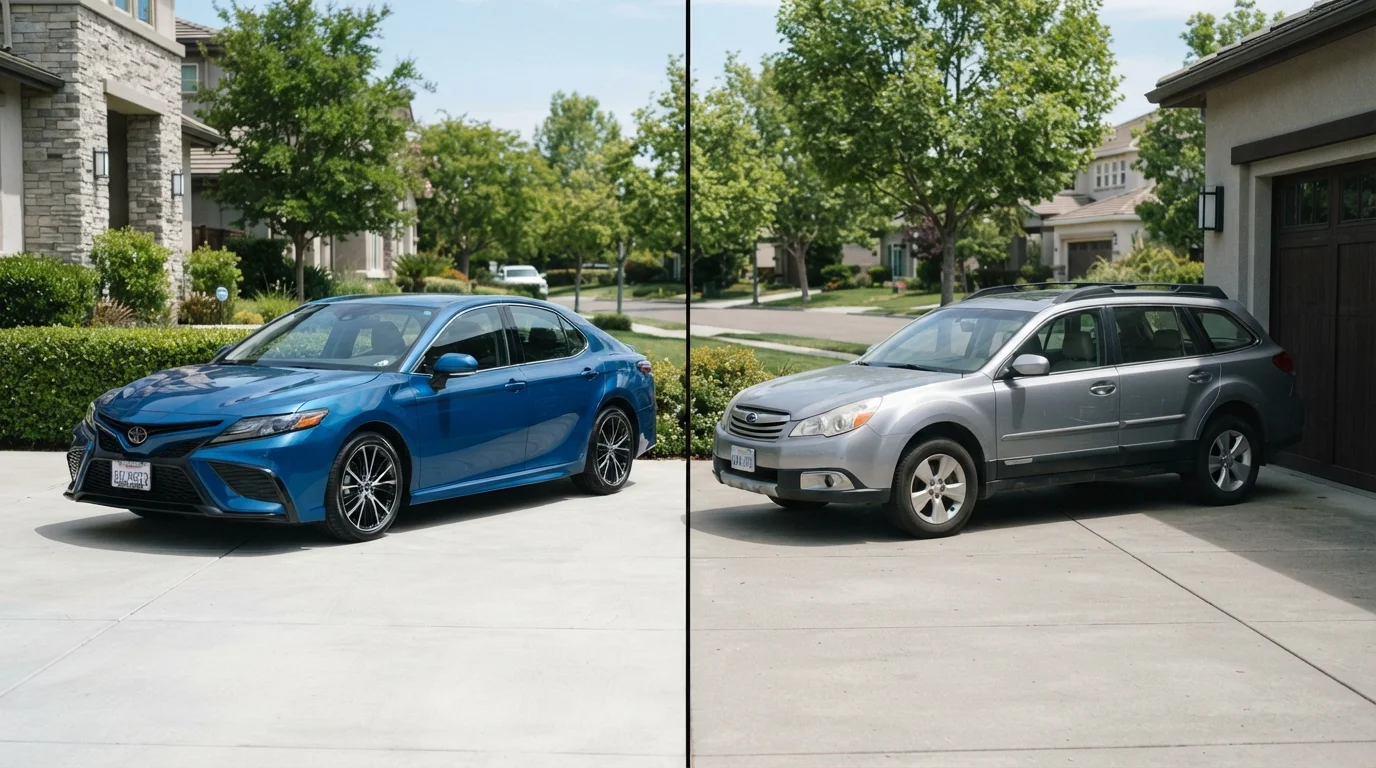
Key Takeaways
- Depreciation is the single largest ownership cost - new cars lose value fastest in the first three years.
- Used cars often carry higher insurance rates for older models but lower total premiums due to lower vehicle value.
- Financing costs on new cars can add thousands of dollars over a loan term, even at competitive rates.
- Certified pre-owned programs can close some of the reliability gap between new and used vehicles.
- Total cost of ownership depends heavily on the specific vehicle, mileage, and how long you plan to keep it.
Option A
New Car
The warranty-backed, feature-rich choice with a higher entry cost.
Best for: Drivers who prioritize reliability guarantees, the latest safety tech, and predictable near-term maintenance expenses.
Option B
Used Car
The lower-sticker option that shifts cost risk toward maintenance.
Best for: Budget-conscious buyers willing to accept some uncertainty in exchange for a significantly reduced purchase price and slower depreciation.
If you drive high mileage and want to minimize repair surprises
New Car
A factory warranty and standard roadside assistance provide a buffer against unexpected repair bills, which matters most when you're putting significant miles on a vehicle.
If reducing your monthly outlay is the primary goal
Used Car
Lower purchase price and reduced depreciation exposure typically translate to lower monthly payments and less money tied up in a depreciating asset.
If you plan to sell or trade in within three years
Used Car
New cars depreciate most steeply in the first few years; buying used lets someone else absorb that initial value drop.
If you want predictable servicing costs for the next several years
New Car
Many new vehicles include complimentary maintenance packages, and factory warranties cover major mechanical failures that can otherwise derail a budget.
Why the Sticker Price Is Just the Starting Line
Most buyers focus almost entirely on the purchase price when choosing between a new and used vehicle. That figure matters, but it represents only one slice of what you'll actually spend. Total annual ownership costs include depreciation, financing, insurance, fuel, maintenance, and registration - and the balance between those categories shifts considerably depending on whether the car is new or used.
Understanding where money actually goes over a three-to-five-year ownership window gives you a far more accurate basis for comparison. The sections below break down each major cost driver.
| Criterion | New Car | Used Car |
|---|---|---|
| Purchase Price | Higher - full retail value | Lower - post-depreciation value |
| Depreciation Rate | Steepest in first 1-3 years | Slower - curve already flattened |
| Financing Costs | Higher total interest on larger loan | Lower principal; rates may be slightly higher |
| Insurance Premiums | Higher - based on greater vehicle value | Generally lower total premium |
| Warranty Coverage | Full factory warranty included | Limited or none; CPO extends coverage |
| Maintenance Costs | Lower near-term; often complimentary | Higher risk of repair costs over time |
| Registration Fees | Higher in value-based fee states | Lower due to reduced vehicle value |
Depreciation: The Cost That Rarely Gets Talked About
Depreciation - the loss in a vehicle's market value over time - is generally the largest single cost of car ownership, yet it's invisible on a monthly statement. New cars typically lose between 15% and 25% of their value in the first year alone, and around 50% over five years, though these figures vary by make, model, and market conditions.
A used car that is two or three years old has already absorbed that steepest portion of the depreciation curve. That means a buyer of a used vehicle loses less value per year simply by entering at a lower point on the curve. Common ownership cost myths often obscure this dynamic, leading drivers to overestimate the savings on new cars and underestimate the depreciation advantage of a well-chosen used vehicle.
~20%
Average new car value lost in year one
Industry estimates consistently place first-year depreciation for new vehicles in the 15%-25% range, depending on make, model, and market demand.
~50%
Value lost over five years on average
Data from automotive valuation analysts suggests most new vehicles retain roughly half their original value after five years, though high-demand models vary significantly.
$1,000+
Typical annual repair cost advantage for new cars
Consumer expenditure research suggests new car owners spend considerably less on unplanned repairs annually compared to owners of vehicles with over 75,000 miles.
Financing, Insurance, and Registration
Financing costs compound the purchase price difference. Even a modest interest rate applied to a $35,000 new car loan generates thousands of dollars in interest over a 60-month term. Used car loans sometimes carry slightly higher interest rates from lenders, but the lower principal typically keeps total interest paid well below that of a new car loan.
Insurance costs are more nuanced. Lenders typically require comprehensive and collision coverage on financed vehicles regardless of age, but premiums are partly based on a vehicle's replacement value - so newer, more expensive cars generally cost more to insure. Registration and state fees are often calculated as a percentage of vehicle value, again tilting costs toward new cars in most states.
For a more detailed look at these line items together, see hidden costs that surprise new car owners.
Maintenance, Repairs, and the Reliability Trade-Off
This is where used cars carry genuine risk. Older vehicles are more likely to need repairs, and out-of-pocket costs for components like transmissions, suspension parts, or timing systems can quickly erode any savings from a lower purchase price. The key variable is reliability history - some vehicles remain highly dependable well past 100,000 miles; others begin generating costly issues much sooner.
Certified pre-owned (CPO) programs from manufacturers offer a middle ground: used vehicles that have passed a multi-point inspection and carry an extended limited warranty. These typically cost more than non-certified used cars but offer a layer of protection closer to buying new. First-time buyers especially benefit from understanding this trade-off before signing any paperwork.
CPO Vehicles: A Middle-Ground Option
Certified pre-owned programs vary by manufacturer and dealer network, so warranty terms, mileage limits, and inspection standards differ. Before assuming a CPO vehicle offers the same protection as a new car warranty, review the specific program terms in writing. Coverage exclusions are common and can affect older or higher-mileage components.
If you're weighing a different powertrain altogether, the electric vs. petrol cost comparison adds another dimension worth reviewing, since EVs carry their own depreciation and maintenance patterns distinct from conventional vehicles.