

Key Takeaways
- Fatal crash rates are significantly higher at night despite fewer vehicles on the road.
- Human night vision is far more limited than most drivers assume, especially at highway speeds.
- Fatigue, impaired drivers, and reduced reaction time compound nighttime hazards simultaneously.
- Simple habits - clean windshields, proper headlight aim, increased following distance - meaningfully reduce risk.
- Overdriving your headlights is one of the most common and preventable nighttime mistakes.
Why Night Driving Deserves More Caution Than Most Drivers Give It
Most drivers feel comfortable behind the wheel after dark. Familiar routes, light traffic, and years of uneventful night trips can build a false sense of security. The data tells a different story: according to the National Safety Council, traffic fatality rates are roughly three times higher at night than during daylight hours, even though fewer vehicles are on the road.
The reasons aren't mysterious - reduced visibility, increased likelihood of impaired or fatigued drivers, and the way darkness masks hazards all converge at once. Understanding each specific risk is the first step toward managing it. The list below breaks down what actually makes night driving dangerous, and what you can do about it without specialized equipment or expertise.
Your headlights cover far less road than you think
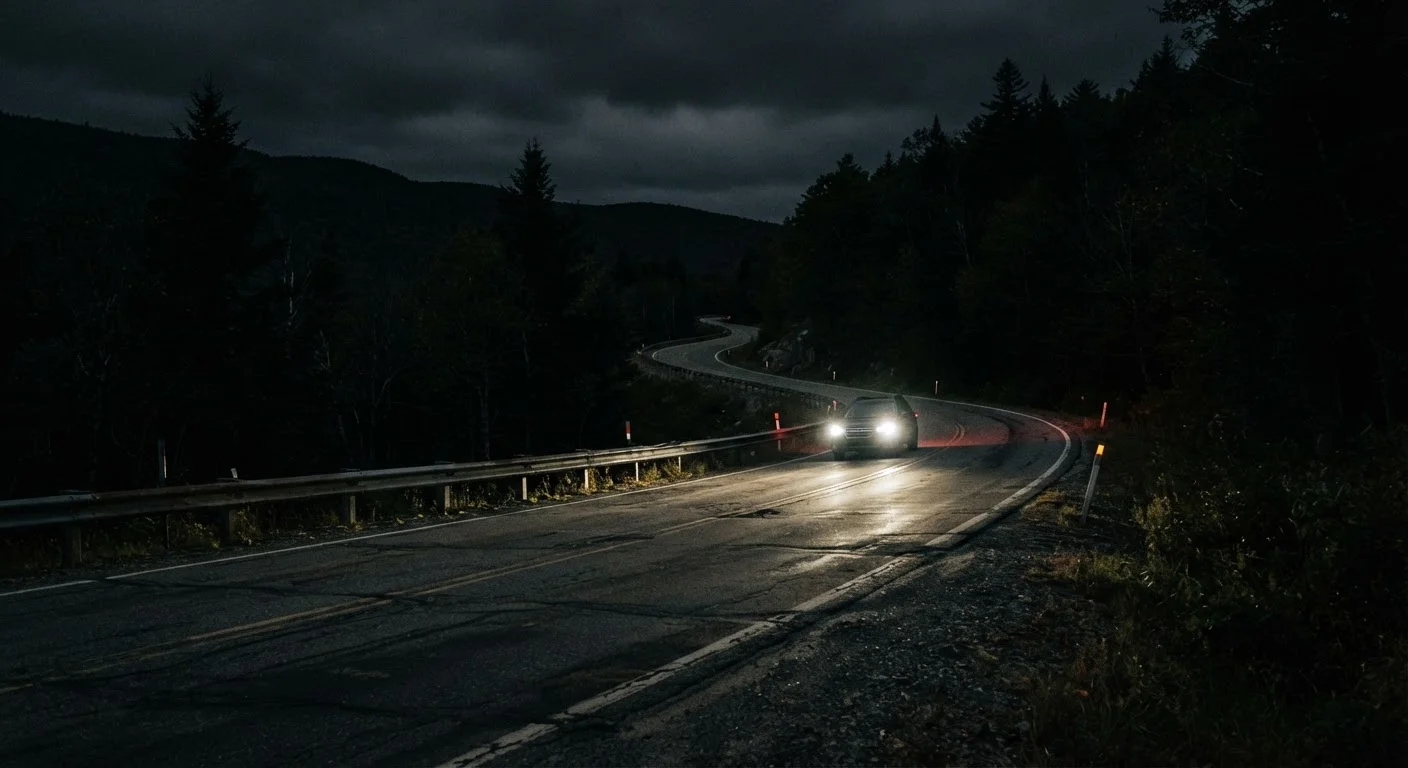
Standard low-beam headlights typically illuminate roughly 160-200 feet ahead. At 60 mph, a vehicle travels about 88 feet per second - meaning you have barely two seconds of lit road ahead of you. High beams extend this to around 350-400 feet, but many drivers use them rarely or not at all on open roads where they're legal and appropriate.
This is called overdriving your headlights: moving at a speed where your stopping distance exceeds your sight distance. It's a setup for unavoidable collisions with debris, animals, or stopped vehicles. Use high beams on unlit rural roads, dim them for oncoming traffic, and check that your headlights are properly aimed - misaligned lights are common and significantly reduce effective range.
At 60 mph, you may have less than two seconds of lit road ahead on low beams.
Human night vision degrades more than drivers realize
The human eye adapts slowly to darkness and never reaches the sensitivity of daylight vision. Contrast sensitivity - the ability to distinguish objects from their backgrounds - drops sharply after dark, making it harder to spot pedestrians, cyclists, and animals even when they're technically within headlight range.
Older drivers face a compounded challenge: the lenses of the eye naturally yellow and thicken with age, reducing light transmission and increasing glare sensitivity. A driver in their 50s may need significantly more light to see as clearly as they did at 25. This doesn't mean older drivers should avoid night driving, but it does mean they should leave more margin - longer following distances, lower speeds on unlit roads, and earlier departures when possible.
Contrast sensitivity drops sharply after dark, making hazard detection genuinely harder.
Impaired drivers are significantly more common at night
Drunk and drug-impaired driving peaks during overnight hours, particularly on weekends. NHTSA data consistently shows that alcohol-involved fatal crashes are far more concentrated between midnight and 3 a.m. than during daytime hours. As a sober driver, you can't control other drivers - but you can adjust your behavior to build in more buffer.
Increase your following distance, stay alert to erratic movement (drifting, inconsistent speed, wide turns), and be especially cautious at intersections, where impaired drivers frequently run red lights. Staying in the center or left lane on multi-lane roads can also reduce exposure to drivers drifting from the shoulder. Defensive driving principles apply here directly - anticipate unpredictable behavior rather than assuming everyone else will drive predictably.
Alcohol-involved fatalities are heavily concentrated in overnight hours, especially on weekends.
Fatigue peaks during the same hours as traffic danger
The body's circadian rhythm creates natural dips in alertness between roughly 2-5 a.m. and again in the early-to-mid afternoon. The overnight window coincides precisely with peak impaired-driving hours, meaning fatigued and impaired drivers are often sharing the road at the same time. Fatigue impairs reaction time, narrows attention, and causes microsleeps - brief, involuntary lapses in consciousness that can last several seconds.
The most honest rule: if you're fighting to stay alert, you're already impaired. Pulling over to rest, switching drivers, or delaying travel is never an overreaction. Understanding how fatigue affects judgment helps you recognize when your own driving is compromised before an incident forces the lesson.
Microsleeps - involuntary lapses lasting several seconds - can occur without any warning.
Glare from oncoming headlights disrupts vision longer than expected
When a bright headlight hits dark-adapted eyes, recovery can take 5-10 seconds - during which vision is meaningfully compromised. At highway speeds, that's several hundred feet of reduced visibility. Modern adaptive headlights and higher-intensity LEDs and HIDs, while safer overall, can be more blinding when misaligned or improperly installed.
Practical counters: avoid looking directly at oncoming headlights; instead, shift your gaze to the right edge of your lane using lane markings as a guide. Keep your windshield clean inside and out - interior film dramatically increases glare scatter and is often overlooked. Anti-reflective coatings on glasses, if you wear them, can also help. These are small adjustments with outsized returns.
Glare recovery can take up to 10 seconds - hundreds of feet at highway speed.
Wildlife and road debris are much harder to spot
Deer strikes spike in the fall, but wildlife crossings happen year-round - and animals often appear suddenly at the edge of headlight range. Deer eyes reflect light, which can provide a brief warning, but many animals don't, and neither does road debris. A tire fragment, fallen load, or open pothole can be almost invisible until you're on top of it.
On rural or wooded roads, scan the full width of the road and both shoulders, not just the center. Reducing speed - even by 10-15 mph below the posted limit - dramatically expands your reaction window. Following distance matters here too: a driver following closely behind another vehicle loses any advantage the lead car's lights might have provided.
Slowing by even 10-15 mph on rural roads can double your available reaction time.
Drive Smarter After Dark
Night driving will always carry elevated risk, but most of that risk is manageable with awareness and a few deliberate habits. Whether it's increasing your following distance, scheduling a rest stop, or keeping your windshield clean, these are low-effort adjustments with real safety returns.
Quick Pre-Night-Drive Checks
Before driving after dark, take two minutes to check: headlights are clean and functioning, windshield is free of interior film and exterior bugs or streaks, and mirrors are adjusted for nighttime glare reduction (most rearview mirrors have a night-mode flip switch). These small checks take little time but meaningfully improve visibility before you even leave the driveway.
For a broader look at how conditions shape smart speed choices, see why the posted speed limit isn't always the safe speed. And if nighttime fatigue is a recurring concern, driver fatigue and its impact on judgment covers the warning signs in depth.