

Key Takeaways
- A gym membership is not required to build strength, endurance, or consistency.
- Short workouts spread throughout the day can be just as effective as longer sessions.
- Soreness after exercise is not a reliable indicator of a productive workout.
- Strength training does not cause women to develop bulky muscle mass.
- Age is not a barrier to starting or benefiting from regular physical activity.
Why Fitness Myths Are Particularly Sticky
Fitness misinformation tends to persist because it often contains a kernel of logic, gets repeated by well-meaning sources, and taps into real anxieties about time, money, and self-image. Many of these beliefs don't just mislead - they actively prevent people from starting. Understanding where these myths fall apart is a practical first step toward building a realistic, affordable fitness routine that fits your actual life.
The myths below are among the most commonly cited reasons people delay or abandon exercise. Each one is grounded in a misunderstanding that evidence can address directly.
Myth
You need a gym membership to get fit.
Fact
Effective exercise requires movement and consistency - not a facility or equipment.
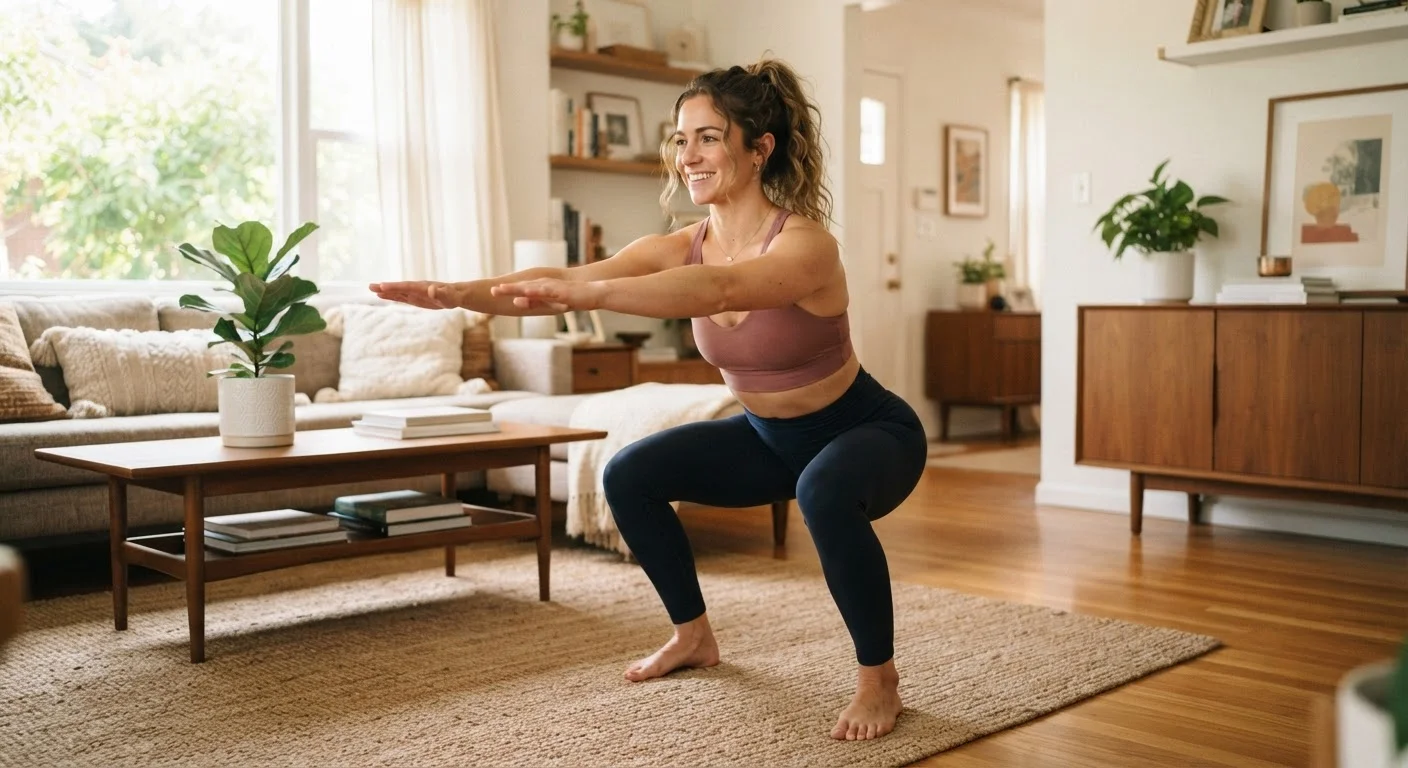
Gyms offer convenience and variety, but they are far from a prerequisite for fitness. Research consistently shows that bodyweight exercises - such as squats, lunges, push-ups, and planks - can build meaningful strength and cardiovascular fitness when performed regularly. The principles of bodyweight training are well-established and require zero cost to apply. Walking, stair climbing, and outdoor movement are also evidence-backed forms of physical activity that carry real health benefits.
Myth
If you're not sore the next day, the workout didn't count.
Fact
Delayed onset muscle soreness (DOMS) is one signal of physical stress - but its absence doesn't mean you didn't train effectively.
DOMS is caused by microscopic muscle fiber damage, particularly from exercises that involve lengthening a muscle under load. It tends to appear after trying new movements or ramping up intensity. As your body adapts, the same workout causes less soreness - which is actually a sign of progress, not failure. Performance markers like improved endurance, more repetitions, or better form are more reliable indicators of an effective session than how stiff you feel afterward.
Myth
You need at least an hour to make exercise worth it.
Fact
Even 10-20 minute movement sessions provide measurable health benefits when performed consistently.
The U.S. Department of Health and Human Services' Physical Activity Guidelines for Americans note that moderate-intensity aerobic activity is beneficial in bouts of any length. Shorter, more frequent sessions can accumulate to meet weekly targets. For people with tight schedules or low energy reserves, splitting movement into two or three brief sessions can be a more sustainable approach than banking on a single long workout that's easy to skip. Consistency over time outweighs any single session's duration.
Myth
Strength training will make women look bulky.
Fact
Building significant muscle mass requires specific hormonal conditions, very high training volumes, and often dietary manipulation - factors not present in typical strength routines.
Women generally have lower testosterone levels than men, which limits the rate and ceiling of muscle hypertrophy. Resistance training for most women leads to improved muscle tone, bone density, metabolic health, and functional strength - not dramatic size increases. The CDC and major physical therapy bodies recommend strength training for all adults, including women, as part of a balanced fitness approach. Fear of bulkiness is one of the most common - and unfounded - barriers that keeps women away from one of the most beneficial forms of exercise available.
Myth
It's too late to start exercising if you're older.
Fact
Adults of any age can gain meaningful fitness benefits from regular physical activity, including strength, balance, and cardiovascular health.
Multiple studies, including those published in journals such as the British Journal of Sports Medicine, have found that older adults who begin resistance or aerobic training show significant improvements in muscle strength, functional mobility, and quality of life. The timeline to benefit is shorter than many assume. Exercise for older adults does require thoughtful progression and awareness of individual health conditions - consulting a healthcare provider before starting is especially important for this group - but age alone is not a disqualifying factor.
What Actually Gets People Moving - and Keeps Them There
The research on exercise adherence points to a few consistent themes: routines that fit into existing schedules, activities that feel manageable (not punishing), and modest, visible progress. None of these require a gym, expensive equipment, or hours of free time.
This Is General Health Information
The content in this article is for educational purposes only and is not a substitute for personalized medical or fitness advice. Before beginning any new exercise program, especially if you have an existing health condition, injury, or are in a special population group such as pregnant, elderly, or managing a chronic illness, consult a qualified healthcare professional.
If you're working without equipment, the full practical overview of home fitness covers how to structure sessions, progress safely, and stay motivated over time. For those who enjoy lower-intensity activity, walking as a fitness tool has genuine benefits - alongside honest limitations worth understanding.
Progress in fitness is rarely linear. If your results plateau, that's common and addressable. Understanding why a fitness routine stops working can help you make targeted adjustments rather than abandoning the effort entirely. And it's worth remembering that rest is not the enemy of progress - rest days are a built-in part of effective training, not a lapse in discipline.
This article is for general informational and educational purposes only and does not constitute medical or fitness advice. Consult a qualified healthcare professional before beginning any new exercise program, particularly if you have health conditions or concerns.