

Key Takeaways
- Effective home fitness requires no equipment and very little dedicated space.
- A balanced routine includes strength, cardio, and mobility work each week.
- Progressive overload - gradually increasing challenge - drives continued improvement.
- Rest and recovery are as important as the workouts themselves.
- Consistency over perfection is the most reliable path to lasting results.
Why Home Fitness Works
The idea that real fitness requires a gym membership, expensive equipment, or hours of free time is one of the most persistent myths in health culture. Research consistently shows that bodyweight exercise performed at home can produce meaningful gains in strength, cardiovascular health, and flexibility - especially for people new to regular movement.
Home training removes common barriers: commute time, membership fees, intimidating environments, and rigid class schedules. For budget-conscious adults juggling work and family, those friction points are exactly what derail consistency. Several fitness myths keep people from ever starting - chief among them the belief that a gym is a prerequisite.
The CDC recommends that adults aim for at least 150 minutes of moderate-intensity aerobic activity per week, plus muscle-strengthening activities on two or more days. All of that is achievable at home, with no cost beyond the space you already have.
150 min
Weekly moderate aerobic activity recommended
According to the CDC's Physical Activity Guidelines for Americans, adults should target at least 150 minutes of moderate-intensity aerobic movement per week.
2x/week
Minimum strength-training days recommended
The CDC and ACSM both recommend muscle-strengthening activity on at least two days per week for general adult health.
~6×6 ft
Minimum floor space needed for most home workouts
Exercise physiologists note that most fundamental bodyweight movements can be performed safely in a small, unobstructed area of this size.
Setting Up Your Space on a Budget
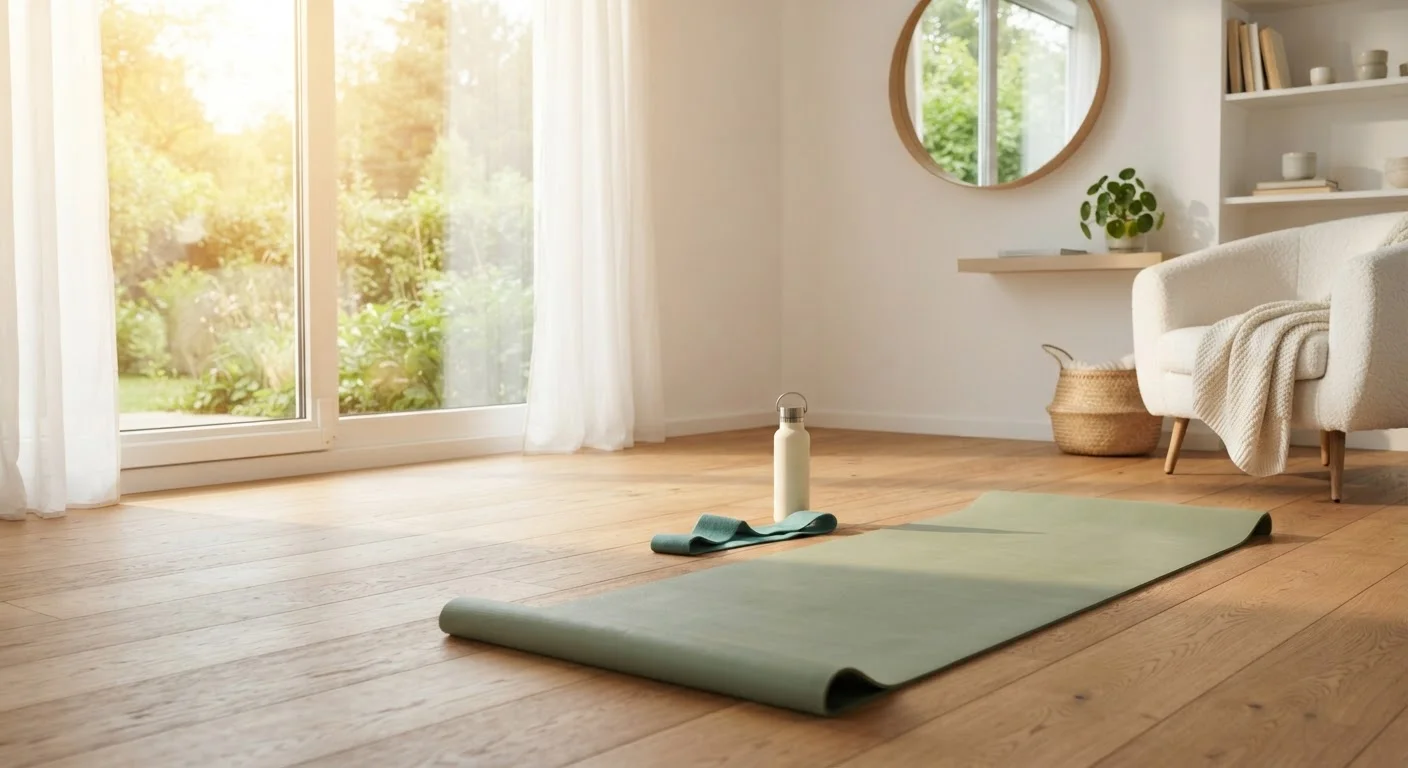
You don't need a dedicated room or costly gear. A clear area roughly 6 feet by 6 feet - enough to lie down and extend your arms - is sufficient for the vast majority of home workouts. A non-slip surface matters more than square footage; a folded blanket or inexpensive yoga mat works well on hard floors.
If you want to add low-cost tools over time, resistance bands and a jump rope offer significant training variety for minimal outlay. These items are not required to start, but they expand exercise options as you advance. Avoid purchasing equipment in bulk before you've established a consistent habit - most people find they need far less than they initially assume.
Start With What You Have
Resist the urge to buy equipment before you've built a habit. Commit to two weeks of bodyweight-only sessions first. If you're still showing up consistently after that, you've earned the right to consider adding tools. This approach also reveals what you actually need versus what you assumed you would.
For more structured guidance on starting from scratch, see our complete bodyweight training starting point.
Planning a Balanced Routine
A well-rounded home routine addresses three components: muscular strength and endurance, cardiovascular fitness, and mobility or flexibility. Neglecting any one of these over time increases injury risk and limits overall progress.
- Strength work: Bodyweight exercises such as squats, push-ups, lunges, and planks challenge major muscle groups without equipment.
- Cardio: Jumping jacks, stair climbing, brisk walking, and high-knees elevate heart rate effectively indoors or in a small outdoor area.
- Mobility: Dynamic stretching before exercise and static stretching afterward support joint health and reduce soreness.
A simple starting framework might be three sessions per week of 20-30 minutes, alternating between strength-focused and cardio-focused days with a mobility cooldown each time. If time is tight, a focused short session is far better than skipping entirely - our guide on getting the most from a 20-minute home workout covers exactly this scenario.
Schedule workouts like appointments - write them in your calendar with a set time and treat cancellation the same way you would a meeting. Vague intentions ('I'll exercise sometime today') are far less likely to happen.
Behavioral research on habit formation consistently shows that implementation intentions - specific when/where/how plans - significantly increase follow-through rates.
If you can only do one type of exercise, prioritize strength training over steady-state cardio early in your fitness journey. Muscle tissue supports metabolism, joint stability, and functional daily movement.
Evidence from exercise science indicates that resistance training produces broad health benefits including improvements in cardiovascular markers, bone density, and insulin sensitivity.
Progressing Safely Over Time
The principle of progressive overload - gradually increasing the demand placed on your body - is what drives continued improvement. Without it, the same routine becomes maintenance rather than development. At home, progression doesn't require heavier weights; it can mean more repetitions, slower tempo, reduced rest time, or more challenging movement variations.
For example, a standard push-up can progress to a close-grip push-up, then an incline push-up with feet elevated, increasing demand on the chest, shoulders, and triceps incrementally. Tracking workouts in a simple notebook helps you see where you've progressed and where to push next.
Check In Before You Ramp Up
Increasing workout intensity too quickly is one of the leading causes of home-exercise injuries. A general guideline used by many fitness professionals is to increase total weekly volume by no more than 10% at a time. If you have cardiovascular conditions, bone or joint issues, or have been sedentary for an extended period, consult a healthcare professional before significantly increasing exercise intensity.
Before beginning any new exercise program, especially if you have existing health conditions, it's worth reviewing the pre-workout readiness checklist and consulting a qualified healthcare professional.
Recovery, Rest, and Injury Prevention
Rest is not optional - it's when the body adapts and strengthens. Most adults benefit from at least one to two full rest days per week. Signs that you may need more recovery include persistent muscle soreness lasting more than 72 hours, declining performance, disrupted sleep, or unusual fatigue.
Common home-workout injuries typically involve overuse or poor form rather than acute trauma. Prioritizing technique over intensity - especially when learning new movements - significantly reduces risk. If pain (as distinct from normal muscle fatigue) occurs during exercise, stop and allow time to recover before resuming. Persistent or sharp pain warrants evaluation by a healthcare professional.
Hydration, adequate sleep, and balanced nutrition all support recovery. For practical guidance on everyday eating habits that complement an active lifestyle, explore the Everyday Nutrition hub.
Staying Motivated for the Long Haul
Motivation fluctuates - that's normal. Sustainable home fitness relies more on habit architecture than willpower. Attaching exercise to an existing daily anchor (morning coffee, lunch break, after the kids' bedtime) reduces the decision-making burden that causes people to skip sessions.
Setting process goals - such as completing three sessions this week - rather than outcome goals alone gives you something achievable to act on daily. Tracking streaks, varying your routine every four to six weeks to prevent boredom, and occasionally working out with a friend or accountability partner via video call are all low-cost strategies with evidence behind them.
If you're weighing whether home training suits your personality versus group classes, a balanced comparison of group classes and home training can help you decide what fits your situation best.
Home Fitness Is Not One-Size-Fits-All
What works well for one person - early morning sessions, high-intensity circuits, daily movement - may not suit another's schedule, fitness level, or health profile. The goal is to find an approach you can maintain, not to replicate someone else's regimen. Experimenting with timing, structure, and intensity over the first few weeks helps you identify what's genuinely sustainable for your life.
This article is for general informational purposes only and does not constitute medical advice. Consult a qualified healthcare professional before beginning a new exercise program, particularly if you have any existing health conditions or concerns.