

Key Takeaways
- A structured 20-minute session can deliver meaningful cardiovascular and strength benefits when designed intentionally.
- Warm-up and cool-down phases are essential, even within a short workout window.
- Combining compound bodyweight movements maximizes muscle engagement and calorie burn.
- Reducing rest time - not adding exercises - is the most effective way to increase workout intensity.
- Consistency across the week matters more than the duration of any single session.
What you will need
Why 20 Minutes Is Enough - When Structured Correctly
The most common barrier to regular exercise isn't motivation - it's time. A 20-minute home workout removes nearly every logistical obstacle: no commute, no membership fee, no equipment. But duration alone doesn't determine effectiveness. Structure does.
The American College of Sports Medicine recognizes that moderate-to-vigorous physical activity, even in shorter accumulated bouts, contributes meaningfully to overall health. A 20-minute session designed around compound movements and minimal rest can engage your cardiovascular system, challenge major muscle groups, and build consistency - which is ultimately the most important fitness variable of all.
This approach differs from casually scattered movement throughout the day. If you're curious how unstructured short activity compares, see how movement snacks stack up. For a broader view of home fitness planning, Home Fitness From the Ground Up covers progression, recovery, and long-term motivation in full.
Intensity Beats Duration - Here's How
Research consistently shows that shortening rest periods - rather than adding more exercises - is the most effective lever for increasing workout intensity within a fixed time window. If the circuit feels too easy, reduce your rest from 20 to 10 seconds before adding new movements. This keeps form intact while meaningfully increasing cardiovascular demand.
What You'll Need Before You Start
One of the genuine advantages of a home workout is how little you actually need. The list below covers everything required and a couple of items that help but aren't essential.
Interval Timer App
Tracks work and rest intervals precisely so you stay on pace without watching a clock.
Exercise Mat or Carpet
Provides cushioning for floor exercises and defines your workout space.
Water Bottle
Keeps you hydrated throughout the session without needing to leave your space.
What you will need
Once your space is ready and your timer is configured, follow the steps below to move through a complete, time-efficient session.
Set your timer and clear your space
Before a single rep, spend 60 seconds arranging your environment. Move furniture, roll out a mat if you have one, and queue your interval timer. A typical 20-minute session uses 40 seconds of work / 20 seconds of rest per exercise - set this ratio in your app before you start so transitions feel automatic rather than stressful.
Warm up for three minutes
Skipping a warm-up in a short session is tempting but counterproductive. Spend the first three minutes on dynamic movement: 30 seconds each of arm circles, hip circles, leg swings, high knees in place, and slow bodyweight squats. Dynamic warm-ups raise muscle temperature and reduce injury risk more effectively than static stretching before exercise - a finding well-supported by exercise science literature. For more on stretching timing, see what the research says about stretching.
Complete two rounds of compound exercises
The core of your session is 12 minutes of structured work split across two rounds. Choose four to five compound movements - exercises that engage multiple muscle groups simultaneously. A practical example circuit:
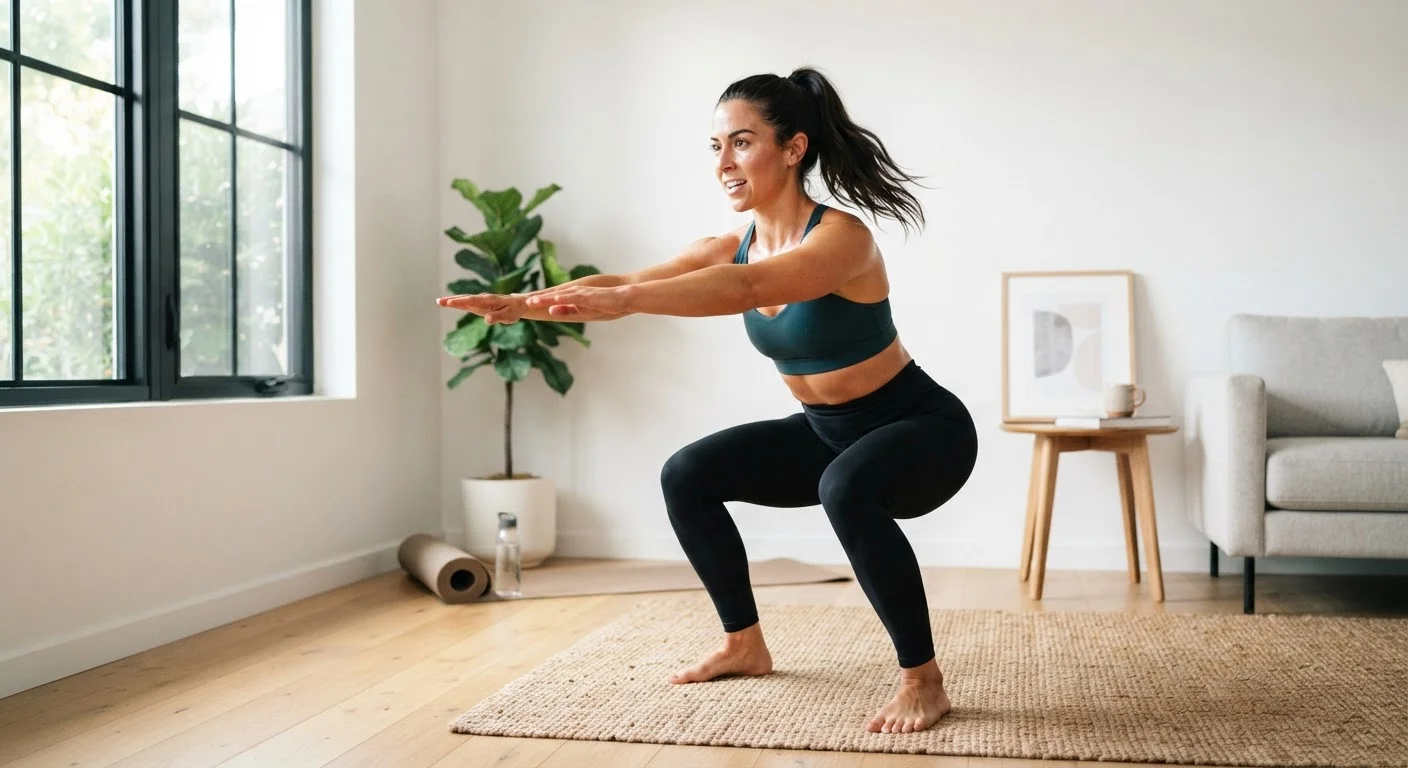
- Squats (lower body and core)
- Push-ups (chest, shoulders, triceps)
- Reverse lunges (glutes, quads, balance)
- Mountain climbers (core, cardio)
- Glute bridges (posterior chain)
Perform each for 40 seconds, rest 20 seconds, then move on. Rest 90 seconds between rounds. For a deeper look at which bodyweight moves deliver the most return, see no-equipment exercises worth building a routine around.
Add one cardio finisher (optional)
If energy allows and your fitness goal includes cardiovascular conditioning, use minutes 15-17 for a brief cardio finisher: two minutes of continuous jumping jacks, skaters, or burpees at moderate intensity. This elevates heart rate without requiring equipment. Whether to prioritize cardio or strength depends on your individual goals - explore how to balance both in a weekly plan.
Cool down and stretch for three minutes
Dedicate the final three minutes to static stretching and controlled breathing. Hold each stretch for 20-30 seconds: standing quad stretch, seated hamstring stretch, chest opener, and a child's pose for the lower back. A deliberate cool-down supports recovery and helps normalize heart rate. This is the appropriate moment for static stretches - held positions that improve flexibility when muscles are already warm.
Keeping It Going: Consistency Over Perfection
A single well-executed 20-minute session is valuable. A habit of them is transformative. The most practical approach to building consistency is scheduling workouts at the same time each day - research in behavioral science suggests that habit formation is strongly tied to environmental cues and timing.
If you miss a day, restart rather than compensate. Doubling up sessions to "make up" for missed workouts tends to increase fatigue and reduce long-term adherence. Three to four structured sessions per week is a reasonable and sustainable starting target for most generally healthy adults.
Know When to Modify or Stop
Sharp joint pain, dizziness, chest tightness, or shortness of breath that feels disproportionate to effort are signals to stop immediately. This workout framework is general fitness education, not a personalized exercise prescription. If you have an existing health condition, are pregnant, or have been sedentary for an extended period, consult a qualified healthcare professional before starting a new exercise routine.
This article is for general informational purposes only and does not constitute medical advice. Consult a qualified healthcare professional before beginning any new exercise program.