

Key Takeaways
- Bodyweight training requires no gym membership or equipment - just consistent effort and space.
- Mastering a handful of fundamental movement patterns builds a strong, balanced fitness foundation.
- Rest and recovery are as important as the workouts themselves for long-term progress.
- Progression comes from adjusting difficulty, not just adding more repetitions endlessly.
- Consulting a healthcare professional before starting is advisable if you have existing health conditions.
Start here
What Bodyweight Training Actually Is
Next
Core Movement Patterns to Learn First
Then
How to Build a Simple Starting Routine
When you're ready
Progression: How to Keep Getting Stronger
Before you begin
Safety, Recovery, and When to Seek Guidance
What Bodyweight Training Actually Is
Bodyweight training uses your own body as resistance - no weights, machines, or gym membership required. It encompasses movements like squats, push-ups, lunges, and planks that challenge your muscles using gravity and leverage. It is one of the oldest and most accessible forms of physical conditioning.
Unlike equipment-dependent exercise, bodyweight training adapts to nearly any living situation. You need a small clear floor area and, in most cases, nothing else. This makes it a practical entry point for people managing tight budgets or unpredictable schedules. For a broader view of exercising at home, see the Home Fitness From the Ground Up overview.
Progressive overload
Gradually increasing the difficulty of exercise over time so your muscles continue to adapt and grow stronger. Without this, progress tends to plateau.
Repetition (rep)
One complete execution of an exercise movement - for example, one squat from standing to the bottom and back up.
Set
A group of consecutive repetitions performed without a rest break. For example, '3 sets of 10 squats' means doing 10 squats three times with rest between each group.
Time under tension
How long your muscles are actively working during an exercise. Slowing down the movement increases time under tension and can make an exercise more challenging.
Movement pattern
A category of motion that groups exercises by how the body moves - such as pushing, pulling, or squatting. Training across patterns helps develop balanced whole-body strength.
Core Movement Patterns to Learn First
Rather than memorizing a long list of exercises, focus on a small set of fundamental movement patterns. These patterns underpin hundreds of exercise variations and reflect how your body naturally moves day to day.
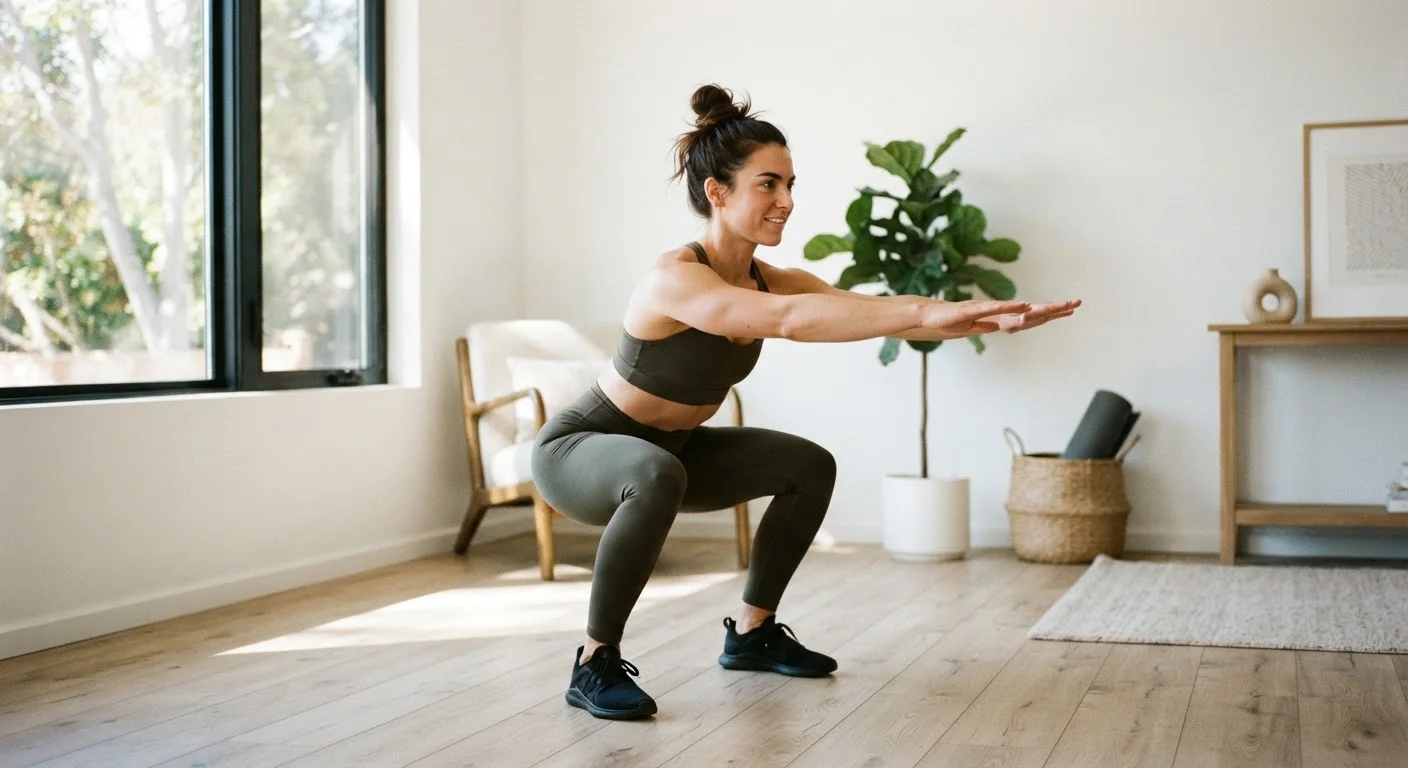
- Squat pattern: Bending at the hips and knees - the foundation of lower-body strength. Bodyweight squats and their variations train the glutes, quads, and hamstrings.
- Push pattern: Pressing your body away from a surface. Push-ups develop the chest, shoulders, and triceps.
- Pull pattern: Drawing resistance toward your body. Rows using a low table edge or doorframe are accessible pull variations for beginners.
- Hinge pattern: Bending at the hips while keeping your spine neutral - the basis of movements like the Romanian deadlift or good morning.
- Core bracing: Exercises like the plank train your torso to stabilize under load, supporting all other movements.
Our no-equipment exercise guide covers safe technique for each of these patterns in practical detail.
How to Build a Simple Starting Routine
A beginner routine does not need to be complex. Aim for two or three sessions per week on non-consecutive days to allow recovery. A session lasting 20 to 30 minutes is sufficient when you are starting out.
Structure each session around three to four movements - one from each major pattern above. Perform each exercise for a set number of repetitions or a timed interval, rest briefly, and repeat. Over time, gradual increases in difficulty drive continued improvement.
Keep Your First Sessions Short
Beginners often underestimate how much effort basic movements require when performed with proper technique. Starting with shorter sessions of 15 to 20 minutes reduces the risk of soreness that discourages follow-through. Building the habit of showing up consistently is more valuable in the early weeks than maximizing session length.
Before locking in your schedule, it is worth running through a readiness checklist to make sure your setup, goals, and any health considerations are accounted for. See Before Your First Workout: A Readiness Checklist for a practical walkthrough.
If you have heard that you need a gym to get fit, or that results only come from intense daily sessions, the article Fitness Myths That Keep People From Starting addresses those ideas directly.
Progression: How to Keep Getting Stronger
The concept of progressive overload - gradually increasing the challenge placed on your muscles - is central to long-term improvement. With bodyweight training, this does not mean simply doing more repetitions indefinitely. Instead, progression works through several levers:
- Leverage changes: Moving your feet higher in a push-up increases the load on your upper body. Elevating your heels or trying a single-leg variation intensifies lower-body work.
- Tempo manipulation: Slowing the lowering phase of a squat or push-up increases muscular time under tension.
- Range of motion: Gradually deepening a squat or lunge as mobility improves adds difficulty without external weight.
- Volume: Adding an extra set once the current workload feels manageable is a straightforward progression step.
Track what you do each session - even a simple note on your phone - so you can see when you are ready to progress rather than guessing.
Avoid Progressing Too Quickly
Increasing difficulty too fast - before your joints and connective tissue have adapted - is a common cause of early overuse injuries. A useful guideline is to feel fully comfortable at your current level for at least one to two weeks before advancing to a harder variation. Soreness after a new exercise is normal; persistent joint pain is not.
Safety, Recovery, and When to Seek Guidance
Sound technique matters more than the number of repetitions. Poor form under fatigue is how most training injuries occur. If a movement causes sharp pain - not the general effort of working muscles - stop and reassess before continuing.
Recovery deserves as much attention as training. Sleep, adequate hydration, and balanced nutrition all support the repair process. For guidance on eating habits that complement an active lifestyle on a budget, explore the Everyday Nutrition hub.
If you have a pre-existing health condition, are pregnant, are returning from injury, or have been sedentary for an extended period, speak with a qualified healthcare professional before beginning a new exercise program. General fitness information - including this article - is not a substitute for personalized medical advice.
This article is for general informational and educational purposes only and does not constitute medical advice. Always consult a qualified healthcare professional before starting a new exercise program, particularly if you have any existing health conditions or concerns.