

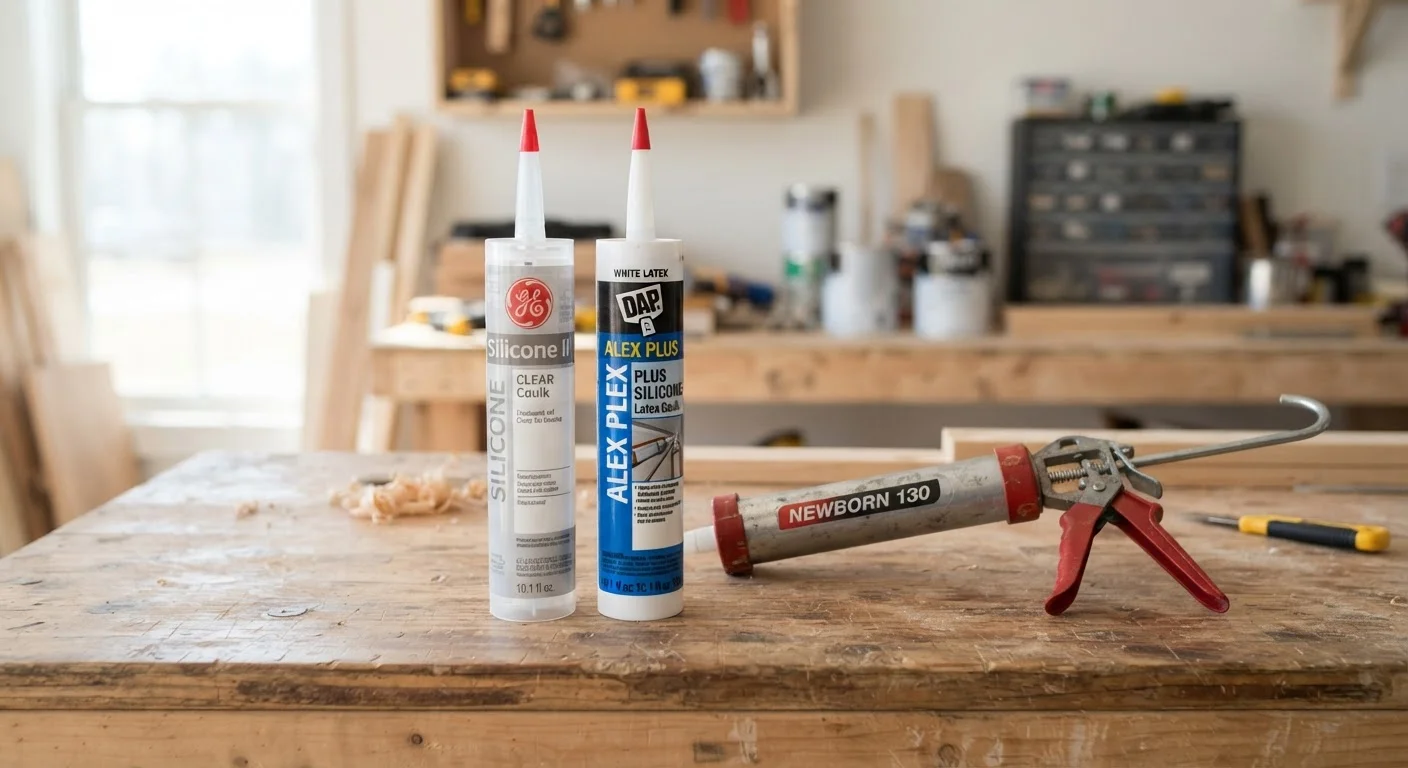
Key Takeaways
- Silicone caulk resists water and stays flexible indefinitely, making it the right call for wet areas.
- Latex caulk cleans up with water, accepts paint, and is far easier to apply neatly on trim and drywall.
- Silicone bonds poorly to already-painted surfaces; latex bonds poorly in consistently wet conditions.
- Using the wrong caulk type is one of the leading causes of premature sealant failure.
- Neither type sticks well to dirty, oily, or incompletely dried surfaces - prep is non-negotiable.
Option A
Silicone Caulk
The waterproof, flexible workhorse for wet and high-movement areas.
Best for: Best for permanently sealing wet zones like tubs, showers, and exterior gaps where flexibility and moisture resistance are critical.
Option B
Latex Caulk
The paintable, easy-cleanup choice for interior trim and drywall.
Best for: Best for interior seams around baseboards, window trim, and crown molding where a smooth, paintable finish matters most.
If you're sealing around a bathtub, shower surround, or kitchen sink
Silicone Caulk
Silicone remains watertight and flexible through constant thermal cycling and moisture exposure. Latex will absorb water, shrink, and fail in these conditions.
If you're filling gaps along baseboards, door trim, or crown molding
Latex Caulk
Latex sands, primes, and accepts paint cleanly, so the finished seam disappears into your wall. Silicone cannot be painted and looks out of place on trim.
If you're sealing exterior windows and door frames exposed to weather
Silicone Caulk
Silicone handles UV exposure, rain, and wide temperature swings without cracking - qualities latex-only formulas cannot reliably maintain outdoors.
If you need a quick, beginner-friendly fix on an interior painted surface
Latex Caulk
Latex tools easily with a wet finger, wipes off with a damp cloth, and bonds well to previously painted drywall and wood trim.
What Actually Separates Silicone from Latex
Both silicone and latex caulk are used to seal gaps and joints around the home, but their chemistry leads to very different real-world behavior. Understanding those differences lets you pick the right product the first time - and avoid the frustration of watching a freshly sealed seam peel six months later.
Silicone caulk is made from a silicone polymer that cures into a rubber-like, permanently flexible seal. It repels water at a molecular level rather than simply resisting it on the surface. Once fully cured - typically 24 hours for a skin and up to 72 hours for full depth - it won't absorb moisture, swell, or shrink. It also remains elastic through a wide temperature range, which matters anywhere a joint expands and contracts seasonally.
Latex caulk (also called acrylic latex or painter's caulk) is water-based and cures by evaporation rather than chemical reaction. This makes it quick to skin over and easy to clean up while wet, but it can shrink slightly as it dries. The upside is full paintability: once dry, latex accepts primer and paint without adhesion problems. It performs well in stable, dry conditions but degrades steadily under prolonged moisture.
| Criterion | Silicone Caulk | Latex Caulk |
|---|---|---|
| Water resistance | Excellent - fully waterproof | Fair - degrades with prolonged moisture |
| Flexibility after cure | High - stays elastic | Low - can crack with movement |
| Paintability | None - paint will not adhere | Full - accepts latex paint |
| Ease of application | Moderate - sticky, less forgiving | High - tools easily with water |
| Cleanup | Requires solvent when wet | Water and damp cloth |
| Cure time before water exposure | 24-72 hours | 1-2 hours (dry conditions) |
| Best environment | Wet, outdoor, high-movement joints | Dry interior trim and drywall |
| Removal difficulty | High - requires solvent and scraping | Moderate - softens with warm water |
Where Each Caulk Belongs in Your Home
Location is the single most reliable guide for choosing between the two types.
Use silicone in these areas:
- Bathtubs and shower surrounds - Constant water exposure demands a waterproof, mold-resistant seal.
- Kitchen sink perimeters - Splash zones and standing water around the undermount or drop-in rim require silicone's impermeability.
- Exterior window and door frames - Weather, UV, and seasonal movement require flexibility and outdoor durability.
- Unheated spaces - Garages and crawl spaces see wide temperature swings; silicone stays elastic through them.
Use latex in these areas:
- Interior trim and molding - Baseboards, door casings, and crown molding need a gap filler that disappears under paint.
- Drywall seams and nail holes near trim - Latex smooths and blends with spackle compound finishing steps.
- Interior window frames in climate-controlled rooms - Stable humidity and no direct water contact make latex entirely adequate here.
If your job falls in a gray zone - say, a bathroom window frame that gets steam but not direct splash - a siliconized acrylic (a hybrid formula blending both materials) is a reasonable middle-ground option. These hybrids accept paint while offering better moisture resistance than straight latex.
Choosing the wrong type for either location is a primary driver of premature sealant failure. For a deeper look at other common application errors, see our article on why caulk keeps peeling.
~48 hrs
Minimum cure time before shower use
Most silicone caulk manufacturers recommend waiting at least 24-48 hours before exposing a freshly caulked shower to water; some formulas require up to 72 hours in humid conditions.
30-60 min
Latex caulk skin-over time
Under typical indoor conditions, latex caulk forms a paintable skin in 30 to 60 minutes, making it practical for trim work that needs paint the same day.
Application, Cleanup, and Finish Differences
Beyond location suitability, the two caulks have very different working properties that affect ease of use, especially for first-timers.
Tooling and smoothing
Latex caulk smooths easily with a wet fingertip or damp sponge. Excess wipes away with a wet cloth before it skins. Silicone is stickier and less forgiving - it should be tooled immediately after application, and excess is removed with a dry cloth or a silicone-specific solvent. Latex is more beginner-friendly by a meaningful margin.
Drying and cure time
Latex typically skins over in 30 to 60 minutes and can be painted within 1 to 2 hours in dry conditions. Silicone releases acetic acid (the vinegar smell you notice) as it cures and needs at least 24 hours before water exposure and often longer in cold or humid rooms.
Paintability
This is where latex wins outright: it accepts any latex paint without adhesion issues. Silicone cannot be painted - paint beads up and peels off the surface. If you accidentally apply silicone in a spot that needs painting, you'll need to fully remove it before applying anything else, which is labor-intensive.
Watch for 'Siliconized' Labels on the Shelf
Many caulk tubes marketed as 'siliconized acrylic' or 'acrylic with silicone' are neither pure latex nor pure silicone - they're hybrids. These blends are paintable like latex but offer improved flexibility and moisture resistance. They're a reasonable compromise for semi-wet areas such as around a bathroom vanity or an interior window sill. Always read the label to confirm paintability and intended use before purchasing.
Removal difficulty
Latex caulk softens with warm water and can often be peeled away if it hasn't bonded for years. Silicone requires a plastic scraper and a silicone remover solvent, and residue left behind will prevent new caulk from bonding - a critical detail when recaulking showers or tubs.