

Key Takeaways
- Start every budget by confirming your actual take-home income, not your gross salary.
- Separating fixed costs from variable spending gives you clearer control over where to cut.
- Irregular and seasonal expenses are the most common cause of budget blowouts - plan for them monthly.
- A budget review habit at month-end is as important as the setup itself.
- Saving and debt payments should be allocated before discretionary spending, not after.
Summary
22 items · 30-60 minutes
How to Use This Checklist
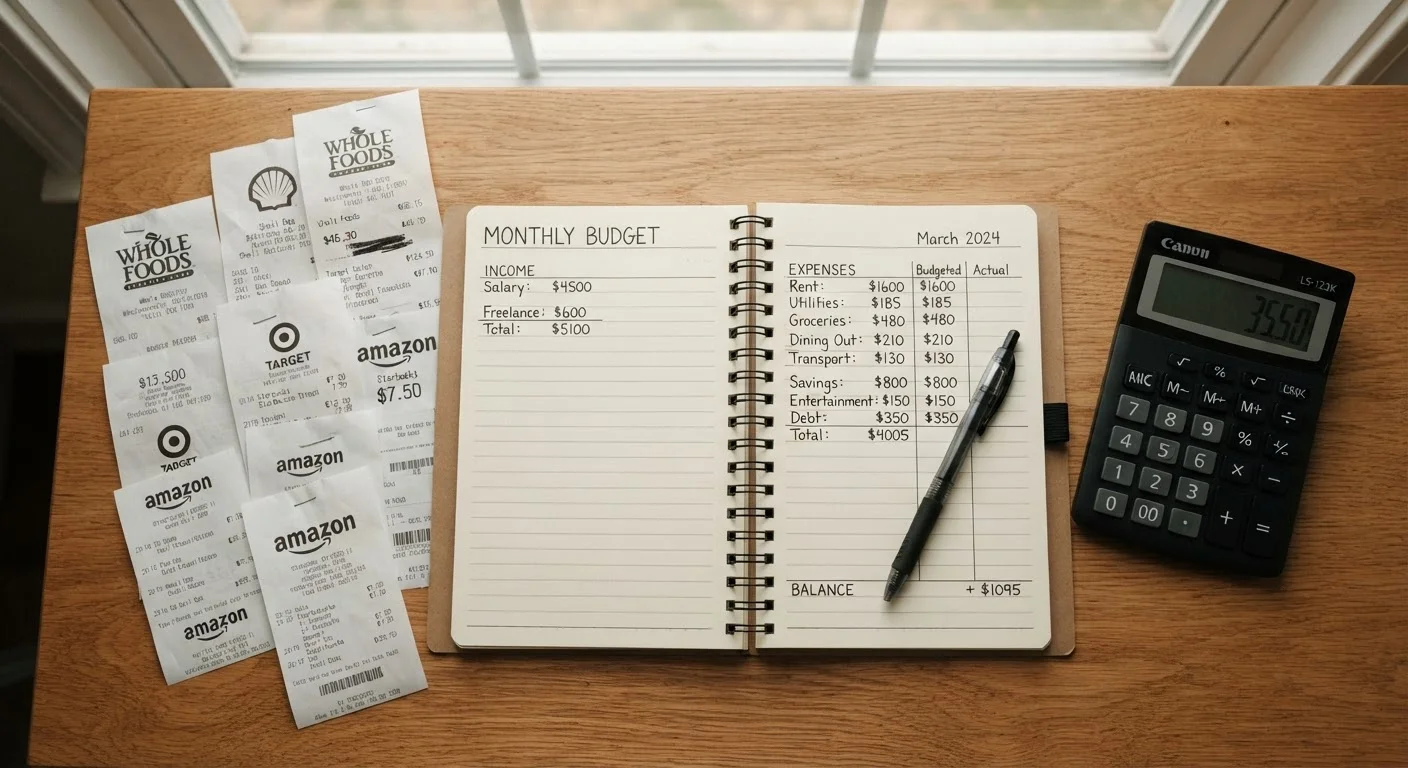
This checklist is designed to walk you through a complete monthly budget setup - whether you're starting fresh or resetting after an off month. Work through each group in order. Some items take two minutes; others require pulling up a bank statement or pay stub. Either way, the full process rarely takes more than an hour.
If you've never built a budget before, the ground-up walkthrough for first-time budgeters may be a better starting point before returning here. For a deeper dive into the strategy behind each step, see the complete smart budgeting guide.
You'll need a few things before you begin.
Recent pay stubs or income records
Confirms your actual take-home amount for the month - the foundation of every budget calculation.
Last 1-3 months of bank and credit card statements
Reveals your real spending patterns across categories, so estimates are grounded in fact rather than guesswork.
Spreadsheet or budgeting notebook
Gives you a single place to record income, planned expenses, and actuals so nothing falls through the cracks.
Calendar
Helps you map bill due dates and income arrival dates to avoid cash flow gaps mid-month.
List of annual subscriptions and recurring memberships
Flags irregular charges that may hit this month but don't appear on monthly statements routinely.
The Monthly Budget Setup Checklist
Work through each group below at the start of each month. Mark items complete as you go - even a simple checkmark in a notebook counts.
Confirm Your Income
Lock In Fixed Expenses
Estimate Variable Spending
Account for Irregular and Seasonal Costs
Allocate Savings and Debt Payments
Balance and Finalize
Set Up Your Review Habit
Always Budget From Take-Home Pay
Your gross salary is not your budgeting number - taxes, retirement contributions, and benefit deductions come out first. Using gross income will give you a false surplus and lead to overdrafts. Pull your actual net deposit amount from your most recent pay stub or bank deposit record before you begin any calculations.
Once your budget is in place, pair it with a month-end review. The monthly financial health check gives you a practical framework for auditing savings and debt balances after the month closes.
Common Pitfalls That Derail Monthly Budgets
Even a well-structured budget can fall apart quickly. A few patterns consistently cause problems:
- Using gross income instead of net. Always budget from take-home pay - the amount that actually hits your account after taxes and deductions.
- Forgetting irregular expenses. Annual subscriptions, car registration, back-to-school costs, and holiday gifts don't appear on your regular statements, but they will drain your account if unplanned. Review the last 12 months of spending at least once a quarter to catch these.
- Treating savings as optional. Savings should be allocated at the same time as rent and utilities, not from whatever is left over. See how to build an emergency fund into your monthly budget for a practical approach.
- Skipping the review. A budget that isn't checked mid-month becomes a guess. Build in at least one check-in to compare actual spending against your plan.
Don't Set and Forget Your Budget
A budget written on the first of the month and not looked at again is mostly decorative. Real budgeting requires at least one mid-month check to catch overspending before it compounds. Even a 10-minute review of your bank balance against your plan can prevent a stressful month-end shortfall.
If your income varies month to month, standard budgeting rules need adjusting. The guide on budgeting on an irregular income covers how to build a plan that holds up when your paycheck isn't predictable.
This article provides general financial education and is not personalized financial advice. For guidance specific to your situation, consider consulting a qualified financial professional.