

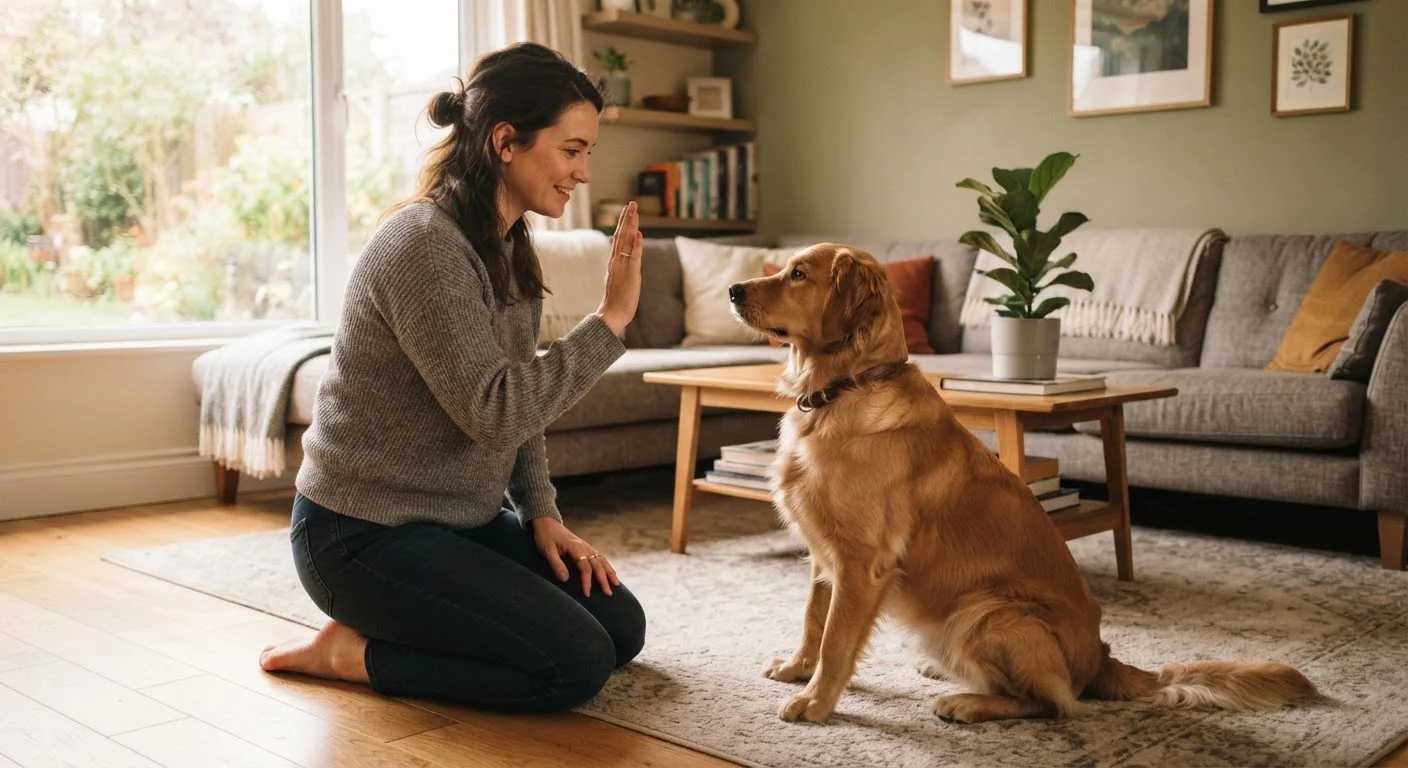
Key Takeaways
- Five-minute training sessions repeated daily outperform occasional long sessions for pet learning.
- Anchoring training to existing daily routines - like meals or walks - dramatically improves consistency.
- Everyday moments such as doorbell greetings or feeding time are built-in training opportunities.
- Professional classes are not required to achieve solid, reliable pet behaviour at home.
- Keeping sessions short prevents mental fatigue in pets and frustration in owners.
Why Short Sessions Work Better Than Marathon Training
Many pet owners assume that meaningful training requires long, structured sessions - ideally led by a professional. Research in animal behaviour consistently points in the opposite direction. Pets, especially dogs, learn most efficiently in short, focused bursts where attention is high and frustration is low.
A five-minute session repeated three times across a day delivers more effective learning than a single 20-minute block. Repetition with rest in between allows the brain to consolidate new information. This mirrors findings in human learning science, and the principle applies equally to cats learning a cue, dogs practicing recall, or rabbits being habituated to handling.
For cost-conscious owners, this is good news: effective training does not require paid class time. It requires frequency and consistency - both of which are achievable within an ordinary busy day. For a broader look at how brief, repeated actions accumulate into real results, the concept parallels what's discussed in movement snacks for human fitness.
3-5 min
Optimal single training session length for dogs
Animal behaviour educators broadly recommend sessions of three to five minutes for dogs, particularly for puppies and when introducing new skills, to sustain focus and prevent fatigue.
3×/day
Recommended micro-session frequency for skill building
Distributed practice - multiple short sessions spread across a day - is a well-established principle in learning science, and is commonly applied in humane pet training guidance.
Anchoring Training to Your Existing Routine
The single most effective strategy for busy owners is to stop treating training as a separate scheduled event and instead attach it to activities already built into your day. This is called habit stacking - pairing a new behaviour with an established one so that the existing habit acts as a reliable trigger.
If you feed your dog twice a day, that's two automatic training opportunities already in your schedule. Ask for a sit before placing the bowl down. Practice a "wait" cue before opening the back door for a bathroom break. Run a quick "touch" (nose-to-hand) exercise while your coffee brews.
Cats and other pets respond to the same logic. A cat being fed can be asked to approach a target stick before the meal begins. A bird can practice a step-up cue each time it's moved from cage to play stand.
See the pet owner's readiness checklist to prepare quickly before each micro-session.
Turning Everyday Moments Into Training Opportunities
Beyond scheduled anchor points, the day is full of unrehearsed training moments that most owners overlook. These "real-life rewards" are often more motivating than formal practice because the context is genuine.
The doorbell rings - that's a recall and settle practice. A visitor arrives - that's a greeting manners opportunity. The leash comes out - that's a cue to sit calmly rather than jump. Each of these requires only 30 to 60 seconds and reinforces skills in the exact context where they need to work.
The goal is to shift from a mindset of "I haven't had time to train today" to recognising that training is woven into life itself. This approach also builds behaviour that generalises well - meaning your pet learns to respond in real situations, not just during formal practice in the living room.
For a structured view of how daily habits shape long-term pet wellbeing beyond training alone, see everyday pet care habits.
When to Seek Professional Guidance
Short home sessions work well for teaching foundational cues and manners. However, if your pet displays fear, anxiety, resource guarding, or any form of aggression, these behaviours warrant assessment by a veterinarian or a certified professional trainer before you attempt to address them yourself. General training advice is not a substitute for individualised behavioural support.
Keeping Momentum When Progress Slows
Even with consistent short sessions, there will be plateaus - days when your pet seems to forget a cue it knew yesterday, or weeks when a new skill refuses to click. This is normal and does not signal failure.
When progress stalls, the most common causes are session length creeping up, the training environment becoming too distracting, or cues being introduced too quickly before foundations are solid. Scale back to what the pet can do successfully and rebuild from there. Success - even small success - is what drives continued learning.
If you're weighing whether to supplement home training with a class, the comparison of group classes vs home training lays out practical trade-offs. For specific techniques to restart learning when you hit a wall, training approaches for when progress stalls offers targeted options.
“Training is not something you do to an animal - it is something you do with them. The relationship and repetition matter far more than the setting or the duration.”
— Karen Pryor, Pioneer of clicker training and author on positive reinforcement methods
This article is for general informational purposes only. For pets with significant behavioural challenges, fear responses, or aggression, consult a qualified veterinary behaviourist or certified professional trainer.