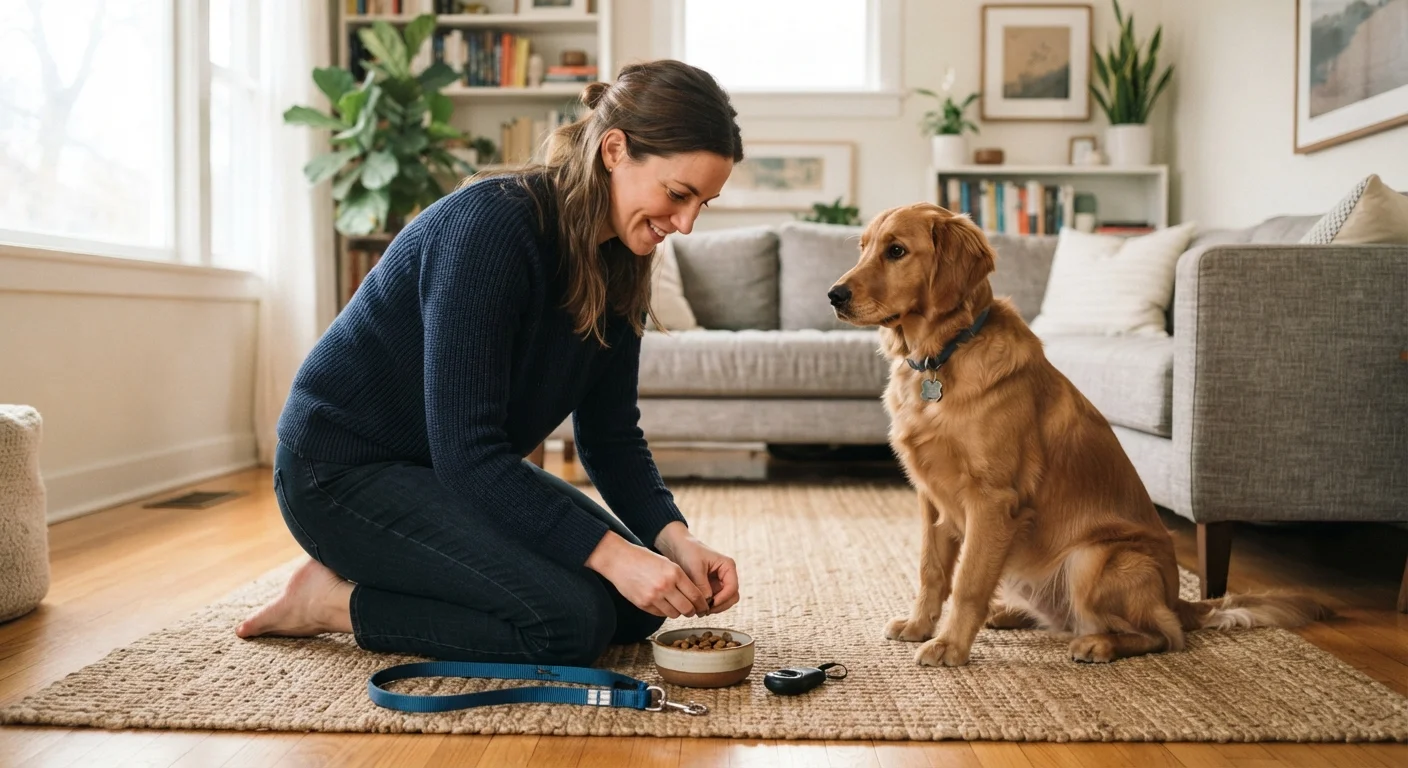
Short, focused sessions of 5-10 minutes tend to produce better learning than long, exhausting ones.
Your own mood and stress level directly affect how your pet responds during training.
High-value treats prepared in advance keep sessions moving without breaks in focus.
A low-distraction environment is especially important when teaching new behaviors.
Consistent cue words and signals are foundational to reliable results over time.
15–30 min
Summary
18 items · 15-30 minutes per session
Why a Pre-Session Routine Matters
Skipping preparation is one of the most common reasons at-home training stalls. A session that starts with hunting for treats, a distracted pet, or a frustrated owner is unlikely to build lasting skills. Running through a quick readiness check takes only a few minutes and makes every repetition count more.
This checklist is designed for everyday pet owners working through training at home - whether you have a new puppy, an adult rescue, or a cat you're teaching basic cues. For a broader framework, see our complete at-home training guide. If certain terms below are unfamiliar, the training terminology reference explains concepts like reinforcement, threshold, and shaping in plain language.
Environment Setup
Choose a low-distraction space - indoors or a quiet yard - especially when practicing a new skill.Must
Remove competing stimuli such as other pets, loud background noise, or open windows facing a busy street.Should
Ensure there is enough clear floor space for your pet to move freely and safely.Must
Check that the area is free of hazards - loose wires, slippery surfaces, or objects your pet could knock over.Must
Timing and Your Pet's State
Schedule the session when your pet is alert but not hyperactive - typically 30-60 minutes after a meal, not immediately before or after.Must
Keep sessions short: 5-10 minutes is usually optimal for dogs and cats, especially for younger or newly adopted animals.Must
Check that your pet has had a bathroom break recently so discomfort or urgency doesn't compete for attention.Should
Note any signs of stress, illness, or unusual lethargy - skip or reschedule the session if your pet seems unwell.Must
Treats and Reinforcers
Prepare soft, small treats (roughly pea-sized) so delivery is fast and doesn't interrupt the training rhythm.Must
Use a treat pouch or small bowl placed within easy reach so you aren't fumbling between repetitions.Should
Match treat value to task difficulty - save your pet's favorite reinforcers for new or challenging behaviors.Should
Account for training treats in your pet's daily food intake to avoid overfeeding.Must
Cues and Session Goals
Decide in advance which one or two behaviors you will work on - unfocused sessions rarely build solid skills.Must
Confirm that all household members use the same cue word and hand signal for each behavior to avoid confusion.Must
Start each session with a behavior your pet already knows well to build confidence before introducing anything new.Should
Plan a clear, positive ending - finish on a successful repetition and offer a short play or rest reward.Nice to have
Your Own Readiness
Check your own stress level before beginning - animals are sensitive to handler tension and frustration.Must
Set a timer so you don't lose track of session length; stopping on time is as important as starting well.Should
Tools to Have Ready Before You Begin
You don't need expensive equipment to train effectively, but having the right basics on hand prevents interruptions that break your pet's focus.
Required
Small Treat Pouch
Keeps reinforcers accessible during the session so you can reward behaviors immediately without breaking momentum.
Required
Clicker or Marker Word
Marks the exact moment of a correct behavior, making it clear to your pet what earned the reward.
Optional
Short Training Leash or Long Line
Provides safe management during recall or stay practice, particularly in early stages of training.
Optional
Training Log or Notebook
Tracks which behaviors were practiced, how many repetitions were successful, and what to focus on next session.
If you're undecided on training methods, our comparison of clicker vs. verbal cue training can help you choose an approach that fits your routine and your pet's temperament.
Avoid Training Through Fear or Pain
Positive reinforcement - rewarding the behavior you want - is the method supported by current animal behavior science and major veterinary organizations. Techniques that rely on physical correction, startling, or intimidation can damage your pet's trust and may worsen problem behaviors. If a behavior feels dangerous or unmanageable, seek guidance from a certified professional rather than escalating pressure.
This article is for general educational purposes only and is not a substitute for professional veterinary or certified animal behavior guidance. If your pet shows signs of aggression, extreme fear, or stress during training, consult a qualified professional before continuing.
Pets & Animals Editorial Team is the collective byline for our editorial team and contributor network. Articles published under this byline or an editorial pen name are researched, written, and reviewed according to our editorial standards for clarity, consistency, and independence before publication.
Disclaimer: The content provided on our blog site traverses numerous categories, offering readers valuable and practical information. Readers can use the editorial team’s research and data to gain more insights into their topics of interest. However, they are requested not to treat the articles as conclusive. The website team cannot be held responsible for differences in data or inaccuracies found across other platforms. Please also note that the site might also miss out on various schemes and offers available that the readers may find more beneficial than the ones we cover.