

Key Takeaways
- Coupon stacking means applying multiple discounts to a single purchase in one transaction.
- Most stores permit combining one manufacturer coupon with one store coupon per item.
- Retailer coupon policies - often posted online or at service desks - set the specific stacking rules.
- Digital coupons, loyalty rewards, and cashback apps may each count as separate stackable layers.
- Violating a store's stacking policy, even accidentally, can result in coupons being voided at checkout.
Coupon Stacking
Coupon stacking is the practice of applying more than one coupon or discount to a single item or transaction. Instead of using just one offer, a shopper combines multiple valid discounts - such as a manufacturer coupon plus a store coupon - to reduce the final price further. Whether and how this is allowed depends entirely on the retailer's coupon policy.
In retail systems, stacking is typically governed by coupon type codes (manufacturer vs. store-issued) and point-of-sale logic that accepts or rejects overlapping offers.
How Coupon Stacking Actually Works
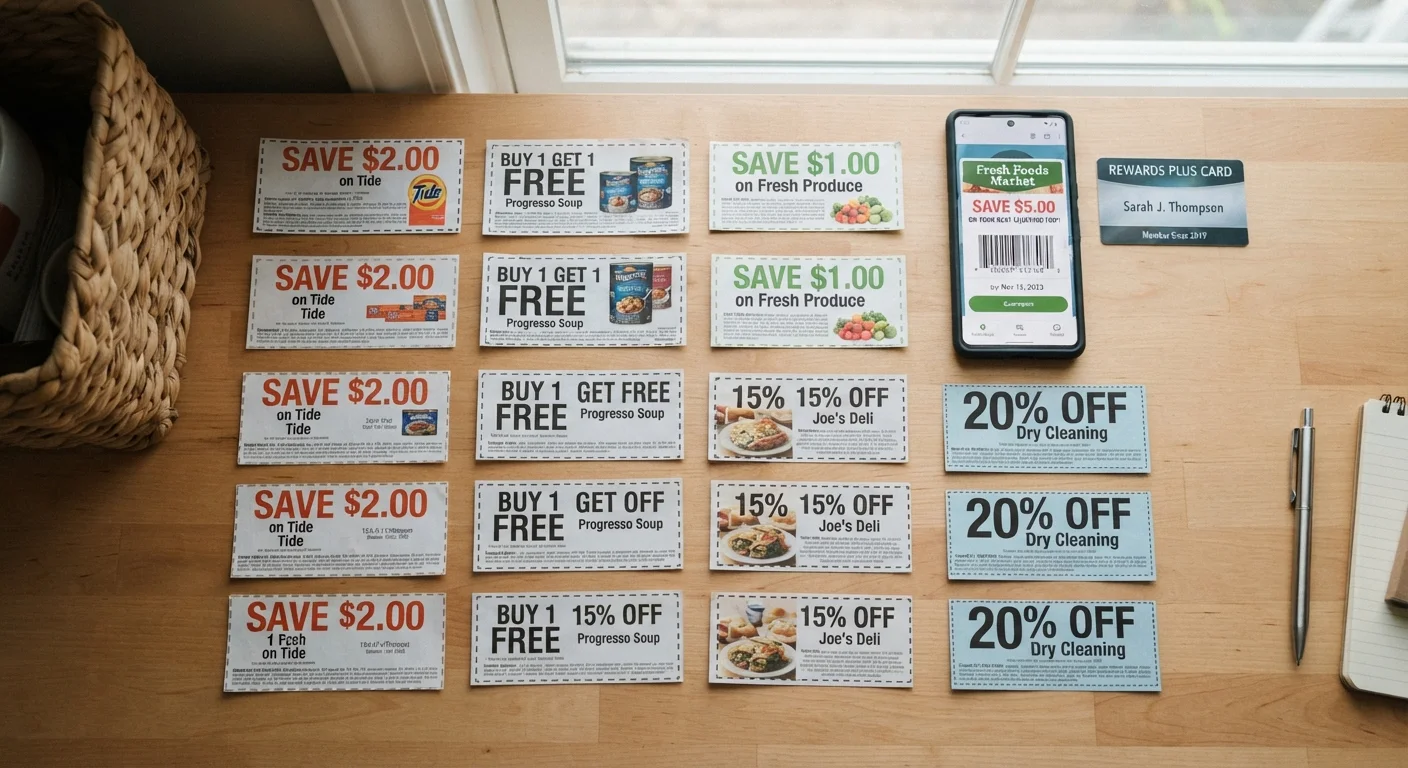
At its core, stacking relies on a simple distinction: manufacturer coupons are issued by the brand that makes the product, while store coupons are issued by the retailer selling it. Because they come from different sources, many retailers allow one of each to be applied to the same item in a single transaction - that's the most common form of stacking.
For example, if a box of laundry detergent has a manufacturer coupon reducing the price by $1.50, and the store has issued its own $1.00 coupon for the same product, a shopper might legally use both, saving $2.50 before tax. The key word is might - the retailer's policy determines whether this is permitted, and no two policies are identical.
Beyond the manufacturer-plus-store combination, some shoppers layer additional tiers:
- Loyalty program discounts loaded to a store rewards card
- Digital coupons clipped via the store's app
- Cashback rebate apps that operate independently of the checkout
- Sale prices already applied to the shelf tag
Each layer is governed by its own terms, and they don't all interact the same way. For a closer look at how coupon language defines what can and can't be combined, see Reading a Coupon's Fine Print.
2-in-1
Most common legal stack: one manufacturer + one store coupon
The manufacturer-plus-store combination is the stacking format explicitly permitted by the largest share of major U.S. grocery and drug retailer coupon policies.
~$1.8B
Annual U.S. coupon redemption value (all formats)
According to Inmar Intelligence's coupon trends data, total coupon redemption in the U.S. has remained in the multi-billion-dollar range annually, underscoring the scale of discount usage among everyday shoppers.
Understanding Store Coupon Policies
Retailer coupon policies are the rulebook for stacking - and they matter more than any stacking strategy. Policies typically specify:
- How many coupons are accepted per item or per transaction
- Whether manufacturer and store coupons can be combined
- Whether digital and paper coupons of the same type can stack
- Categories or brands that are excluded from any coupon use
- How the store handles coupons that exceed the item's price
These policies are often posted on the retailer's website under customer service or FAQ sections, and most large chains will provide a printed copy at their service desk on request. Policies can be updated without notice, so confirming the current rules before a planned stacking trip is a practical habit.
Screenshot or Save the Policy Before You Shop
Retailer coupon policies can be updated without notice. Before planning a stacking trip, visit the store's website and save or screenshot the current policy. If you're shopping in-store, ask the customer service desk for a printed copy. Having the policy on hand prevents disputes at the register and helps you plan more accurate savings in advance.
It's also worth understanding that point-of-sale systems are programmed to enforce stacking rules automatically. In many cases the register will simply reject a coupon that conflicts with another one already scanned, rather than relying on cashier judgement. This means errors tend to surface at checkout - not after the fact.
For shoppers new to the mechanics of discounts and deals, A First-Timer's Roadmap to Coupons and Deals provides useful background on how these systems work together.
Loyalty Programs, Digital Coupons, and Where They Fit
One area that trips up even experienced shoppers is the overlap between loyalty program pricing and coupons. Stores that operate loyalty cards frequently offer member prices that are automatically applied at checkout - these are discounts, but they are not coupons in the traditional sense and generally do not count against a coupon stacking limit.
Digital coupons clipped within a store's own app, however, are treated as store coupons by most point-of-sale systems. That means clipping a digital store coupon and then also presenting a paper store coupon for the same item would likely constitute stacking two store coupons - something most retailer policies prohibit.
Same Coupon Type, Same Item: Usually a No
Using two manufacturer coupons on a single item - or two store coupons on the same item - is prohibited at virtually all major U.S. retailers. The distinction between coupon sources (manufacturer vs. store) is what typically makes stacking legitimate. When in doubt, check whether each coupon carries a different issuer code or origin.
Cashback apps, on the other hand, process their rebates after the transaction is complete and do not interact with the checkout system at all. This makes them a uniquely flexible layer of savings. For a fuller picture of how loyalty schemes and coupons can be paired effectively, see Loyalty Programmes and Coupons: Making Them Work Together.
Finally, even when stacking is done correctly, it's easy to fall into traps that erode real savings - buying items you wouldn't otherwise need, or miscalculating which offers are genuinely compatible. Couponing Pitfalls That Cost Shoppers More Than They Save covers the most common mistakes worth avoiding.