

| Deepest clearance period | January (post-holiday) |
| Back-to-school window | July - mid-August |
| Peak promotional season | November - December |
| Appliance/mattress sale events | Memorial Day, Labor Day, Presidents' Day |
| Sales-tax holiday timing | Varies by state; typically July-August (Verify with your state's revenue department) |
How the Retail Calendar Works
Retail discounting follows a predictable rhythm driven by inventory cycles, manufacturer incentives, and consumer behavior patterns. Retailers need to clear seasonal stock before new merchandise arrives, which creates recurring windows when markdowns are genuinely deep rather than cosmetic. Understanding this calendar puts shoppers in a proactive position - planning purchases around these windows rather than buying on impulse at full price.
That said, not every "sale" during these periods represents real savings. Pricing strategies like anchor pricing and inflated "was" prices are common. See our overview of retail pricing tactics for a grounding perspective before shopping any sale event.
| Deepest clearance period | January (post-holiday) |
| Back-to-school window | July - mid-August |
| Peak promotional season | November - December |
| Appliance/mattress sale events | Memorial Day, Labor Day, Presidents' Day |
| Sales-tax holiday timing | Varies by state; typically July-August (Verify with your state's revenue department) |
Major Recurring Discount Windows by Season
January - February: Post-Holiday Clearance & Winter Closeout
January is one of the most reliable markdown periods of the year. Retailers clear holiday merchandise, winter apparel, and seasonal home goods at steep discounts to make room for spring inventory. Bedding, furniture, and fitness equipment also tend to see promotional pricing tied to New Year consumer interest.
March - April: Early Spring Transitions
Late winter clothing, outerwear, and cold-weather home goods hit clearance. Easter weekend often brings promotional events across home, apparel, and food categories. This is also a quieter period for electronics, which can mean modest deals as retailers compete for wallet share.
May - June: Memorial Day & End-of-School Season
Memorial Day weekend (late May) is a traditional sale period for appliances, mattresses, and outdoor furniture. Retailers use it as a volume driver heading into summer. Back-to-school preparation also begins in late June for some product categories.
July - August: Back-to-School & Summer Clearance
The back-to-school window, typically July through mid-August, drives discounts on clothing, electronics, school supplies, and dorm essentials. Summer apparel and outdoor equipment go into clearance simultaneously. Many states also run sales-tax holidays on clothing and school supplies during this period - check your state's official revenue department for eligibility and dates.
September - October: Early Fall & Columbus Day Events
Lawn and garden equipment, patio furniture, and summer goods reach clearance-level pricing. Columbus Day weekend has historically been associated with mattress and furniture promotions, though the event's scope varies by retailer and year.
November - December: Peak Promotional Season
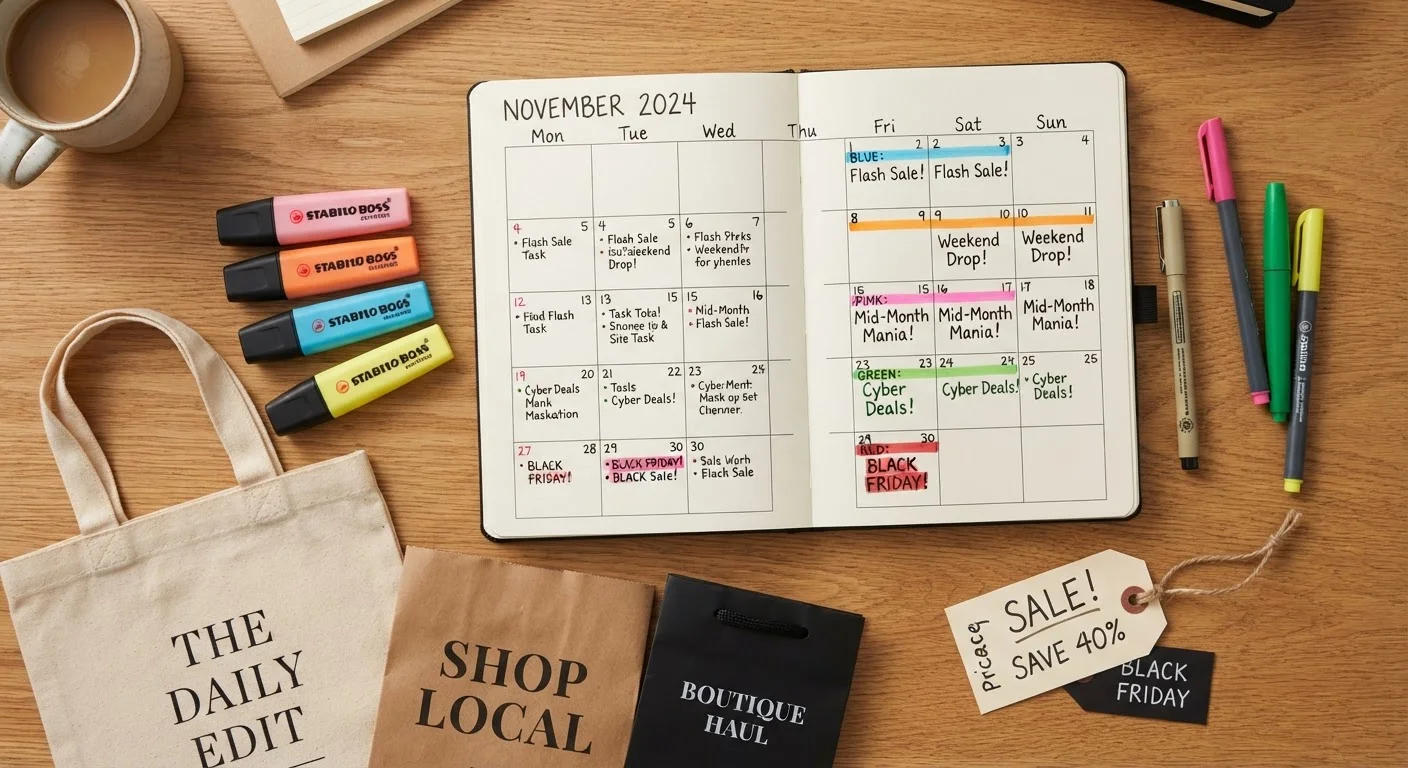
Black Friday and Cyber Monday anchor the year's largest promotional period. Discounts span nearly every category, though electronics, toys, and apparel tend to see the heaviest competition. The two weeks before Christmas bring additional markdowns on slower-moving inventory, and the week after Christmas opens another clearance cycle.
5
Major promotional weekends per calendar year
Memorial Day, Independence Day, Labor Day, Black Friday, and Cyber Monday are the five most widely recognized US retail sale events.
17+
States with annual sales-tax holidays
The number of states offering a sales-tax holiday on qualifying purchases fluctuates year to year; verify current status with your state's department of revenue.
How to Use This Calendar Strategically
Mapping anticipated purchases to these windows requires some advance planning. The core principle is straightforward: identify non-urgent needs several weeks ahead of a relevant sale window, then monitor pricing in the days leading up to it rather than assuming the headline discount is the floor price.
Keep in mind that "sale" framing does not automatically mean the lowest available price. Our article on how retailers structure discounts breaks down the mechanics behind clearance events versus promotional markdowns - a useful distinction when evaluating whether a timed purchase makes sense.
For a broader framework on stacking discounts, comparing deal types, and building sustainable saving habits, the complete guide to coupons, deals, and discount strategies covers the full picture. And if seasonal buying triggers a home organization reset, our seasonal declutter checklist offers a practical companion for clearing space before new purchases arrive.
Clearance pricing
Markdowns applied to merchandise a retailer needs to sell before discontinuing or replacing with new inventory. Clearance prices are generally final and not subject to further promotional stacking.
Promotional pricing
A temporary price reduction used to drive traffic or volume during a defined window, such as a holiday weekend. The item typically returns to its regular price afterward.
Inventory cycle
The recurring pattern by which retailers receive, sell, and replace merchandise by season or category. Sale windows often coincide with the end of an inventory cycle.
Sales-tax holiday
A state-designated period during which certain goods (commonly clothing and school supplies) are exempt from state sales tax. Eligibility rules and dates vary by state.