

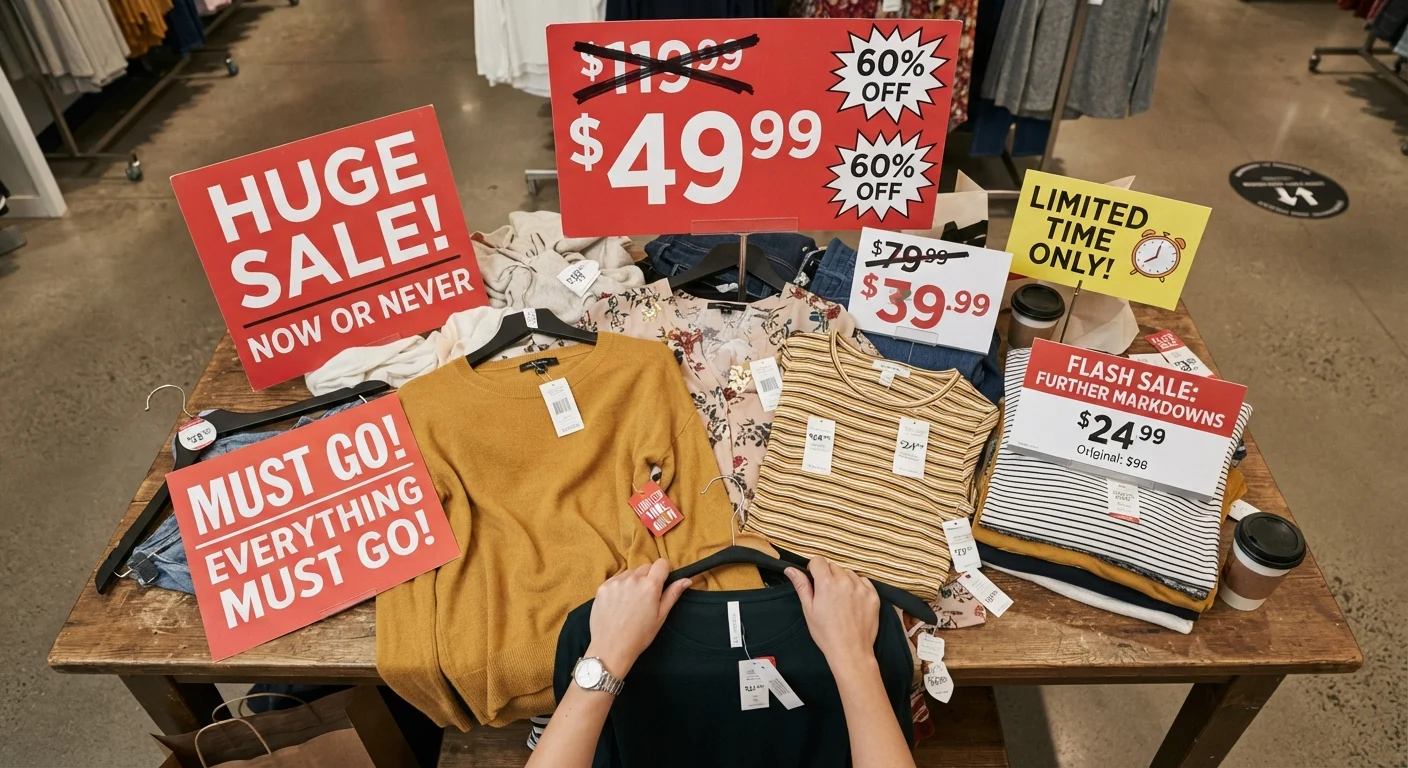
Key Takeaways
- A 'was' price is only meaningful if the item actually sold at that price for a substantial period.
- Countdown timers and 'limited stock' warnings are often manufactured to create urgency, not reflect reality.
- Anchor pricing uses a high reference price to make a lower price feel like a deal, even when it isn't.
- Tracking an item's price history - not just its sale badge - is the most reliable way to evaluate a discount.
- Buying something on sale that you didn't need still costs more than not buying it at all.
Why Sale Badges Don't Equal Savings
Most shoppers have been trained to associate red tags and crossed-out prices with genuine value. Retailers know this, and pricing departments are built around exploiting that association. The result is a retail environment where the appearance of a discount and an actual discount are two very different things.
This isn't about cynicism - it's about understanding the mechanics at work so your budget decisions are based on real numbers, not manufactured emotion. Below, we break down the most common retail pricing myths and explain what's actually happening behind the tag.
Myth
If something is marked down from a higher 'was' price, I'm getting a real discount.
Fact
The 'was' price is only a genuine reference point if the item was sold at that price in the normal course of business. Many retailers set artificially high original prices specifically to make markdowns look more dramatic.
This practice is known as anchor pricing or reference price inflation. A retailer lists an item at $120, rarely or never sells it at that price, then marks it to $72 and calls it 40% off. The savings figure is real only if the anchor price was real. Regulatory agencies in several states have taken action against retailers for deceptive reference pricing, but enforcement is inconsistent. The safest approach: look up what the item has actually sold for over time, not just what the tag claims it used to cost. Percentage-off deals deserve the same scrutiny.
Myth
A countdown timer or 'only 3 left' warning means I need to act fast or lose the deal.
Fact
Urgency cues are frequently automated marketing features, not accurate reflections of supply or offer expiration. The same 'sale' often resets after the timer expires.
Manufactured scarcity and artificial urgency are among the most widely documented tactics in e-commerce. Countdown timers may be hardcoded to loop. Low-stock warnings can trigger at arbitrary thresholds set by the retailer's marketing system, not by genuine inventory data. The psychological effect - anxiety that pushes toward a faster, less scrutinized decision - is the intended outcome. If an item is genuinely what you need at a genuinely fair price, the decision stands on its own merits without a clock attached.
Myth
Sale events like holiday weekends always offer the lowest prices of the year.
Fact
High-profile sale events generate significant advertising spend for retailers, and prices during those windows are not always lower than prices at other points in the year.
Analysis of retail pricing data has repeatedly found that many items sold during major promotional events were available at similar or lower prices in the weeks before or after the event. Some categories do see genuine seasonal lows at predictable points in the retail calendar - understanding when major retail discounts typically appear by category is more useful than assuming any single sale event delivers across-the-board value.
Myth
Using a coupon always means I'm saving money on my shopping trip.
Fact
A coupon reduces the price of a specific item, but it doesn't create savings if that item wasn't already on your planned list or if it steered you toward a higher-priced option.
Coupons are a marketing tool designed to drive product trial and volume purchases - not purely a consumer benefit. Common pitfalls include buying a more expensive size or brand to qualify for a coupon, purchasing a quantity you won't use before expiry, and adding unplanned items to your cart to meet a minimum spend threshold. Couponing pitfalls that quietly erode savings are worth understanding before clipping becomes a habit.
Myth
A higher percentage off always means a better deal.
Fact
The percentage discount tells you nothing about whether the final price is competitive or whether the item represents value for your actual needs.
A 60% markdown on an overpriced item may leave you paying more than the standard retail price elsewhere. And a 10% discount on a commodity item you use regularly may be a genuinely useful saving. Comparing price per unit rather than sticker price gives you a consistent basis for judgment that percentage badges simply don't provide. The discount is a starting point for evaluation, not a conclusion.
How to Evaluate a Price Before You Buy
Once you understand that sale framing is a marketing tool, the next step is building a simple evaluation habit. Before acting on a promotional price, ask three questions: What did this item actually cost over the past 90 days? Do I need this item regardless of the price? And what is the cost per unit or use - not just the sticker total?
Price history tools are available for online retailers and can show whether today's "sale" price is genuinely lower than historical norms or simply dressed up with discount language. Price history tracking and price alerts are worth building into your routine for any purchase above a few dollars.
~40%
Items sold below 'original' price at major retailers
Research by pricing analytics firms has found that a substantial share of products at large retailers are listed at a promotional price at any given time, raising questions about what the reference price actually represents.
2-3x
How often urgency tactics increase conversion rates
E-commerce studies have documented that countdown timers and low-stock warnings measurably increase purchase rates, which explains their near-universal adoption regardless of actual inventory or offer status.
It also helps to separate the discount from the decision. A 40% markdown on something you wouldn't have bought at full price is still an unplanned expense. Spending intentionally means your shopping list drives your cart - not the promotional calendar. For a closer look at how markdowns are actually structured by retailers, see how retailers structure discounts.
Hidden Costs Don't Appear on the Sale Tag
A discounted price is only part of the total cost of a purchase. Subscription add-ons, accessories required to use the product, disposal fees, and ongoing maintenance can significantly change the real cost of ownership. Before a sale price triggers a decision, consider what the item will cost beyond the register. Our guide on hidden costs buried in everyday purchases covers what to look for.
Finally, pay attention to the numbers that aren't on the sale tag. Unit price, total price, and value together tell a more complete story than any percentage badge. And before stocking up on a sale item in bulk, it's worth checking when bulk buying actually saves money versus quietly costing more.
The Best Price Is the One You Planned For
No sale price beats the savings of not making an unplanned purchase. Retailers invest heavily in pricing psychology because it works - shoppers regularly spend more during sale events than they intended. Building a shopping list before you browse, and sticking to it, is one of the most effective spending controls available. This is general financial information; for guidance tailored to your situation, consider speaking with a financial counselor.