

Key Takeaways
- Premium tiers often bundle one or two useful upgrades with several features most buyers never use.
- Identifying your actual use case before shopping prevents paying for capability you don't need.
- Manufacturers use feature count as a proxy for value - but more features rarely means proportionally more utility.
- A structured needs audit before purchase is the most reliable way to avoid spec-padding traps.
- Paying for unused features is a recurring cost, not a one-time splurge, especially in subscription-based products.
Our Verdict
The gap between what a product can do and what you will actually use it for is where most unnecessary spending hides. Approaching any significant purchase with a written list of required functions - before reviewing product pages - consistently narrows the field to options that deliver genuine value without the premium markup. Neither the stripped-down entry model nor the fully loaded top tier is inherently right; the right choice is the one that maps most closely to how you actually plan to use it.
| Best for | Recommended |
|---|---|
| Shoppers making a first-time or infrequent purchase in an unfamiliar category | Needs-first audit approach |
| Those replacing a product they already own and understand | Direct feature-to-use comparison |
| Budget-conscious buyers who want durability without luxury add-ons | Mid-tier with targeted feature check |
Why Products Are Loaded With Features You Won't Use
Product tiers exist primarily to justify price gaps. A manufacturer produces a core product, then segments it into entry, mid, and premium versions by layering on features - some genuinely useful, many added mainly to make the jump in price feel earned. This practice is sometimes called feature bundling, and it's standard across electronics, appliances, software, and even packaged goods.
The challenge for shoppers is that feature lists are designed to impress, not inform. A 47-point spec sheet signals thoroughness; it rarely signals that all 47 points matter to you. Marketers know that more features - even obscure ones - generate a sense of greater value, which is why spec sheets grow longer every product cycle regardless of whether the additions serve mainstream users.
Understanding this dynamic doesn't mean avoiding premium products. It means evaluating them on your terms, not the manufacturer's framing. See also: common myths about expensive products that reinforce the idea that a longer feature list equals better value.
The Two Categories Every Feature Falls Into
Before comparing products, it helps to sort every listed feature into one of two buckets:
- Functional features - things you will use regularly to accomplish the core task the product is designed for.
- Peripheral features - things that sound useful in the abstract but don't apply to how you will actually use the product.
For example, a blender with a built-in heating element is a meaningful upgrade for someone who wants to make hot soups. For someone who blends smoothies, it's dead weight in both price and counter space. Neither assessment is wrong - they reflect different use cases.
| Functional Feature | Peripheral Feature | |
|---|---|---|
| Definition | Directly serves your stated use case | Useful in theory, irrelevant to your actual use |
| Usage frequency | Regular - at least weekly or per session | Rare or never in your context |
| Impact if absent | Product cannot do what you need | No meaningful difference to your experience |
| Justifies price premium? | Yes, if the cost is proportionate | No - you're paying for unused capability |
| Example (blender) | Variable speed control for textures you make | Heating element if you never make hot soups |
| How to identify | Appears in your pre-purchase needs list | Absent from your needs list but highlighted in marketing |
The same logic applies to software subscriptions, where tiers often lock core workflow tools behind enterprise plans designed for teams ten times your size. If you find yourself regularly paying for tiers, auditing what those subscriptions actually deliver is a logical next step.
How to Run a Pre-Purchase Needs Audit
The most effective way to avoid paying for unused features is to define your requirements before you open a product page. A brief needs audit takes five minutes and can save considerably more at checkout.
- Write down the core job. In one sentence, describe exactly what you need the product to do. Be specific - not "a laptop for work" but "a laptop for writing, video calls, and occasional spreadsheet work."
- List frequency of use. How often will you use it, and in what environment? A tool used twice a year has a very different value calculation than one used daily.
- Identify any non-negotiables. These are features where absence would make the product genuinely unusable for you - not just mildly inconvenient.
- Flag nice-to-haves separately. These are features you'd use if they were free, but wouldn't specifically pay to add.
Write Your Needs List Before Browsing
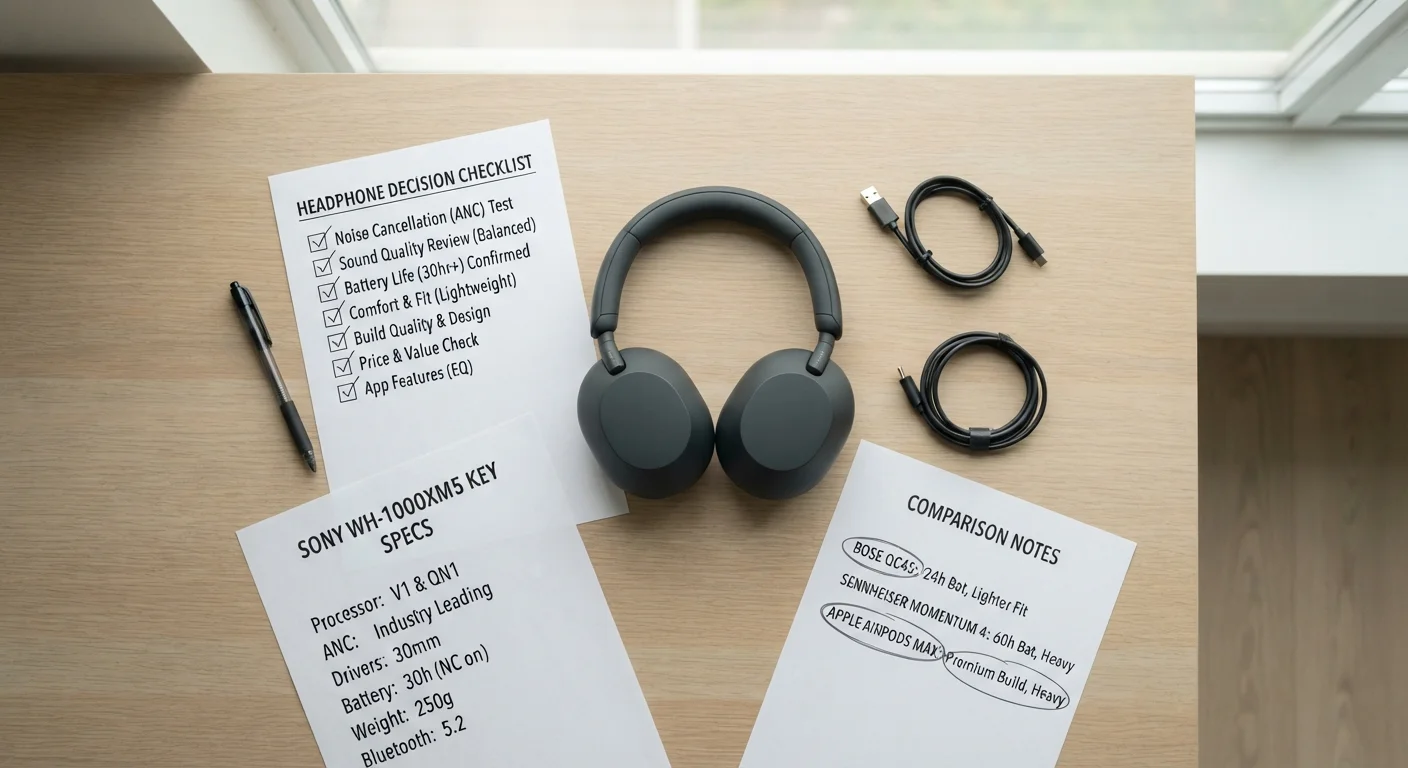
Opening a product page before defining your requirements means the manufacturer's framing shapes your thinking from the start. Writing your core job, non-negotiables, and nice-to-haves on paper first takes the spec sheet out of the driver's seat. Even a rough list reduces the likelihood of being swayed by features that sound impressive but don't serve your actual situation.
Once you have this framework written down, evaluate each product tier against it directly. Features that don't address your core job or non-negotiables are costing you money without adding value to your experience. For a deeper look at interpreting what spec numbers actually mean in practice, reading between the lines on product specifications can help you translate marketing language into usable information.
When Paying More Is Actually the Right Call
This framework isn't an argument for always buying the cheapest option. There are legitimate reasons to pay a premium:
- Durability signals - higher build quality can reduce replacement frequency, which lowers total cost of ownership over time. This is especially relevant for frequently used tools and appliances.
- Capability ceiling - if you're likely to grow into more advanced use, upgrading once may be more economical than replacing sooner.
- Reliability in critical applications - where failure has real consequences (medical devices, safety equipment, primary transportation), the calculus shifts meaningfully toward reliability over price.
The key distinction is that these are needs-based justifications, not feature-count justifications. Paying more because a product is genuinely more durable or better suited to your use case is sound reasoning. Paying more because the spec sheet is longer is not.
It's also worth noting that hidden costs extend beyond the purchase price. ongoing maintenance, accessories, and disposal costs can significantly change which tier represents true value over time.
This article is for general informational purposes only and does not constitute financial or purchasing advice tailored to your individual circumstances.