

Key Takeaways
- Food costs can quietly claim 30% or more of a travel budget if left unmanaged.
- Shopping at local markets and grocery stores is consistently cheaper than eating out every meal.
- Choosing accommodations with kitchen access allows home-style meals that stretch your food budget significantly.
- Eating the main meal at lunch instead of dinner often means the same dish at a lower price.
- A small travel snack kit reduces impulse purchases at airports, rest stops, and tourist zones.
Why Food Spending Deserves Its Own Budget Line
Most travelers plan carefully for flights and hotels, then let food spending drift. That drift adds up fast. Three restaurant meals a day in a mid-size American city or popular international destination can easily run $60-$100 per person - a figure that rivals the cost of a budget hotel room. Over a week-long trip, that's a significant portion of total spend, much of it on meals that weren't especially memorable.
The good news is that food is one of the most flexible budget categories on any trip. Unlike airfare, which is locked in once booked, food choices happen in real time - which means every day brings new opportunities to spend more thoughtfully. For a broader look at where travel budgets tend to fracture, see where hidden costs catch travelers off guard.
Proven Practices for Eating Well Without Overspending
These approaches work across trip types - whether you're driving cross-country, spending a week abroad, or hopping between cities. None require sacrificing the pleasure of eating local food.
Stay somewhere with kitchen or kitchenette access at least part of your trip
Preparing even one or two meals per day - typically breakfast and lunch - can cut your daily food spend by 40-60% compared to dining out for every meal. This approach also lets you use ingredients across multiple meals, reducing waste and cost.
Eat your largest, most exploratory meal at lunch rather than dinner
Many restaurants - especially in Europe, Latin America, and urban US areas - offer lunch specials or prix-fixe midday menus at noticeably lower prices than dinner. You get the same kitchen, the same chef, and often the same dishes for meaningfully less.
Shop at local grocery stores and markets rather than tourist-facing food vendors
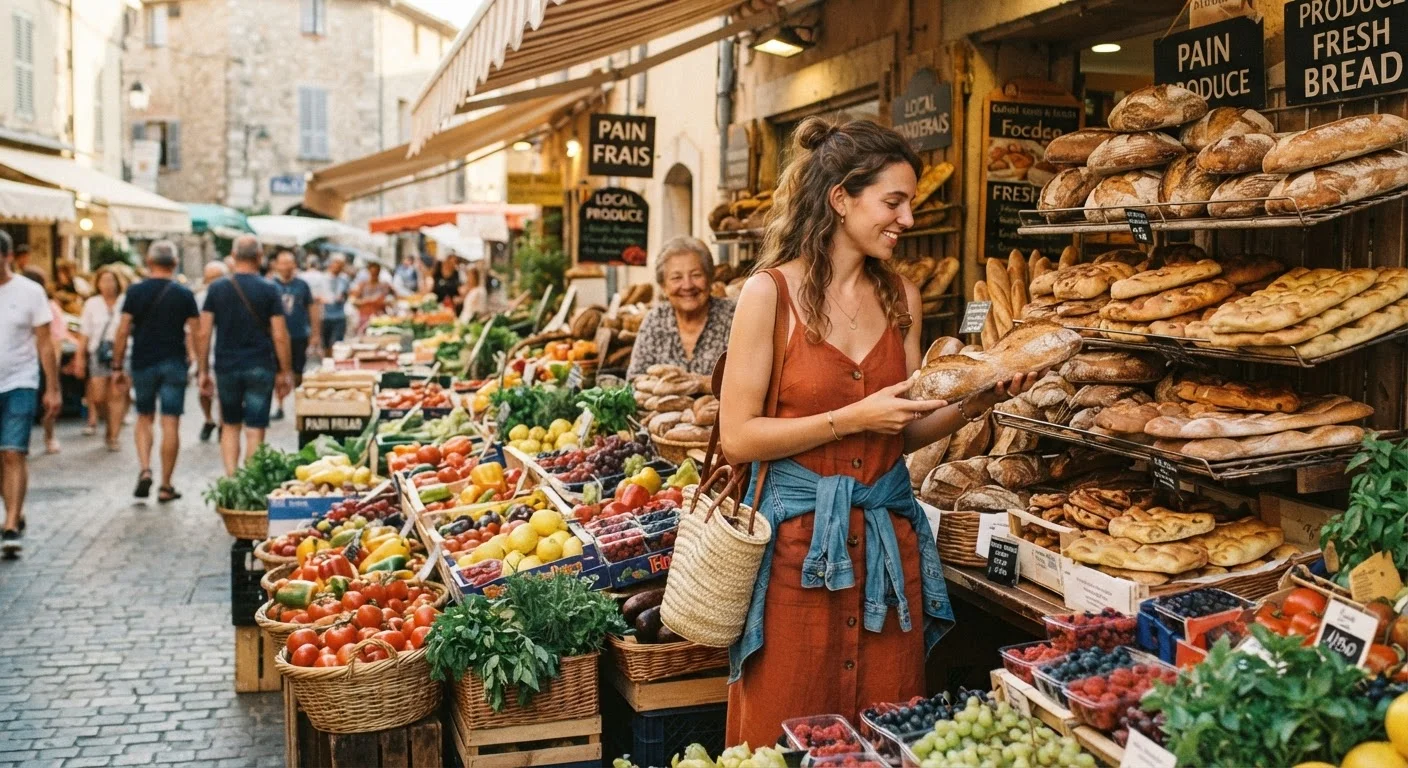
Convenience stores and food stalls near major tourist attractions mark up prices because foot traffic sustains them. A neighborhood supermarket or farmers market typically offers fresher food at lower prices, and browsing it gives genuine insight into local food culture.
Pack a small travel snack kit to carry daily
Hunger at inconvenient moments - transit hubs, long drives, sightseeing stretches - triggers impulse food purchases at the highest possible prices. Carrying portable, satisfying snacks eliminates most of those moments entirely.
Use a daily food spending cap rather than tracking every purchase
Tracking each item is tedious and easy to abandon. Setting a simple per-day food ceiling - and checking your total once at the end of the day - keeps spending in range without adding friction to every meal decision.
Seek out lunch counters, food halls, and market eateries over full-service restaurants
Counter-service spots, food markets, and informal eateries typically offer lower prices, faster service, and often more authentic local food than tourist-facing restaurants. They're where locals eat, which makes them worth seeking out on both quality and cost grounds.
Quick Moves You Can Make Starting Today
You don't need to overhaul your travel style to spend less on food. Small, consistent choices compound over the length of a trip. Here are the highest-impact actions to put into practice immediately.
The One-Splurge Rule Works Well for Food
Rather than trying to eat cheaply at every meal, consider budgeting for one intentional, higher-cost dining experience per trip - a local specialty, a celebrated dish, or a celebrated setting. Keeping the rest of your meals modest makes that one splurge feel earned and keeps total food spend in line. This approach tends to produce more satisfying food memories than spreading the same dollars across multiple mediocre restaurant meals.
How This Fits Into the Bigger Budget Picture
Managing food costs is one piece of a larger on-the-road financial strategy. Pairing smart food habits with real-time expense tracking makes the difference between a trip that stays on budget and one that surprises you at checkout. See how to track travel spending in real time for a straightforward approach that doesn't require spreadsheets.
For readers building a full trip plan, the end-to-end budget travel resource covers everything from destination choice through post-trip financial review. And if you want to apply the same cost-conscious mindset to everyday spending beyond travel, smart spending principles offer a useful framework.
~30%
Share of travel budget often spent on food
Travel budget surveys consistently show food and drink account for roughly a quarter to a third of total trip spending for independent travelers.
2-3×
Price premium at tourist-area eateries
Prices at restaurants adjacent to major tourist attractions can run two to three times higher than comparable local spots just a few blocks away.
This article provides general travel and budgeting information. Food prices, availability, and local customs vary by destination and change over time. Always verify current conditions before traveling.