

Key Takeaways
- Routine checks you do yourself - fluid levels, tyre pressure, lights - cost nothing but time.
- Catching small problems early almost always costs less than repairing the damage they cause.
- Your owner's manual is the single most reliable source of maintenance intervals for your specific vehicle.
- Some jobs genuinely require a qualified mechanic; knowing the difference protects you and your car.
- A basic maintenance habit built now will lower your total ownership costs over the life of the vehicle.
Start here
Why Routine Maintenance Matters From Day One
Next
The Checks You Can Do Yourself
Then
When to Call in a Mechanic
Finally
Building a Simple Maintenance Routine
Why Routine Maintenance Matters From Day One
New drivers often focus almost entirely on the act of driving - understandably so. But a car is a machine with dozens of systems that wear, consume, and degrade over time. Ignoring them doesn't make the wear stop; it just means you find out about it later, usually at greater expense.
The good news is that the fundamentals aren't complicated. Most routine maintenance is about checking things regularly and acting when something looks wrong - not about deep mechanical knowledge. Think of it less as a technical skill and more as a habit, one that protects both your safety and your wallet from the start.
If you're still getting to grips with the full picture of what car ownership actually costs, the guide to first-car ownership costs is a useful starting point before diving into maintenance specifics.
Your Owner's Manual Is Underrated
Every vehicle comes with an owner's manual that specifies the exact fluids, tyre pressures, and service intervals for that model. It's the most accurate source you have - more reliable than generic online guides. Keep it in the glovebox and actually use it.
The Checks You Can Do Yourself
Several of the most important maintenance tasks require no tools and no mechanical experience. Building them into a monthly routine takes about 15 minutes.
Tread depth
The measurement of the grooves in a tyre that channel water away and maintain grip. As these wear down, stopping distances increase - especially in wet conditions.
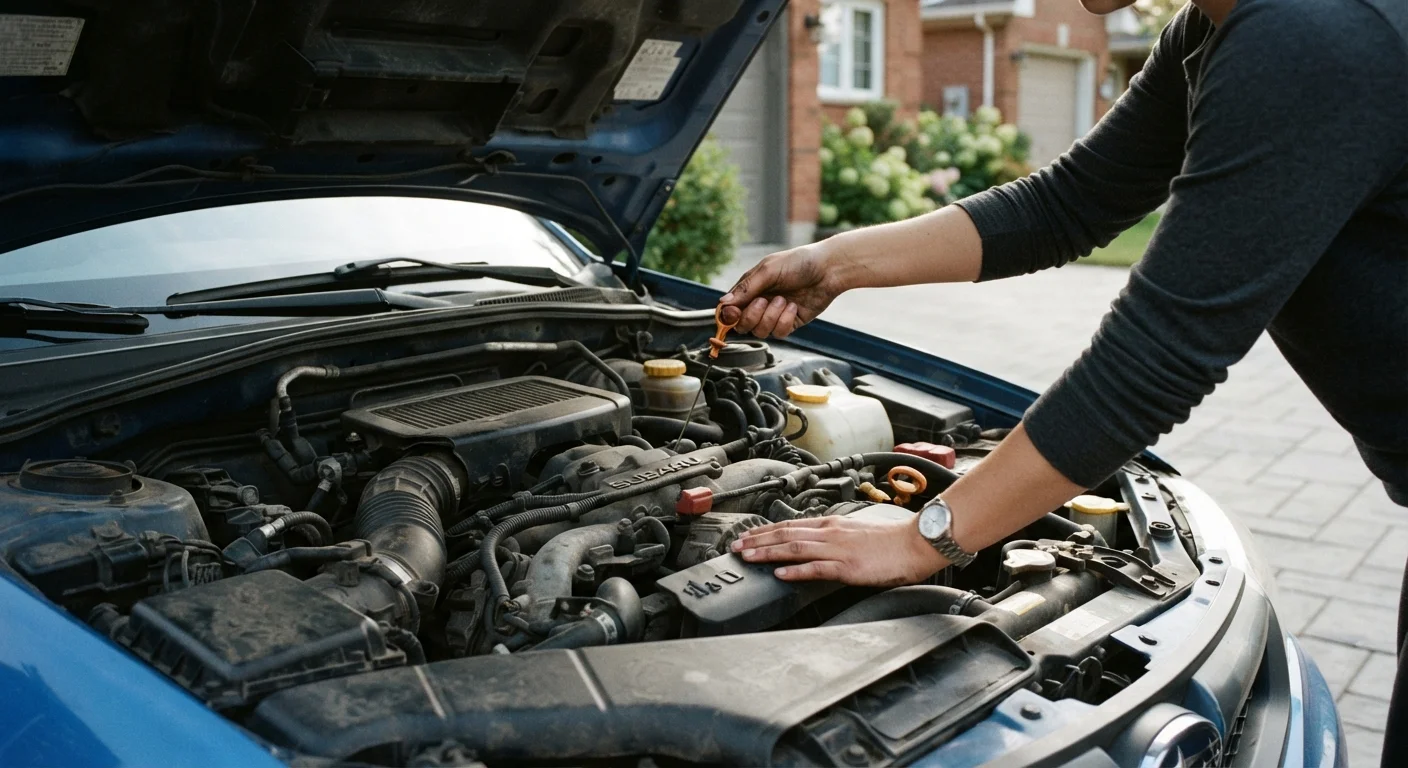
Dipstick
A long metal rod in the engine bay used to measure the level and condition of engine oil. You pull it out, wipe it clean, reinsert it, and read the level from the markings.
Coolant
A liquid mixture (also called antifreeze) that circulates through the engine to prevent it from overheating. It also stops the fluid freezing in cold temperatures.
Brake fluid
A hydraulic fluid that transfers the force from your brake pedal to the brake components at each wheel. Low or contaminated brake fluid affects braking performance.
Service interval
The recommended schedule - typically based on time (e.g., 12 months) or mileage - at which your vehicle should be inspected and serviced by a mechanic.
Cabin air filter
A replaceable filter that cleans the air entering the passenger compartment through the ventilation system. A clogged one reduces airflow and can carry unpleasant odors.
Tyre Pressure and Tread
Under-inflated tyres increase fuel consumption and wear unevenly; over-inflated tyres reduce grip. Check pressures monthly using a gauge at a petrol station or with a handheld gauge. The correct pressures - which vary by load - are in your owner's manual and often on a sticker inside the driver's door frame. For tread depth, the legal minimum in the US is 2/32 of an inch, though many safety organisations recommend replacing tyres before that point.
Engine Oil
Low or dirty oil causes engine wear that accumulates invisibly and expensively. Check the dipstick when the engine is cold and parked on level ground. The oil level should sit between the two markers. If it's low, top up with the grade specified in your manual - not just any oil.
Coolant, Brake Fluid, and Windscreen Washer
These are visible in translucent reservoirs under the hood. Coolant and brake fluid have MIN/MAX markings; if either is consistently low, that's worth investigating with a mechanic rather than just topping up repeatedly. Washer fluid is the one you can top up freely without concern.
Lights
Walk around the car once a week - headlights, brake lights, indicators, and reverse lights. A failed brake light is both a safety risk and a reason to be pulled over. Most bulb replacements are inexpensive and straightforward, though some modern vehicles require a workshop visit due to sealed unit designs.
When to Call in a Mechanic
Knowing what not to attempt yourself is as important as knowing what you can handle. The following are not DIY territory for new drivers:
- Brake system work - pads, rotors, calipers, and brake lines require proper tools and expertise. Brake failure is life-threatening.
- Suspension and steering components - incorrect repairs affect handling and create serious safety risks.
- Timing belt or timing chain replacement - this is engine-critical work with narrow tolerances.
- Electrical faults - modern vehicles have complex electronics; guessing at wiring can cause additional damage.
- Any dashboard warning light you can't identify - red lights especially warrant professional diagnosis before continued driving.
When budgeting for professional servicing, it helps to plan ahead rather than absorb unexpected bills. Our realistic maintenance budget guide breaks down what typical service costs look like so you're not caught off guard.
Don't Ignore a Red Warning Light
A red dashboard warning light - oil pressure, engine temperature, brake system - signals that something needs immediate attention. Continuing to drive can turn a manageable issue into major damage or a safety incident. Pull over safely, check your manual, and contact a mechanic before driving further if you're unsure.
Building a Simple Maintenance Routine
The most effective maintenance system is the one you'll actually stick to. A simple structure that works for most drivers:
- Monthly: Tyre pressure, engine oil level, lights check, washer fluid.
- Every 3-6 months: Coolant and brake fluid levels, wiper blade condition, cabin air filter inspection.
- At each service interval: Follow the schedule in your owner's manual. Most modern cars need a service annually or at a specified mileage - whichever comes first.
Keep a simple log - a notes app works fine - recording what you checked, when, and what was done. This is especially useful when selling the car or querying a mechanic about a recurring issue.
For a deeper look at how maintenance needs evolve as a vehicle ages, this end-to-end maintenance guide covers every major stage from early ownership to high mileage. And if you want to develop the driving habits that reduce wear in the first place, habits that keep running costs down is worth reading alongside this one.
The effort involved in routine maintenance is genuinely modest. The payoff - fewer breakdowns, lower repair bills, and a car that holds its value better - is not.