

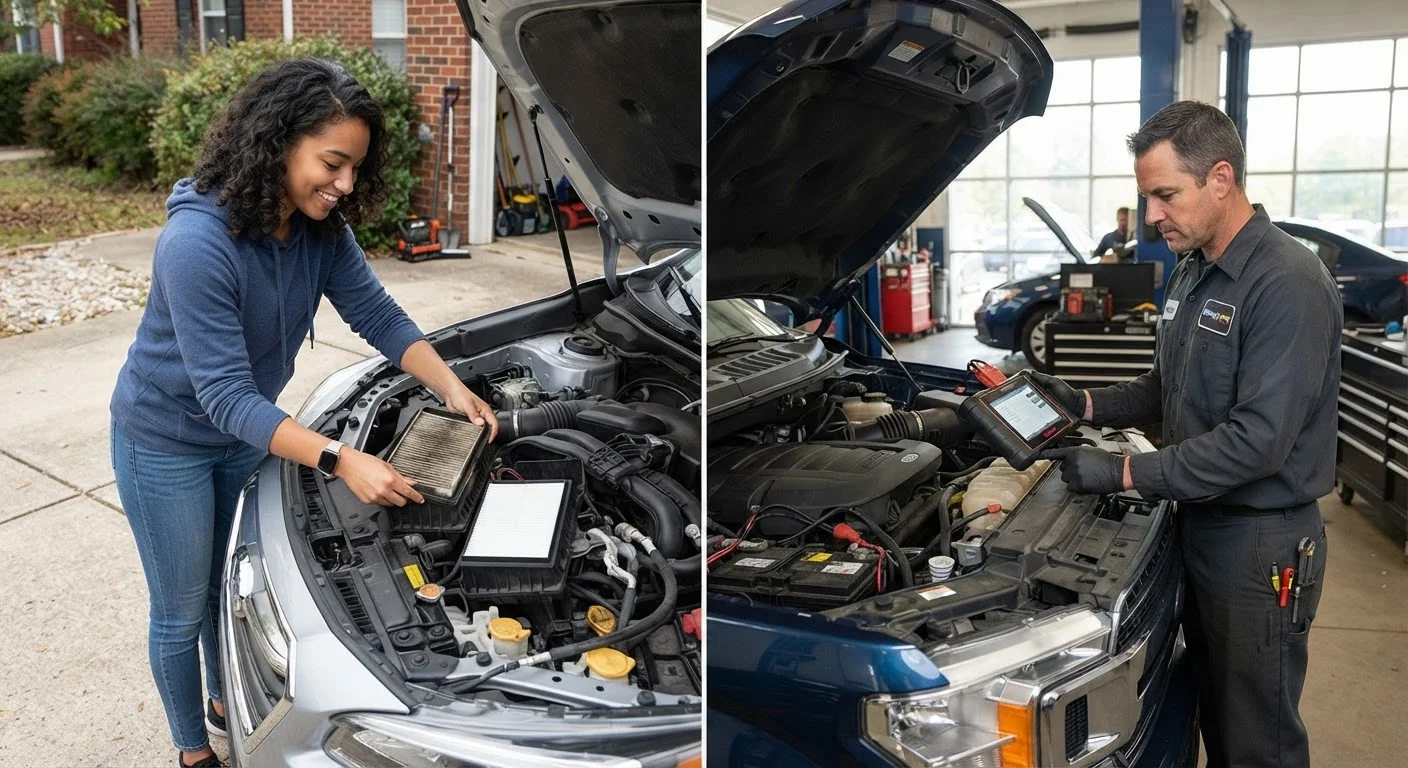
Key Takeaways
- Routine tasks like air filter swaps, wiper replacements, and tire pressure checks are safe for most drivers to handle at home.
- Brake system work, suspension repairs, and anything involving airbags should always go to a qualified mechanic.
- Attempting complex repairs without proper tools can void warranties and create safety hazards.
- Doing basic maintenance yourself can reduce ownership costs without compromising vehicle safety.
- When in doubt, a pre-inspection by a mechanic before attempting DIY work is always a reasonable step.
Our Verdict
Routine, low-risk maintenance tasks are well within reach for most drivers willing to invest a little time and the right basic tools. However, safety-critical systems - brakes, steering, suspension, and anything electronic or structural - carry real consequences when done incorrectly and are best handled by a qualified mechanic. The clearest guide is this: if a mistake could put you or others at risk on the road, don't go it alone.
| Best for | Recommended |
|---|---|
| Budget-conscious drivers comfortable with basic tools | DIY tasks: filters, wipers, fluid top-ups, bulbs |
| Drivers who want peace of mind on safety systems | Professional mechanic for brakes, suspension, and diagnostics |
| Owners of newer vehicles still under warranty | Professional mechanic to avoid voiding coverage |
Why the DIY vs. Professional Line Matters
Car ownership in the US comes with real ongoing costs. For drivers looking to manage those expenses sensibly, doing some maintenance at home is a legitimate strategy - but only when the task genuinely suits a non-specialist. The risk isn't just wasted time or a botched repair; getting it wrong on the wrong system can create a safety hazard that puts you and others in danger.
Understanding where that line sits is worth the effort. As part of a complete lifetime maintenance picture, dividing tasks by complexity and consequence is one of the most practical frameworks any driver can use.
| Task | DIY-Friendly | Mechanic Required | |
|---|---|---|---|
| Engine air filter | Yes - simple clip-and-swap | Not needed | |
| Wiper blade replacement | Yes - 10 minutes, no tools | Not needed | |
| Tire pressure check | Yes - basic gauge suffices | Not needed | |
| Brake pad replacement | Not recommended for most | Yes - safety-critical | |
| Timing belt/chain service | No - high engine damage risk | Yes - specialized tools required | |
| Airbag system repairs | Never - injury risk | Yes - always | |
| Check engine light diagnosis | Code reading only | Yes - full diagnosis needed | |
| Suspension/steering parts | No - alignment required after | Yes - precision work |
Tasks Most Drivers Can Safely Handle at Home
The following jobs are broadly considered low-risk, require minimal tools, and are well-documented for home execution. That said, always consult your vehicle's owner manual before starting - procedures vary by make and model.
- Engine air filter replacement: Typically involves unclipping a housing, swapping the filter, and reseating the cover. Most filters are accessible without lifting the vehicle.
- Cabin air filter replacement: Usually located behind the glove box or under the dashboard. No special tools needed in most cases.
- Windshield wiper blades: Clips vary slightly, but blade kits include simple instructions. Takes under 10 minutes per side.
- Tire pressure checks and inflation: A basic pressure gauge costs a few dollars. Keeping tires inflated to the manufacturer's recommended PSI (printed on the driver's door jamb) improves handling and fuel efficiency.
- Topping up fluids: Washer fluid, coolant overflow reservoir, and power steering fluid (on older vehicles) are straightforward top-ups. Avoid opening the radiator cap when the engine is hot.
- Replacing exterior bulbs: Many headlight and tail light bulbs can be swapped from the engine bay or trunk without removing bumpers, though some newer designs require professional access.
Start With a Basic Tool Kit
A socket set, a pair of pliers, a torque wrench, and a quality flashlight cover the majority of DIY-friendly tasks. Before buying specialty tools for a one-time job, check whether a local auto parts store offers a free tool loan program - many do. Starting with well-documented, low-stakes tasks builds the confidence and skill to handle slightly more involved work over time.
Tasks That Belong with a Qualified Mechanic
Some repairs look approachable on video but carry consequences that aren't immediately obvious. The jobs below involve safety-critical systems, specialized tools, or calibration that home mechanics genuinely cannot replicate safely.
- Brake system work: Pad replacement may seem simple, but improper seating, incorrect torque on caliper bolts, or failure to bed in new pads properly can lead to brake failure. Rotors, calipers, and brake lines raise the stakes further.
- Suspension and steering components: Ball joints, tie rods, and struts require alignment afterward. An improperly installed component can cause unpredictable handling at speed.
- Timing belt or chain service: Incorrect timing can cause catastrophic engine damage within minutes of starting. This job demands precise mechanical knowledge and specific tools.
- Airbag system work: Supplemental restraint systems involve explosive charges. Accidental deployment during repair can cause severe injury. Always defer to a professional.
- Transmission service beyond fluid changes: Internal transmission repair is complex, expensive to get wrong, and often requires proprietary diagnostic tools.
- Check engine light diagnosis: A scan tool can pull a code, but correctly interpreting and resolving the underlying cause - especially for emissions or engine management faults - typically needs professional equipment and experience.
For a clearer picture of what mechanics actually inspect and why it matters, see what mechanics check during a standard service.
Warranty and Insurance Implications
On vehicles still covered by a manufacturer or extended warranty, certain DIY repairs - particularly those involving powertrain or safety systems - may void coverage if not performed by an authorized technician. Review your warranty terms carefully before starting any work beyond basic consumables. In some cases, documentation of who performed the service can matter at claim time.
Planning Your Maintenance Budget Around Both Approaches
Mixing DIY tasks with professional servicing is a practical middle ground for most drivers. Handling filters, wiper blades, and fluid top-ups at home can reduce the number of paid shop visits over a year, while leaving safety-critical work to professionals keeps your vehicle roadworthy and, for newer vehicles, protects any remaining warranty coverage.
Building a realistic annual estimate - factoring in both DIY costs (supplies, occasional tools) and professional service intervals - helps avoid being caught off guard by unexpected bills. Budgeting realistically for servicing and repairs is a useful next step for any driver trying to get ahead of costs rather than react to them.
This article is for general informational purposes only. Vehicle designs vary significantly - always consult your owner's manual and, where in doubt, a qualified mechanic before attempting any maintenance work.