

Key Takeaways
- A standard service covers fluids, filters, brakes, tires, lights, and key mechanical components.
- Mechanics inspect both safety-critical and wear-related items during the same visit.
- Not all services are identical - the scope depends on mileage, vehicle age, and service type (interim vs. full).
- Knowing what's checked helps you ask better questions and verify the work performed.
- Keeping a service log protects your vehicle's resale value and warranty standing.
Standard Car Service
A standard car service is a scheduled inspection and maintenance visit where a qualified mechanic checks and, where necessary, replaces key components to keep a vehicle running safely and efficiently. It typically covers fluids, filters, brakes, tires, lights, and several mechanical systems. The scope varies by shop, vehicle age, and mileage interval, but most follow a broadly consistent checklist.
Service intervals are usually defined by the manufacturer in miles or months - whichever comes first. Some modern vehicles use condition-based monitoring systems that signal when a service is actually due rather than on a fixed schedule.
Why Understanding a Service Checklist Matters
Most drivers drop their car off, pay the bill, and hope for the best. That's understandable - but knowing what a mechanic actually inspects during a standard service puts you in a stronger position. You can ask informed questions, spot vague or incomplete invoices, and make better decisions about what needs attention now versus what can wait.
A standard service is not one-size-fits-all. An interim service (typically every six months or 6,000 miles) covers core safety checks and consumables. A full service (usually annually) goes deeper, including additional fluid replacements, spark plugs, and more thorough mechanical inspections. Understanding the difference helps you budget appropriately - something our guide on building a realistic maintenance budget covers in detail.
2/32"
Legal minimum tire tread depth in the US
Per federal safety standards; many safety organizations recommend replacing tires at 4/32" for adequate wet-road stopping distance.
~40%
Of vehicle breakdowns linked to maintenance neglect
Industry estimates consistently attribute a large share of roadside breakdowns to issues that routine servicing is designed to catch early.
12 months
Typical maximum interval between services
Most manufacturers recommend servicing at least annually regardless of mileage, particularly for vehicles used in stop-and-go or short-trip conditions.
Fluids: The First Priority
Engine oil is the most commonly replaced item during any service. The mechanic will drain the old oil, replace the oil filter, and refill with fresh oil to the correct specification. Understanding oil types - synthetic, semi-synthetic, or mineral - matters here because using the wrong grade can reduce engine protection.
Beyond engine oil, a thorough service checks:
- Coolant - for level, concentration, and signs of contamination
- Brake fluid - for moisture content, which degrades braking performance over time
- Power steering fluid (where applicable) - level and condition
- Windshield washer fluid - topped up as needed
Many of these can be checked between services too. Our driveway fluid check guide walks through what's safe to do yourself.
Brakes, Tires, and Safety Systems
Brakes are inspected both visually and, where possible, physically. The mechanic checks brake pad thickness, rotor condition (looking for scoring or uneven wear), and the integrity of brake lines and calipers. Worn pads that go unnoticed can damage rotors and significantly increase stopping distances.
Tires get checked for tread depth (the legal minimum in the US is 2/32", though 4/32" is the safety-recommended threshold), uneven wear patterns, sidewall damage, and pressure. Uneven wear often signals an alignment or suspension issue worth investigating separately.
Lights - headlights, brake lights, turn signals, and reverse lights - are verified for function. A failed brake light is both a safety hazard and a ticketable offense, so this is a quick but important check.
Ask for the Inspection Report
A reputable shop will provide a written checklist showing what was inspected, what was replaced, and any advisory items flagged for future attention. Review it before you leave - it's also useful for your car maintenance log. If no written report is offered, it's reasonable to ask for one.
Filters, Belts, and Under-the-Hood Components
The air filter is inspected and replaced if clogged - a restricted filter reduces engine efficiency and fuel economy. The cabin air filter, which affects interior air quality, is also checked during a full service.
The mechanic will examine drive belts (including the serpentine belt) for cracking, fraying, or tension issues. A snapped serpentine belt disables power steering, the alternator, and in some vehicles, the water pump - making this a critical inspection point. Timing belts, where applicable, follow a separate manufacturer-specified replacement interval.
Hoses - coolant hoses in particular - are checked for softness, bulging, or cracks. These under-the-hood items are easy to overlook but can cause rapid overheating if they fail.
Battery terminals are inspected for corrosion, and some shops test battery voltage and cold cranking amps to flag a battery that's approaching end of life.
Suspension, Steering, and the Visual Undercarriage Check
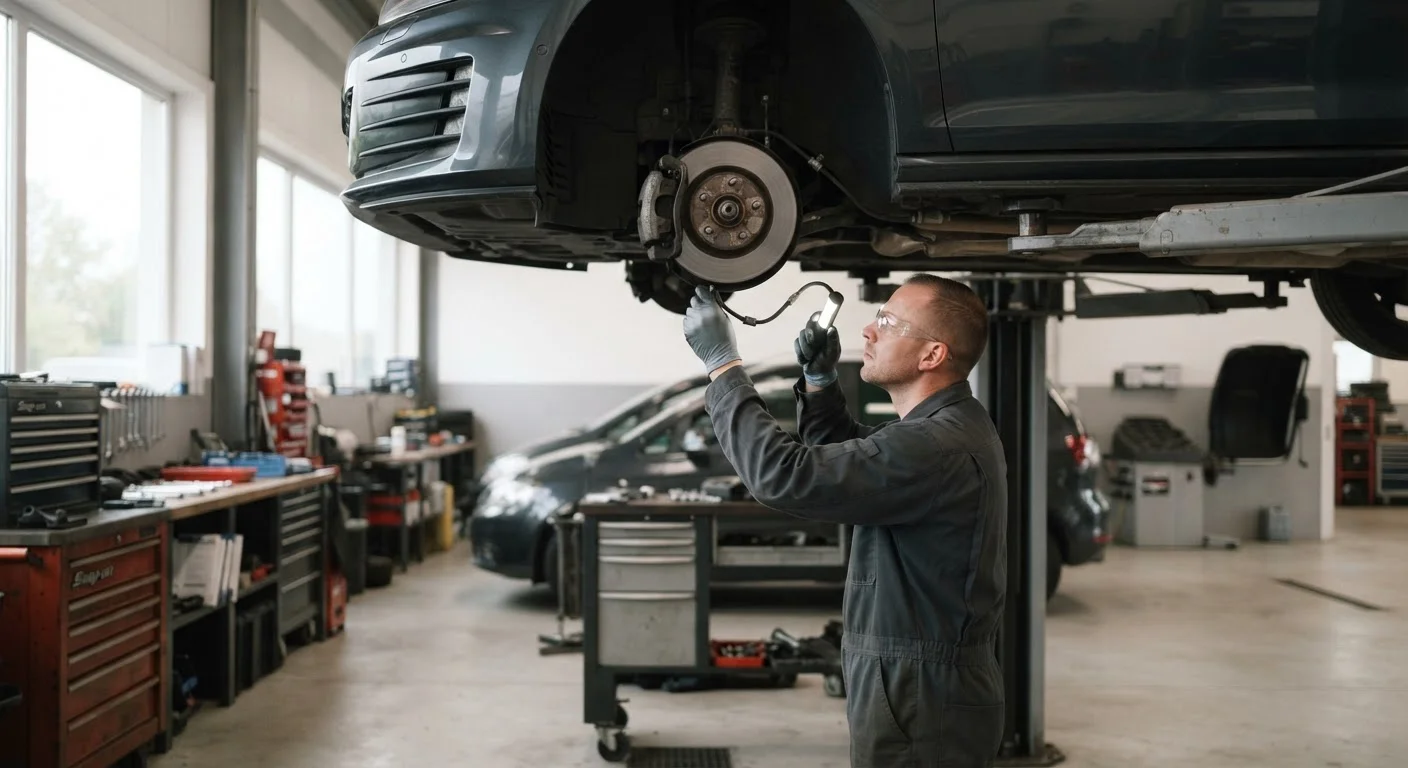
With the vehicle raised on a hoist, the mechanic has access to components that are invisible at ground level. This includes shock absorbers and struts (checked for leaks or excessive play), ball joints, tie rods, and CV joints and boots. Torn CV boots allow grease to escape and contaminants to enter, accelerating joint wear.
Exhaust components are also inspected visually - looking for corrosion, loose hangers, or obvious leaks. A failing exhaust can affect emissions compliance and fuel efficiency.
This undercarriage pass often catches issues that wouldn't surface until a component fails on the road. It's one of the clearest arguments for keeping to a regular service schedule, as described in our lifetime maintenance overview.
Interim vs. Full Service: Know the Difference
An interim service covers the core essentials - oil, filters, fluids, brakes, and tires - and is suited to higher-mileage drivers who service more frequently. A full service adds a wider mechanical inspection, including spark plugs, additional fluid replacements, and a more detailed drivetrain check. When booking, confirm which type you're receiving and what's included in writing.
This article is for general informational purposes only. For advice specific to your vehicle, consult a qualified mechanic or refer to your owner's manual.