

Key Takeaways
- Meal planning reduces food waste and impulsive grocery spending without requiring chef-level skills.
- Auditing your pantry before shopping is the single most time- and money-saving first step.
- A realistic plan accounts for busy nights, leftovers, and foods you actually enjoy eating.
- Organizing your grocery list by store section cuts shopping time and limits temptation.
- Consistency matters more than perfection - small weekly adjustments build lasting habits.
Start here
Why Meal Planning Is Worth the Effort
Next
Step 1: Take Stock Before You Shop
Then
Step 2: Build a Realistic Weekly Menu
Apply it
Step 3: Write a Purposeful Grocery List
Build the habit
Keeping It Going: Simple Habits That Stick
Why Meal Planning Is Worth the Effort
Meal planning is one of those habits that sounds more complicated than it actually is. At its core, it simply means deciding in advance what you'll eat for the week - so that your grocery trip is intentional rather than reactive.
Research published in nutritional epidemiology journals has found that people who plan meals ahead of time tend to eat a wider variety of foods and are less likely to rely on fast food or heavily processed options. For budget-conscious shoppers, the financial upside is equally compelling: fewer impulse purchases, less food thrown out at the end of the week, and no last-minute takeout orders when the fridge looks empty.
If your household budget is already a work in progress, meal planning pairs naturally with a broader spending plan. Our monthly spending plan guide covers how to set realistic category limits - including groceries - which makes planning meals that much easier.
Meal planning
The practice of deciding in advance what meals you'll prepare and eat over a set period, typically a week, before you shop for groceries.
Pantry audit
A quick inventory of the food you already have at home - fridge, freezer, and cupboards - done before writing a grocery list to avoid waste and duplicate purchases.
Food waste
Food that is purchased but not eaten, often because it spoils before being used. Reducing food waste is one of the most direct ways to lower household food costs.
Batch cooking
Preparing a larger quantity of a recipe in one session so that portions can be eaten across multiple meals or days, saving time and effort during the week.
Flexible meal
A dish built around a neutral base - such as grains, roasted vegetables, or legumes - that can be customized with different toppings or proteins to suit different preferences.
Step 1: Take Stock Before You Shop
Before you write a single meal idea, open your fridge, freezer, and pantry. A quick inventory takes five minutes and prevents the classic mistake of buying duplicates or ignoring ingredients already on hand.
As you look through your supplies, note:
- Proteins - frozen chicken, canned beans, eggs, canned fish
- Grains and starches - rice, pasta, oats, bread, tortillas
- Produce - what needs to be used first to avoid spoilage
- Condiments and flavor builders - sauces, spices, oils that anchor quick meals
Prioritize meals that use up items already in your kitchen. This single habit is responsible for most of the food-waste reduction people notice when they start planning. Our weekly grocery checklist outlines the key staple categories worth keeping stocked as a foundation.
Step 2: Build a Realistic Weekly Menu
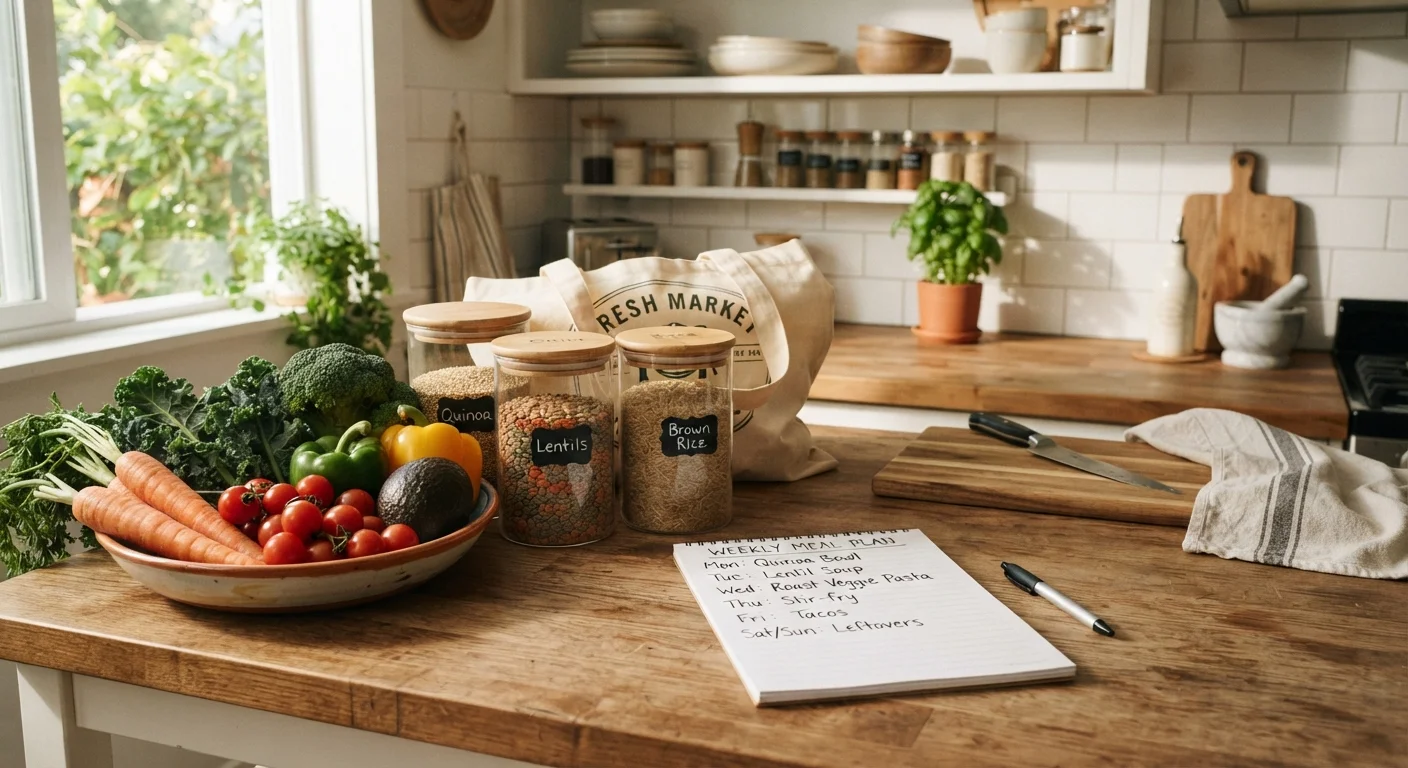
Start with a simple blank grid: seven dinners, plus however many lunches and breakfasts you want to plan. Don't try to fill every slot with something elaborate - an honest plan outperforms a perfect one.
Use these principles to build your menu:
- Plan for real life. If Wednesday nights are consistently hectic, that's a leftovers night or a 15-minute meal - not a slow cooker project.
- Build in at least one double batch. Cooking a larger portion of a meal (like a pot of soup or a grain bowl base) gives you a ready lunch or a second dinner with no extra effort.
- Leave one night flexible. A planned "whatever's in the fridge" night reduces pressure and naturally uses up odds and ends.
- Balance nutrition broadly. Aim for variety across the week rather than perfection at every meal - different protein sources, a range of vegetables, and whole grains alongside refined ones.
Start With Just Five Dinners
Beginners often feel pressured to plan all 21 meals at once. Instead, start by planning only five dinners and leave two nights open for leftovers or flexibility. This approach is far easier to sustain and still delivers most of the benefit of full meal planning.
Eating patterns that support long-term health don't require complicated recipes. Simple combinations - eggs and vegetables, beans and rice, canned fish over greens - consistently appear in research on affordable, nutritious diets.
Step 3: Write a Purposeful Grocery List
Once your menu is drafted, translate it directly into a shopping list. Work through each planned meal and note every ingredient you don't already have at home.
Organize the list by store section - produce, proteins, dairy, frozen, dry goods, condiments. This isn't just a time-saver; it limits the amount of browsing you do in aisles that aren't relevant to your plan, which is one of the most reliable ways to reduce impulse spending.
Avoid Over-Planning Your First Week
One of the most common first-week mistakes is buying ingredients for ambitious recipes that require more time or skill than a busy week actually allows. Plan meals you already know how to make confidently before introducing new recipes. A practical first week builds momentum; a stressful one makes it easy to quit.
A few practical list-writing tips:
- Write quantities, not just item names - "2 cans chickpeas" is more useful than "chickpeas."
- Flag items that are interchangeable so you can choose based on what's available or reasonably priced at the store.
- Keep a running notes section at the bottom for pantry restocks that aren't tied to a specific meal.
For shoppers also working on broader financial habits, a structured budgeting walkthrough can help you set a realistic weekly grocery number before you head to the store.
Keeping It Going: Simple Habits That Stick
The most common reason meal planning stalls is setting an unsustainable standard in week one. A workable system is always better than a flawless one that gets abandoned by week three.
A few habits that help beginners stay consistent:
- Pick a regular planning time. Sunday evening or the day before your usual shop works for most households. Attaching planning to a time you already have free makes it easier to maintain.
- Keep a rotating recipe list. Write down 10-15 meals your household reliably enjoys. Planning becomes much faster when you're choosing from a familiar list rather than starting from scratch every week.
- Review the week briefly. A two-minute look back - what got used, what didn't - improves your next plan without requiring formal tracking.
Meal planning also connects naturally to other health habits. If you're building a fitness routine alongside your nutrition changes, our guide to a well-rounded weekly workout plan offers the same kind of realistic, beginner-friendly framework applied to movement.
This article provides general nutrition and lifestyle information for educational purposes only. It is not a substitute for advice from a registered dietitian or qualified healthcare provider. If you have specific dietary needs or health conditions, consult a professional before making significant changes to your eating habits.