

| Recommended weekly aerobic activity | ~150 min moderate or ~75 min vigorous (U.S. Dept. of Health and Human Services Physical Activity Guidelines for Americans) |
| Strength training sessions per week | 2 or more (U.S. Dept. of Health and Human Services Physical Activity Guidelines for Americans) |
| Minimum rest days recommended | At least 1 per week (General exercise science consensus) |
| Cost of a basic home routine | $0 - bodyweight exercises require no equipment |
| Minimum effective session length | 10 minutes (bouts can be accumulated) (U.S. Physical Activity Guidelines, 2nd edition) |
What 'Well-Rounded' Actually Means
A well-rounded workout plan isn't about training harder every day - it's about combining the right types of movement across the week so your body develops evenly and recovers adequately. Most fitness guidelines, including those from the U.S. Department of Health and Human Services, point to three foundational pillars: aerobic (cardio) activity, muscle-strengthening work, and intentional rest or active recovery.
None of these require a gym membership or expensive equipment. Walking, bodyweight exercises, and stretching cost nothing and can be done almost anywhere. The key is structuring them deliberately rather than improvising day to day.
| Recommended weekly aerobic activity | ~150 min moderate or ~75 min vigorous (U.S. Dept. of Health and Human Services Physical Activity Guidelines for Americans) |
| Strength training sessions per week | 2 or more (U.S. Dept. of Health and Human Services Physical Activity Guidelines for Americans) |
| Minimum rest days recommended | At least 1 per week (General exercise science consensus) |
| Cost of a basic home routine | $0 - bodyweight exercises require no equipment |
| Minimum effective session length | 10 minutes (bouts can be accumulated) (U.S. Physical Activity Guidelines, 2nd edition) |
For a deeper look at how cardio and strength training each affect the body, see our guide to balancing cardio and strength. If you're building entirely at home, the full home fitness overview covers planning and progression in more detail.
Breaking Down the Weekly Structure
A practical weekly plan for most healthy adults typically includes:
- Aerobic activity: Spread across most days in moderate-intensity bouts (brisk walking, jogging, cycling) or fewer sessions of vigorous activity. Current public health guidance generally suggests around 150 minutes of moderate-intensity or 75 minutes of vigorous aerobic activity per week for adults - consult a healthcare provider about what's appropriate for your situation.
- Strength training: Two or more sessions per week targeting major muscle groups. This can be done entirely with bodyweight movements like squats, push-ups, and lunges. Our article on no-equipment exercises covers effective options.
- Flexibility and mobility: Even 10-15 minutes of stretching or yoga-style movement on rest days supports recovery and reduces injury risk.
- Rest or active recovery: At least one full rest day per week. Active recovery (light walking, gentle stretching) on additional days is fine and often preferable to complete inactivity.
Aerobic exercise
Physical activity that elevates your heart rate and breathing for a sustained period, using oxygen as the primary fuel source. Examples include walking, running, swimming, and cycling.
Muscle-strengthening activity
Exercise that works major muscle groups against resistance, causing them to adapt and grow stronger over time. This includes bodyweight movements, resistance bands, and weight training.
Active recovery
Low-intensity movement performed on rest days to promote circulation and reduce muscle soreness without adding significant training stress. Light walking and gentle stretching are common examples.
Progressive overload
The gradual increase of exercise difficulty over time - through more reps, sets, or resistance - to continue challenging the body and driving adaptation.
Mobility work
Exercises that improve the range of motion of joints and surrounding tissues, supporting better movement quality and reducing injury risk.
Variety matters not just for physical balance but for adherence - rotating movement types reduces boredom and keeps the habit sustainable over weeks and months.
Fitting a Routine Into a Real-Life Schedule
One of the biggest barriers to consistent exercise is the belief that sessions must be long or uninterrupted. Research suggests that shorter bouts of activity, accumulated across the day, can deliver meaningful health benefits - so three 10-minute walks count toward your weekly total.
Short Sessions Still Count
The U.S. Physical Activity Guidelines (2nd edition) removed the earlier requirement that activity bouts last at least 10 minutes. This means any movement - even a brief walk between tasks - contributes to your weekly total. Breaking sessions into smaller chunks throughout the day is a practical strategy for busy schedules and costs nothing extra.
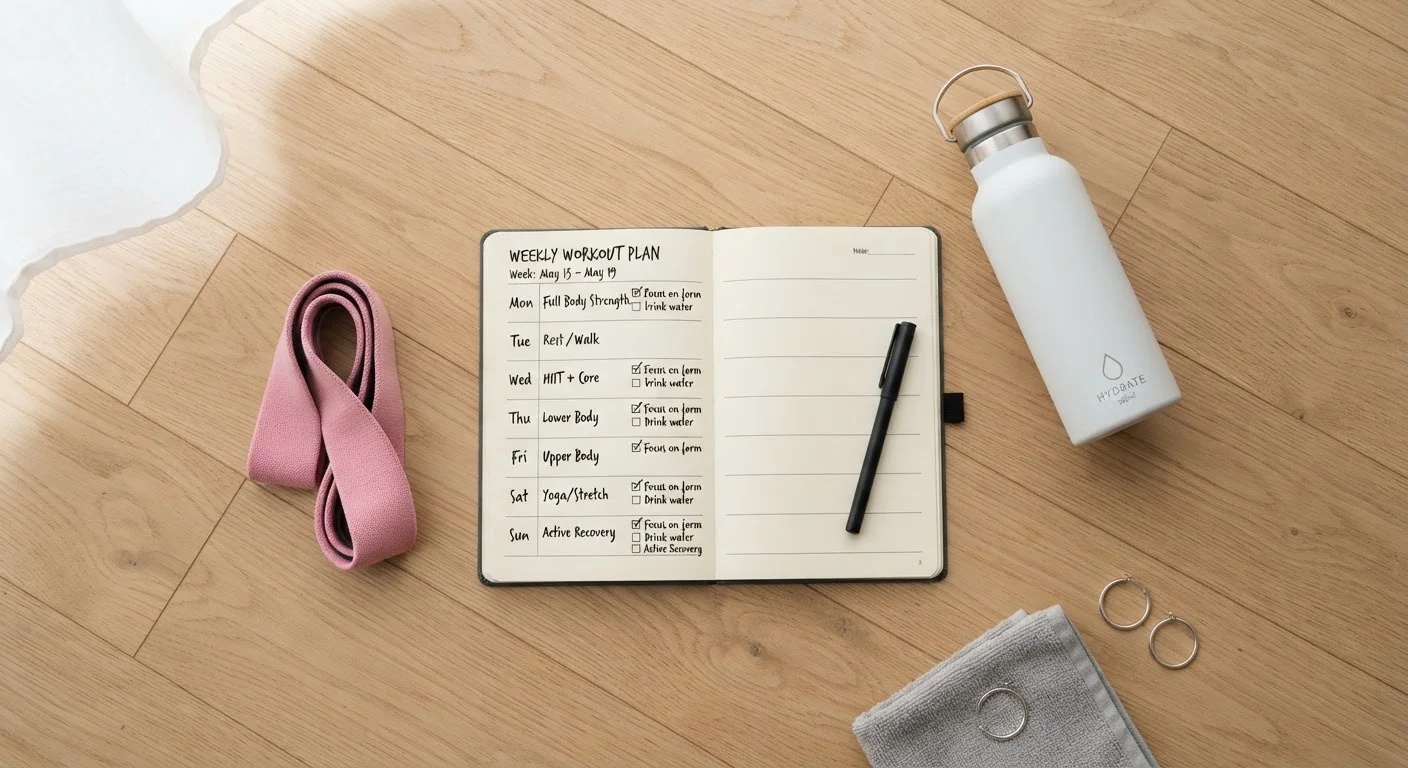
A simple starting framework for a 7-day week:
- Day 1: Moderate cardio (30-min brisk walk or jog)
- Day 2: Bodyweight strength (upper body focus)
- Day 3: Light activity or rest
- Day 4: Moderate cardio
- Day 5: Bodyweight strength (lower body and core focus)
- Day 6: Active recovery - stretching, short walk, or yoga
- Day 7: Full rest
This framework is a general illustration, not a personal prescription. Adjust based on your current fitness level, health status, and lifestyle - and speak with a qualified healthcare professional before starting a new exercise programme, especially if you have any existing health conditions.
Pairing consistent movement with steady nutrition habits compounds the benefit. Our beginner's guide to meal planning can help you build that side of the habit affordably.
This article is for general informational and educational purposes only and is not a substitute for professional medical advice. Consult a qualified healthcare provider before beginning any new exercise programme.