

Key Takeaways
- Organizing your grocery list by food category helps ensure nutritional variety and reduces impulse spending.
- Whole grains, legumes, and eggs offer strong nutritional value at a lower cost per serving than most packaged foods.
- Stocking versatile pantry staples reduces food waste and makes weeknight cooking faster and cheaper.
- Frozen and canned produce can be just as nutritious as fresh and often costs significantly less.
- A written list based on planned meals is one of the most effective ways to stay on budget at the store.
Summary
28 items · 20-40 minutes
Why a Structured Grocery List Saves Money and Supports Health
Walking into a grocery store without a plan is one of the most reliable ways to overspend - and one of the most common habits that can quietly erode both your budget and your diet quality. Research consistently shows that shoppers who use a list buy more intentionally, waste less food, and make more nutritious choices. For a deeper look at the patterns that trip people up, see common shopping habits that undermine a healthy diet.
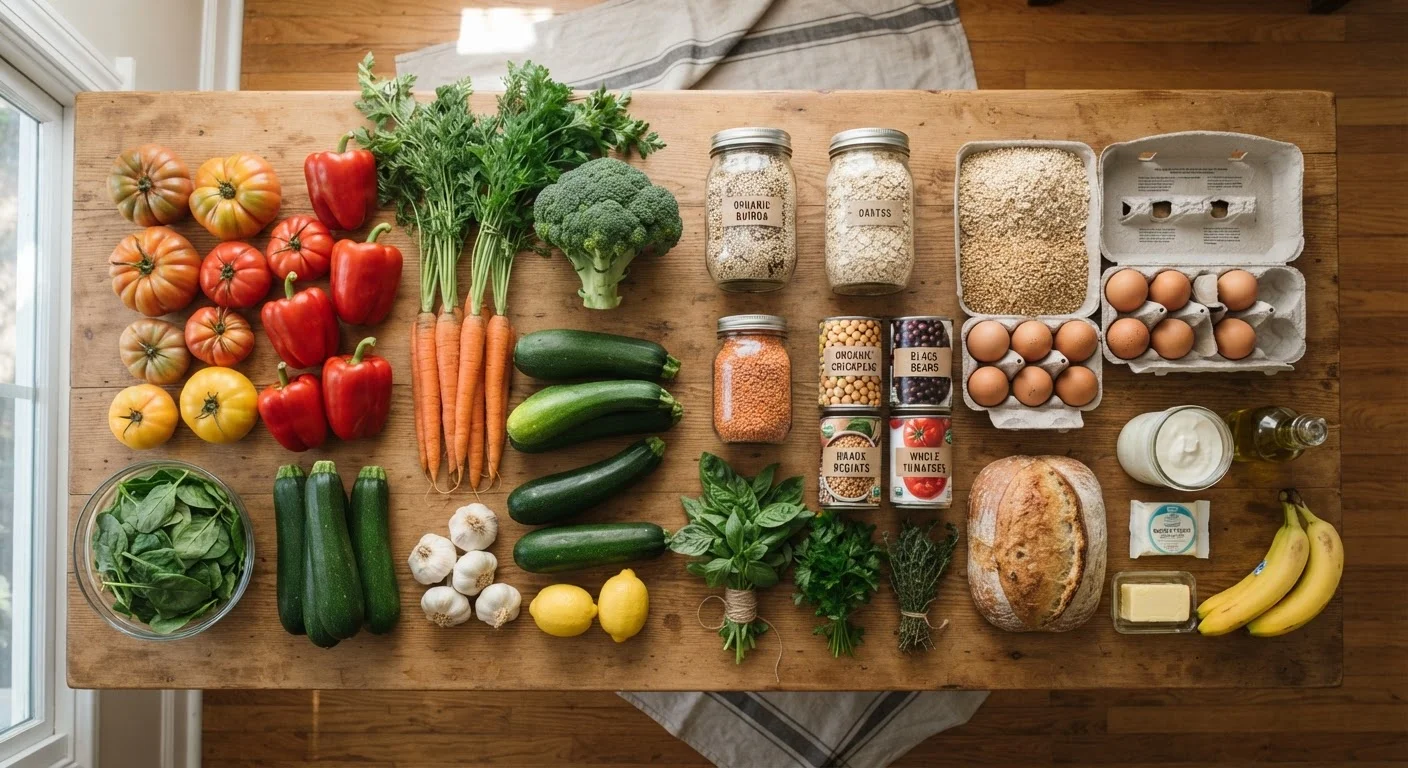
This checklist is organized around five core pantry categories - grains, proteins, produce, fats, and condiments - because covering each category every week is the most practical way to ensure nutritional variety without obsessing over individual nutrients. Before shopping, take five minutes to review what you already have and note only what needs restocking. If you're working to align grocery spending with a broader household budget, a monthly budget checklist can help you set a realistic weekly grocery target.
Whole Grains & Starches
Proteins
Vegetables & Fruit
Healthy Fats
Pantry Staples & Condiments
How to Use This Checklist Effectively
This list is designed as a starting framework, not a rigid prescription. Adjust quantities based on your household size, dietary needs, and what's already in your pantry. A few principles make this checklist most effective:
- Plan meals first, then shop. Even rough meal sketches (three dinners, two lunches) dramatically reduce overbuying.
- Default to flexible staples. Items like oats, canned tomatoes, and dried lentils can stretch across multiple meals. See our guide to making dried lentils last a week for practical ideas.
- Don't overlook frozen and canned. Frozen spinach, canned chickpeas, and sardines are nutritionally comparable to fresh equivalents and often cost far less per serving.
- Compare cost per serving, not sticker price. A bag of dried black beans may cost more upfront than a single can but yields many more portions. For a breakdown of affordable grain options, see oats, rice, pasta, and bread compared.
Don't Skip the Produce Section to Save Money
It can be tempting to cut vegetables and fruit when budgets are tight, but doing so tends to increase reliance on higher-sodium, lower-nutrient packaged foods. Frozen and canned options are legitimate, affordable alternatives - they undergo minimal nutritional loss during processing and can cost significantly less than fresh. Prioritize at least one vegetable and one fruit in every weekly shop, even in their preserved forms.
For more evidence-grounded strategies on maintaining a nutritious diet without overspending, see what actually works for eating well on a tight budget.
Notepad or Grocery List App
Record items by category before shopping to avoid backtracking and impulse buys.
Pantry Inventory Sheet
Track what staples you already have at home so you only buy what's actually needed.
Store Circular or Weekly Ad
Identify which produce and proteins are on sale so you can plan meals around discounted items.
Meal Plan Template
Sketch out three to five dinners before shopping to anchor your list and reduce food waste.
This article provides general nutrition and shopping information for educational purposes only. It is not a substitute for personalized dietary advice from a registered dietitian or other qualified healthcare professional. Individual nutritional needs vary - consult a qualified professional for guidance specific to your health situation.