

Key Takeaways
- Shopping without a list consistently leads to more processed food purchases and higher spending.
- Front-of-package health claims are marketing tools, not nutritional guarantees - always check the label.
- Shopping hungry significantly increases impulse purchases of calorie-dense, low-nutrient foods.
- Skipping the perimeter of the store often means missing the most nutrient-dense whole foods.
- Bulk buying can undermine healthy eating when it leads to spoilage or overconsumption of less nutritious items.
Why Small Shopping Habits Have Big Nutritional Consequences
Most people don't leave the grocery store intending to undermine their diet. Yet research in consumer behavior consistently shows that the decisions made inside a store - often in seconds, under the influence of hunger, habit, or packaging - shape what ends up on the plate far more than any single meal choice. For budget-conscious shoppers, the stakes are double: poor habits erode both nutritional quality and financial discipline at the same time.
The good news is that these patterns are learnable and reversible. Understanding why certain shopping habits work against healthy eating - and what to do instead - is the first step toward a cart that actually reflects your intentions. For a practical foundation, the weekly grocery checklist for a balanced pantry offers a useful starting point.
Shopping without a list - or ignoring the one you wrote.
Why it happens: List-making feels like extra effort, especially for quick trips. Many shoppers rely on memory or in-store cues, leaving decisions open to impulse and marketing.
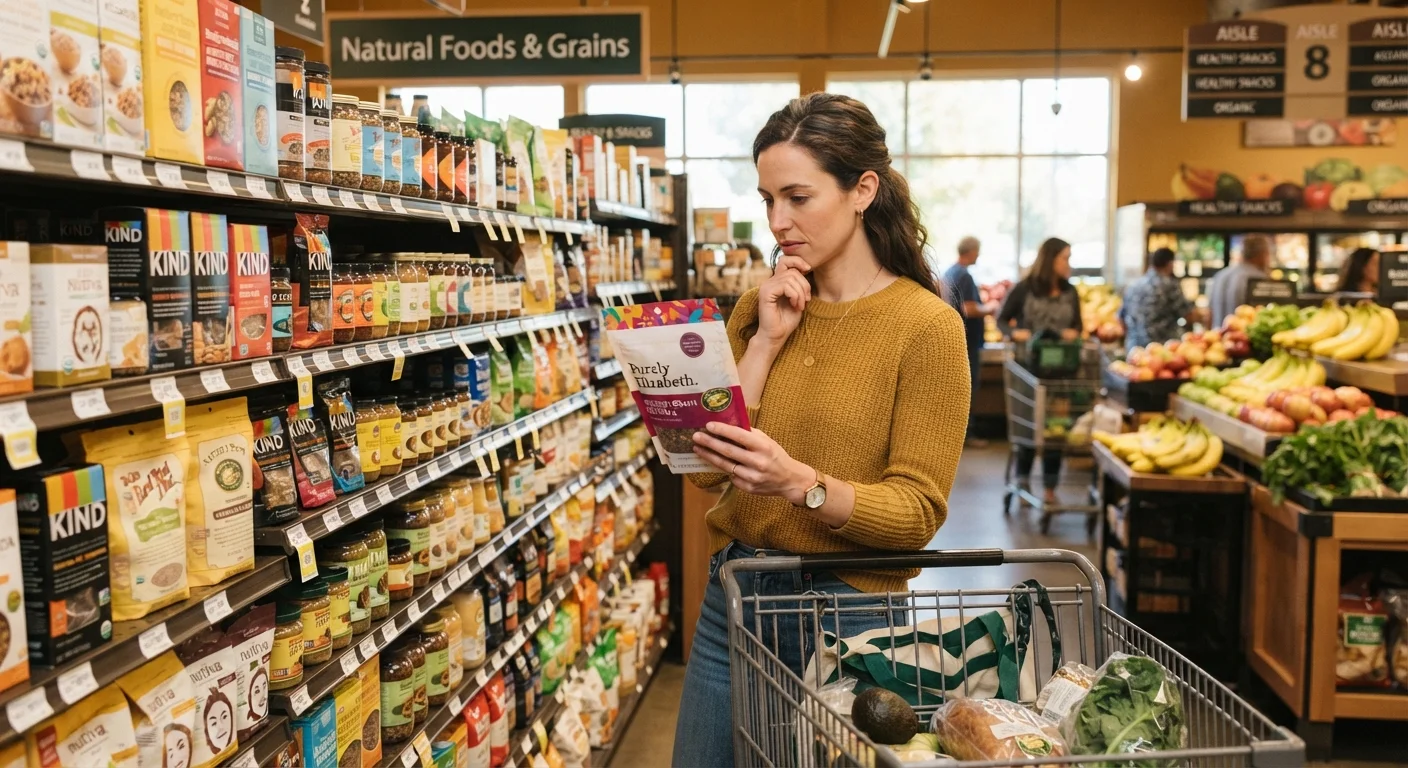
Trusting front-of-package health claims without reading the Nutrition Facts panel.
Why it happens: Labels like "low fat," "high fiber," or "no added sugar" are designed to be seen quickly and feel authoritative. Shoppers in a hurry rarely flip the package over.
Shopping hungry, which skews food choices toward calorie-dense, low-nutrient options.
Why it happens: Hunger amplifies the appeal of high-fat and high-sugar foods. Studies in appetite research have found that food purchases made while hungry tend to include more processed snacks and fewer vegetables.
Avoiding store-brand or generic products in favor of premium-branded "health" versions.
Why it happens: Premium packaging and higher prices signal quality in many categories, and shoppers often assume the same applies to nutrition. This isn't reliably true for staple foods.
Bulk buying perishable or indulgent items that spoil or get overconsummed before they're used.
Why it happens: Larger pack sizes feel like better value, and they sometimes are. But for fresh produce, dairy, or snack foods, the math only works if the food is actually eaten. Bulk buying has real limits.
Skipping the store perimeter and spending most of the trip in the center aisles.
Why it happens: Center aisles are where packaged, shelf-stable goods live - convenient, familiar, and heavily marketed. The perimeter, where whole foods like produce, proteins, and dairy are typically stocked, requires more planning and perishable management.
The Hidden Cost of These Habits - To Your Health and Your Wallet
Grocery shopping mistakes rarely look like mistakes in the moment. A "natural" label seems reassuring. Buying the large bag feels economical. Skipping a list saves time. But these small decisions compound across weeks and months into meaningful nutritional gaps and budget overruns.
~60%
Of US calories from ultra-processed foods
A study published in BMJ Open estimated that ultra-processed foods account for approximately 57-60% of total caloric intake for the average American adult.
23%
More unplanned purchases without a list
Research in the Journal of Marketing Research has found that shoppers without a list make substantially more unplanned purchases, many of which skew toward high-calorie, low-nutrient items.
Highly processed foods - often the ones that fill carts when shoppers are rushed, hungry, or list-free - tend to be higher in sodium, added sugars, and refined starches than their whole-food counterparts, according to nutrition research published in peer-reviewed journals. They're also frequently more expensive per gram of protein or fiber. The overlap between planned versus unplanned shopping and diet quality is well-documented: structure at the store translates to better outcomes at the table.
"Natural" Does Not Mean Nutritious
The FDA does not have a formal regulatory definition for the term "natural" on food packaging. A product labeled natural can still contain high levels of added sugars, sodium, or refined grains. Always verify nutritional quality using the Nutrition Facts panel rather than relying on front-of-package language.
Front-of-package labeling is one of the least regulated areas of food marketing. Terms like "natural," "wholesome," or "made with real fruit" carry no standardized legal definition under current FDA guidelines. The only reliable source of nutritional truth on a package is the Nutrition Facts panel itself. Our guide to reading a nutrition label without getting confused walks through exactly what each section means. Similarly, many "superfood" claims are marketing constructs - see why superfoods are mostly a marketing term for context.
If you're working to stretch a tight food budget further, eating well on a tight budget covers evidence-informed strategies that pair naturally with smarter shopping habits. And for those curious how grocery pitfalls mirror broader financial blind spots, spending patterns that quietly undermine savings goals offers a useful parallel perspective.
This article is for general informational and educational purposes only and does not constitute medical or dietary advice. Consult a registered dietitian or qualified healthcare professional for guidance tailored to your individual health needs.