

Key Takeaways
- Serving size is the foundation of every number on the label - always check it first.
- % Daily Value tells you how much a nutrient contributes to a standard 2,000-calorie diet.
- Ingredients are listed by weight - the first few ingredients dominate the product.
- Aim for less than 5% DV of nutrients to limit, and at least 20% DV of nutrients to seek.
- Front-of-package health claims are marketing; the nutrition panel is the reliable data.
What you will need
Why the Label Matters More Than the Front of the Package
Food packages are designed to sell. Words like "natural," "light," or "wholesome" on the front are largely unregulated marketing terms. The Nutrition Facts panel on the back or side, by contrast, follows a standardized format regulated by the U.S. Food and Drug Administration (FDA). It gives you concrete numbers rather than impressions - and once you understand its structure, you can compare products quickly and objectively.
For budget-conscious shoppers, this matters doubly: a lower price tag means nothing if the product delivers poor nutritional value. Understanding the label helps you evaluate what you are actually getting per dollar. It also pairs well with a broader look at common grocery shopping habits that erode a healthy diet, where misreading front-of-package claims is one of the most frequent pitfalls.
What you will need
How to Read the Label: A Step-by-Step Walkthrough
Work through the panel in order from top to bottom. Each section builds on the one before it.
Start with serving size and servings per container
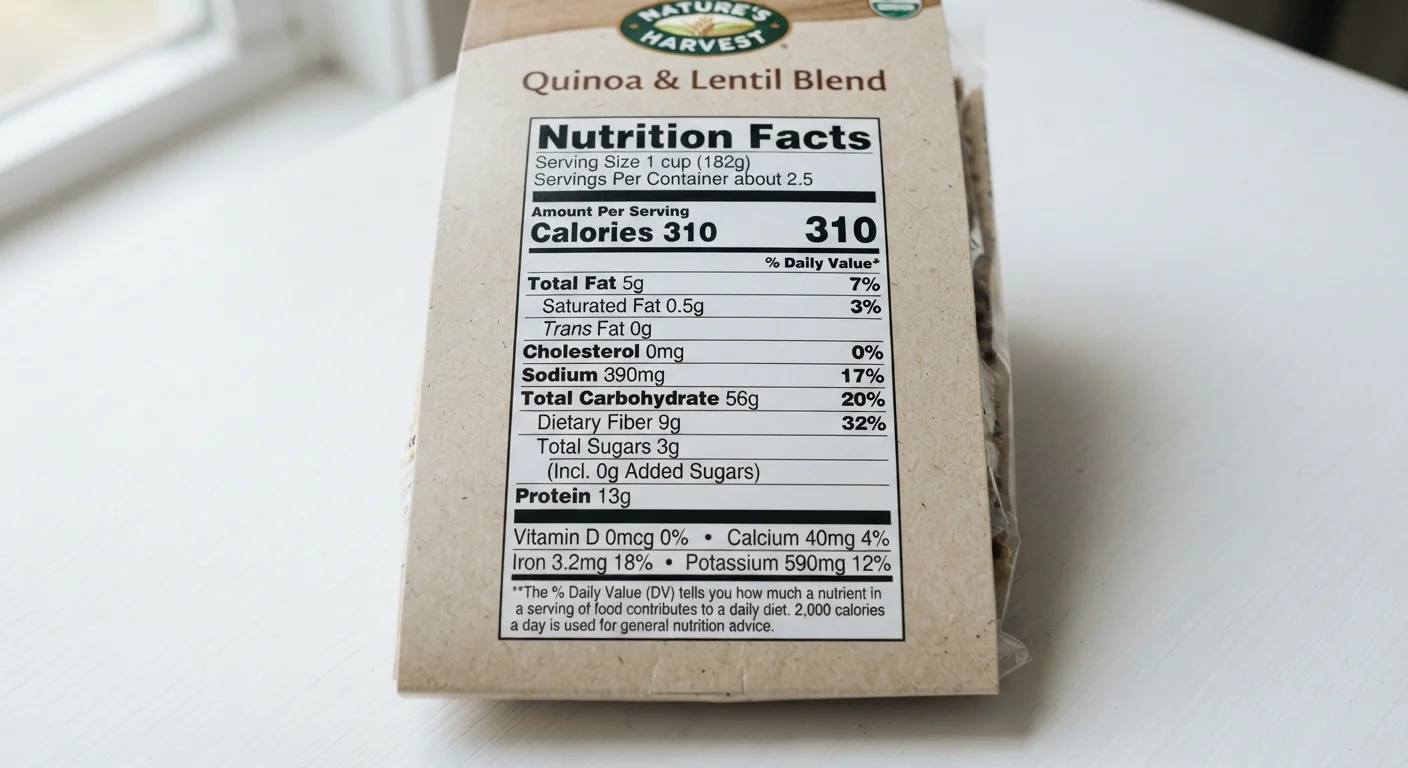
The very first line after the "Nutrition Facts" header lists the serving size (e.g., "2 crackers" or "1 cup") and the number of servings in the package. Every single number below - calories, fat, sodium - reflects one serving, not the whole package. If you eat two servings, you double every value.
Note the calories per serving
Calories measure total energy in one serving. This number is displayed prominently. It is a useful reference point, but it should not be the only number you evaluate - a highly processed food and a nutrient-rich food can have identical calorie counts.
Scan nutrients to limit
Below calories, the label lists Total Fat (with saturated fat and trans fat broken out), Cholesterol, and Sodium. These are nutrients most Americans already consume in sufficient or excess amounts. The FDA's guidance is to keep these contributions low relative to your daily intake. Trans fat should be as close to zero as possible - there is no established safe level.
Check nutrients to get enough of
The lower portion of the panel lists Dietary Fiber, Total Sugars (with Added Sugars as a sub-line), Protein, Vitamin D, Calcium, Iron, and Potassium. Most Americans fall short of fiber, vitamin D, calcium, and potassium. For a deeper look at what protein, carbohydrates, and fat actually do in the body, see macronutrients explained.
Interpret the % Daily Value column
The % Daily Value (%DV) column runs down the right side of the panel. It shows what percentage of a standard daily recommendation one serving provides, based on a 2,000-calorie reference diet. Your actual needs may differ, but %DV is still a reliable tool for comparing foods side by side - it works the same way regardless of your individual calorie target.
Read the ingredient list
The ingredient list appears below or beside the nutrition panel. Ingredients are listed in descending order by weight - the first ingredient makes up the largest proportion of the product. If added sugar (under any of its many names: corn syrup, dextrose, evaporated cane juice, maltose, etc.) appears in the first three ingredients, the product is heavily sweetened. A short ingredient list with recognizable items generally signals less processing.
Use %DV to Compare, Not Just to Count
When comparing two similar products, line up their %DV columns rather than raw gram amounts. This makes it easier to see at a glance which option delivers more of the nutrients you want and less of the ones you're watching. It works even when serving sizes between products differ slightly.
Common Mistakes and How to Avoid Them
Even informed shoppers slip into a few predictable traps when scanning nutrition labels.
- Ignoring the serving size: A package that looks like one serving may list two or three. Always multiply every number by the number of servings you will actually eat.
- Fixating on calories alone: A low-calorie food is not automatically nutritious. Compare it against what it provides - fiber, protein, vitamins - rather than just what it lacks. This is the core idea behind nutrient density, which is often a more useful lens than calorie counting.
- Overlooking added sugars: Total sugars include naturally occurring sugars (e.g., in fruit or dairy). The "Added Sugars" sub-line tells you what was put in during processing - this is the number worth watching.
- Skipping the ingredient list: The nutrition panel gives quantities; the ingredient list tells you what those nutrients come from. Both together give you the full picture. See also how whole and processed foods differ nutritionally for context on why ingredient sourcing matters.
Front-of-Package Claims Are Not Regulated Like Labels
Terms such as "low-fat," "multigrain," or "made with real fruit" are not held to the same standardized definitions as the Nutrition Facts panel. A "reduced sodium" product, for example, only needs to contain 25% less sodium than the original version - which may still be a high-sodium food. Always verify front-of-package claims against the actual panel numbers.
This article is for general informational and educational purposes only and is not medical or dietary advice. Consult a qualified healthcare provider or registered dietitian for guidance tailored to your individual health needs.