

Key Takeaways
- Whole foods retain naturally occurring fiber, vitamins, and minerals often lost during heavy processing.
- Not all processed foods are nutritionally poor - minimal processing like freezing or canning can preserve nutrients well.
- Ultra-processed foods tend to be high in added sodium, sugar, and refined fats with limited nutritional benefit.
- Budget-conscious shoppers can prioritize whole foods using affordable staples like dried beans, oats, and frozen vegetables.
- Reading ingredient lists helps identify how heavily processed a product is before you buy.
Option A
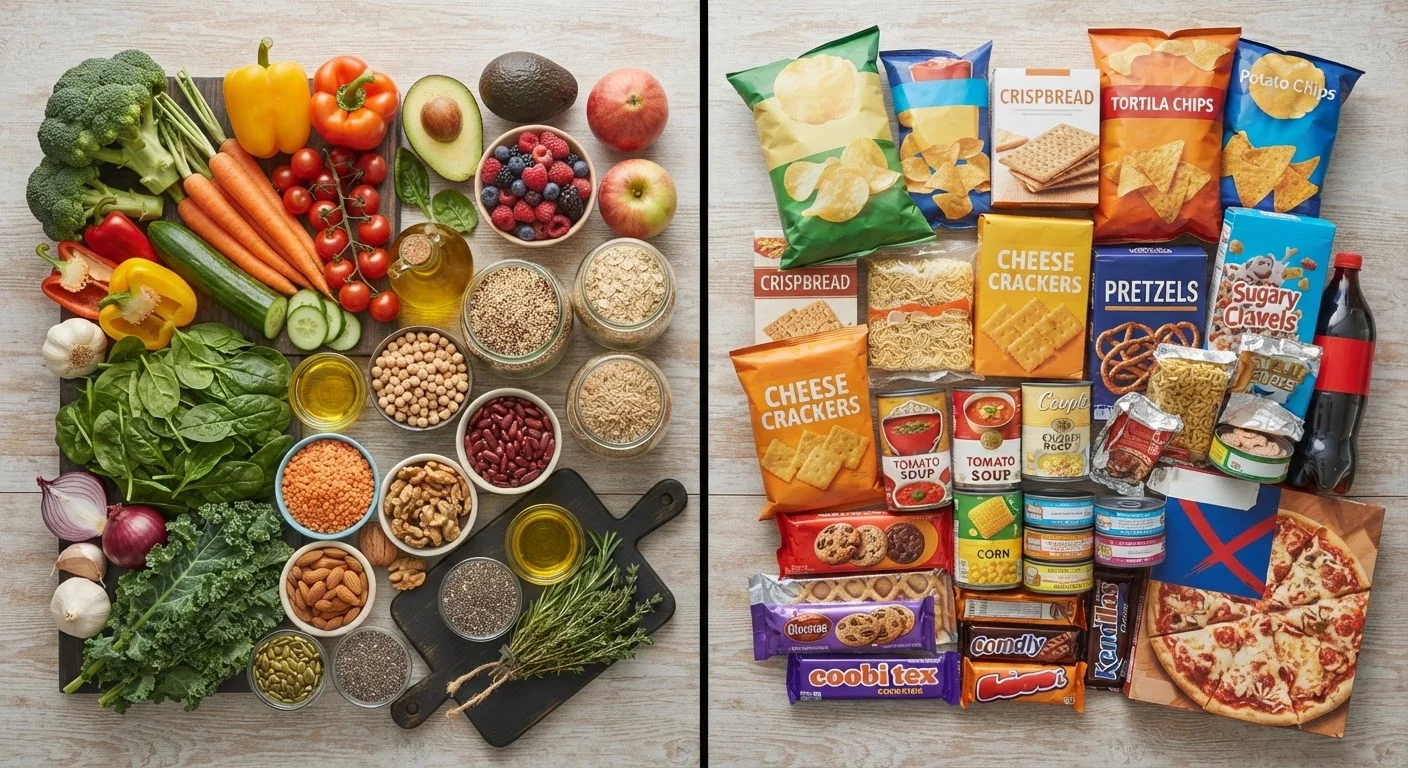
Whole Foods
Minimally altered, nutrient-dense ingredients in their natural form.
Best for: Shoppers prioritizing fiber, vitamins, and long-term nutritional value with fewer additives.
Option B
Processed Foods
Convenient, shelf-stable products that vary widely in nutritional quality.
Best for: Time-pressed households seeking convenience, though careful label-reading is essential for nutritional balance.
If you want maximum nutrient density on a budget
Whole Foods
Staples like dried lentils, oats, brown rice, and seasonal produce deliver fiber, protein, and micronutrients at a low cost per serving.
If you need shelf-stable convenience for busy schedules
Processed Foods
Minimally processed options like canned beans, plain frozen vegetables, and whole-grain bread offer genuine nutritional value with practical convenience.
If you are managing sodium or added sugar intake
Whole Foods
Whole foods contain little to no added sodium or sugar, making them easier to include without exceeding daily reference values.
If you are transitioning away from ultra-processed eating gradually
Processed Foods
Selecting lightly processed items - plain yogurt, unsalted nuts, or low-sodium canned vegetables - is a realistic middle step that supports gradual improvement.
What Do These Terms Actually Mean?
The terms whole foods and processed foods are used loosely in everyday conversation, but they describe a meaningful spectrum. Whole foods are ingredients that remain close to their original form - think raw oats, fresh or frozen vegetables, eggs, dried legumes, and plain cuts of meat. They have undergone little or no industrial alteration before reaching your kitchen.
Processed foods cover a much wider range. Food scientists commonly use the NOVA classification system, developed by researchers at the University of São Paulo, which groups foods into four categories: unprocessed or minimally processed, processed culinary ingredients, processed foods, and ultra-processed foods. A can of plain chickpeas is lightly processed; a cheese-flavored snack cracker loaded with artificial flavors and emulsifiers sits at the opposite end. Understanding this spectrum matters because nutritional quality varies enormously across it.
For a practical guide to decoding what's inside packaged products, see reading a nutrition label without getting confused.
Key Nutritional Differences
Whole foods generally deliver nutrients in their naturally occurring combinations. Fiber in whole grains slows glucose absorption; phytonutrients in vegetables work alongside vitamins in ways that isolated supplements may not replicate. Heavy processing frequently strips out fiber and micronutrients and replaces them with refined starches, added sugars, and sodium to improve shelf life and palatability.
| Criterion | Whole Foods | Processed Foods |
|---|---|---|
| Fiber content | Naturally high; intact in most cases | Often reduced or removed during processing |
| Added sodium | Little to none | Frequently elevated, especially in ultra-processed |
| Added sugar | Absent in most whole foods | Common in ultra-processed snacks and drinks |
| Micronutrients | Naturally present, varied | Sometimes added back after processing |
| Shelf life | Shorter; requires more planning | Extended; convenient for stockpiling |
| Ingredient list length | Minimal - often one ingredient | Can be lengthy with additives and preservatives |
| Cost per serving | Low for staples like oats, beans, rice | Variable; snack formats often cost more per calorie |
Ultra-processed products often contain ingredient lists dominated by additives - stabilizers, colorings, flavor enhancers - that contribute little nutritional value. Research published in journals including The BMJ has associated high ultra-processed food consumption with elevated risks of certain chronic conditions, though researchers note that overall dietary patterns and socioeconomic factors are also relevant variables. These findings represent strong associations rather than proven direct causation.
For a deeper look at what each macronutrient does in the body, visit macronutrients explained.
57%
Share of US calories from ultra-processed foods
A nationally representative dietary study published in BMJ Open estimated that ultra-processed foods account for more than half of daily caloric intake for many US adults.
~2x
Fiber gap between whole and refined grains
The USDA reports that whole grains can contain roughly twice the dietary fiber of their refined counterparts, depending on the specific grain.
70%+
Of US sodium intake from packaged foods
According to the CDC, the majority of sodium Americans consume comes from processed and packaged foods, not salt added at the table.
Budget-Friendly Strategies for Eating More Whole Foods
Eating closer to whole foods does not require a large grocery budget. Several affordable staples anchor a nutrient-dense diet: dried beans and lentils, plain oats, brown rice, eggs, canned fish in water, and frozen vegetables. Frozen produce in particular often matches or exceeds fresh counterparts in vitamin content because it is typically frozen shortly after harvest. You can learn more in frozen vs. fresh produce.
Practical steps for budget-focused shoppers include:
- Build meals around dried or canned legumes as a low-cost protein and fiber source.
- Choose plain frozen vegetables over seasoned packaged versions to avoid added sodium.
- Compare unit prices - bulk oats or rice almost always cost less per serving than boxed cereals.
- Limit ultra-processed snack foods, which often cost more per calorie with less nutritional return.
Not All Processing Is the Same
Terms like 'processed' can be misleading. Plain canned tomatoes, pasteurized milk, and frozen spinach are all technically processed, yet they retain strong nutritional profiles. The nutritional concern centers primarily on ultra-processed products engineered with additives, refined ingredients, and minimal whole-food content. Checking the ingredient list is more informative than relying on the word 'processed' alone.
If you are also exploring plant-based eating as a cost-saving strategy, plant-based eating on a budget covers real trade-offs worth knowing before you make the shift.
This article is for general informational and educational purposes only and is not a substitute for advice from a registered dietitian or qualified healthcare professional. Consult a professional before making significant changes to your diet, especially if you have an existing health condition.