
What 'Nutrient Density' Really Means - and Why It Matters More Than Calories

Key Takeaways
- Nutrient density measures nutritional value per calorie, not just total calories.
- Calorie-counting alone can lead you to overlook how well a food actually nourishes you.
- Many of the most nutrient-dense foods - like lentils, eggs, and leafy greens - are also among the most affordable.
- Processing typically strips away nutrients, lowering a food's overall density.
- Reading nutrition labels helps you compare nutrient density between similar products.
Nutrient Density
Nutrient density describes how much nutritional value - vitamins, minerals, fiber, protein - a food provides relative to its calorie content. A nutrient-dense food gives you a lot of nutrition for relatively few calories. It's a way of measuring the quality of a food, not just its quantity.
Researchers and dietitians often use scoring systems (such as the Nutrient Rich Foods Index) to rank foods by their concentration of beneficial nutrients per calorie or per serving.
Why Calorie Counts Don't Tell the Whole Story
Most of us grew up in a culture that treated calories as the primary measure of a food's healthfulness. While calories - the unit of energy your body extracts from food - do matter, fixating on them alone misses something fundamental: not all calories come with the same nutritional package.
A 200-calorie serving of white rice crackers and a 200-calorie bowl of cooked lentils provide very different things to your body. The lentils deliver protein, fiber, folate, iron, and potassium. The crackers deliver mostly refined starch. Both register identically on a calorie count, but only one meaningfully nourishes you.
This is the core problem that the concept of nutrient density helps solve. It shifts the question from how much energy does this food provide? to how much nutrition does this food provide per calorie? For shoppers trying to stretch a grocery budget while still eating well, that shift in perspective is genuinely useful. Understanding macronutrients - carbohydrates, protein, and fat - is a helpful first step toward seeing why foods differ so dramatically in their nutritional payoff.
What Makes a Food Nutrient-Dense?
A food earns the label "nutrient-dense" when it contains meaningful amounts of vitamins, minerals, fiber, or high-quality protein relative to its calorie load. There's no single official threshold, but nutrition researchers and federal dietary guidelines consistently point to the same categories of foods.
9
Nutrients many Americans fall short on
The Dietary Guidelines for Americans identifies calcium, potassium, dietary fiber, and vitamin D among the 'nutrients of public health concern' commonly under-consumed in US diets.
~57%
Of US calories from ultra-processed foods
A study published in BMJ Open estimated that ultra-processed foods account for roughly 57% of caloric intake among US adults, foods that tend to rank low on nutrient density measures.
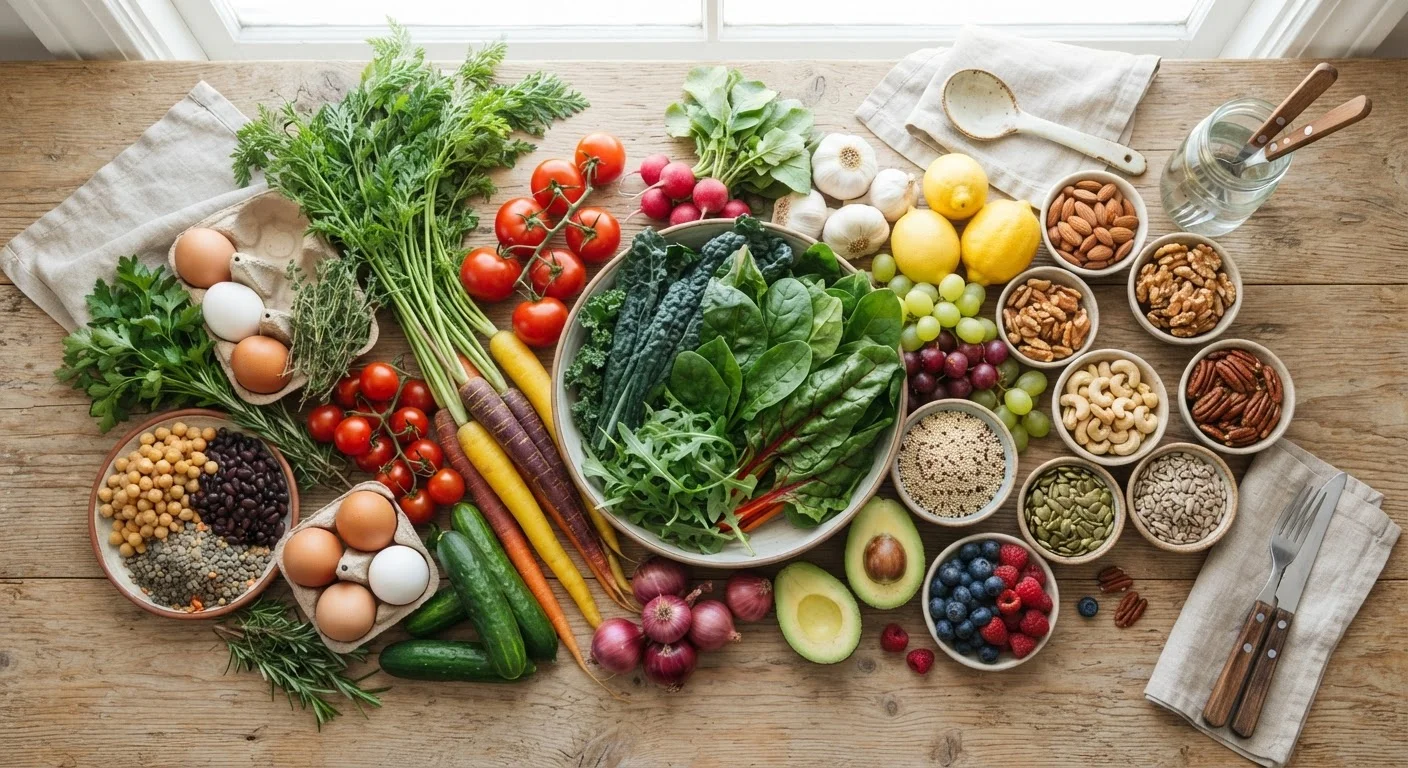
Dark leafy greens (spinach, kale, collard greens), legumes (lentils, beans, chickpeas), eggs, oily fish, whole grains, and most vegetables and fruits fall into the nutrient-dense category. These foods tend to be high in fiber, which supports digestive health, and rich in micronutrients that many Americans fall short on - including potassium, magnesium, and vitamin D, according to the Dietary Guidelines for Americans.
On the opposite end of the spectrum sit what nutrition scientists sometimes call "empty-calorie" foods: items high in added sugars, refined carbohydrates, or saturated fats that provide energy but little else. Ultra-processed snack foods, sugary drinks, and many packaged baked goods commonly fit this description. How whole and processed foods differ nutritionally goes deeper into why processing matters so much to a food's nutritional profile.
Putting Nutrient Density to Work at the Grocery Store
The practical power of nutrient density thinking shows up at checkout. Budget-conscious shoppers often assume that eating nutritiously is expensive - but some of the highest-scoring foods on any nutrient density measure are among the cheapest items in the store.
Maximise Nutrition Per Dollar Spent
When grocery shopping on a budget, prioritise the perimeter of the store - produce, eggs, and basic proteins - where nutrient-dense whole foods are most concentrated. Frozen vegetables are nutritionally comparable to fresh and often cost less. Dried legumes bought in bulk offer exceptional nutritional value per dollar and have a long shelf life.
Dried lentils, for instance, cost very little per serving and provide substantial protein, fiber, and iron. Eggs are a well-documented source of high-quality protein, B vitamins, and choline. Canned sardines deliver omega-3 fatty acids and calcium in a shelf-stable, affordable form. Affordable protein-rich foods that nutritionists recommend covers many of these options in greater detail.
When comparing similar products on a shelf, checking the nutrition label for fiber, protein, and vitamin and mineral content relative to serving size gives you a fast, practical read on nutrient density. Reading a nutrition label without confusion walks through exactly how to interpret those figures. Look for items that deliver a meaningful percentage of your daily values for several nutrients without an outsized calorie count - that's nutrient density in action.
This article is for general informational and educational purposes only and is not a substitute for professional medical or dietary advice. Consult a qualified healthcare provider or registered dietitian for guidance tailored to your individual health needs.