

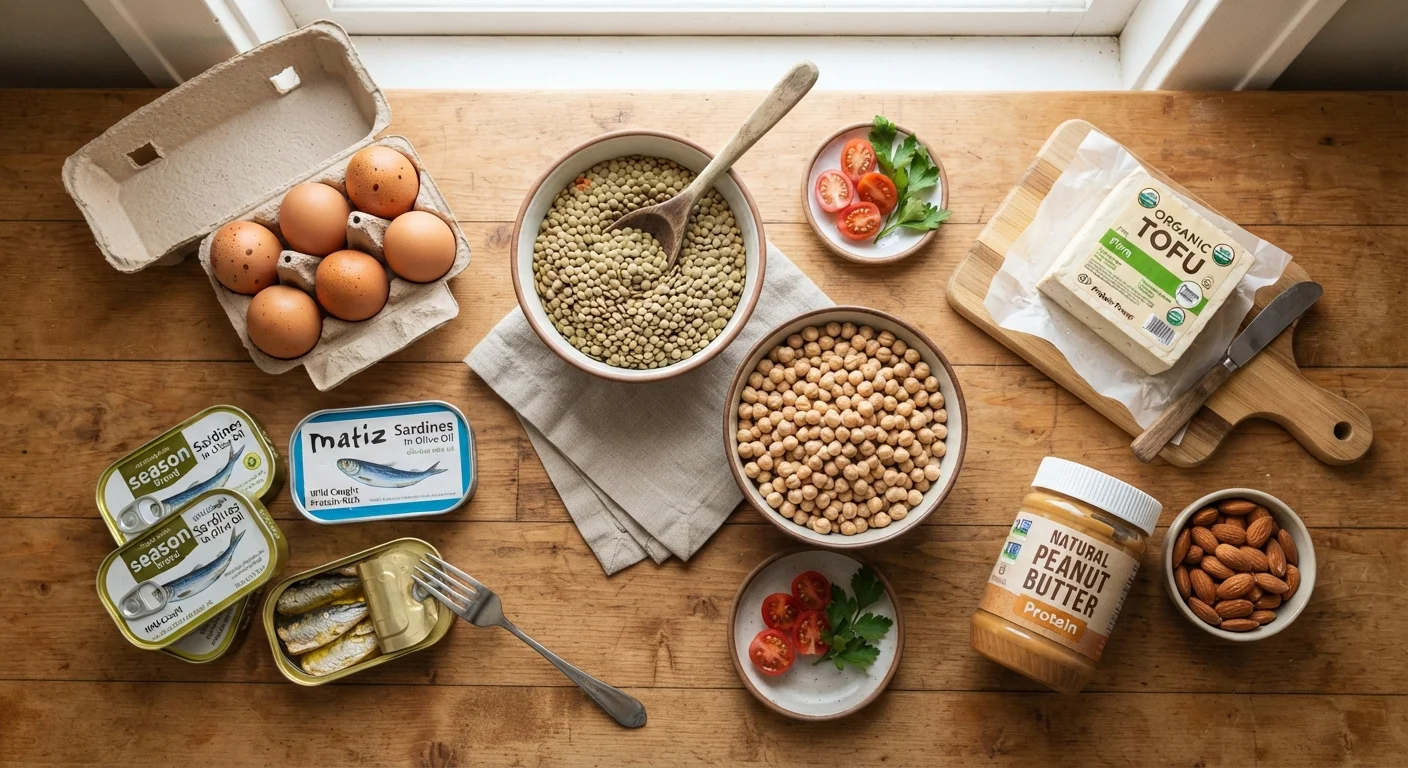
Key Takeaways
- Legumes, eggs, and canned fish consistently rank among the most affordable high-protein foods available.
- Plant-based proteins like lentils and chickpeas also deliver fiber and micronutrients alongside protein.
- Pairing complementary plant proteins can help meet amino acid needs without animal products.
- Dried or canned forms of most protein staples offer the lowest cost per gram of protein.
- Nutritional value matters as much as price - nutrient-dense proteins provide more overall dietary benefit.
Why Protein Cost Per Serving Actually Matters
Protein is essential for muscle maintenance, immune function, enzyme production, and satiety - but "high-protein" foods marketed as premium often carry premium prices. The good news is that several of the most nutritious protein sources available are also among the most affordable in any US grocery store.
Registered dietitians and public health researchers consistently point to a short list of staples that deliver meaningful protein alongside other nutrients, without requiring a large food budget. Understanding what each option actually provides - not just grams of protein, but overall nutrient density - helps shoppers make smarter choices week to week.
The seven options below are grounded in nutrition research and real-world affordability. They form the backbone of a practical, protein-sufficient diet for most healthy adults. As always, individual dietary needs vary - consult a registered dietitian or healthcare provider if you have specific health conditions or nutritional concerns.
Compare Cost Per Gram of Protein
Rather than comparing foods by package price, divide the total cost by the grams of protein in the package to find your true cost per gram. This single calculation often reveals that dried legumes and eggs outperform many foods marketed as high-protein. It also helps when comparing canned versus dried versions of the same ingredient.
Seven Affordable Protein Sources Worth Stocking Regularly
Dried and Canned Lentils
Lentils are one of the most cost-efficient protein foods available. A one-cup cooked serving provides roughly 18 grams of protein alongside significant amounts of fiber, folate, and iron. Dried lentils are particularly economical - a one-pound bag typically yields several servings at a very low cost per portion.
Unlike dried beans, lentils require no overnight soaking, making them faster to prepare. They work across a wide range of dishes, from soups and stews to grain salads and veggie patties. Because they are a plant protein, lentils are low in the amino acid methionine; pairing them with grains like rice helps ensure a more complete amino acid profile over the course of the day.
Lentils require no soaking and deliver around 18 grams of protein per cooked cup.
Eggs
Eggs are frequently cited by dietitians as one of the most nutritionally complete affordable proteins. A single large egg contains approximately 6 grams of high-quality protein, along with choline, vitamin B12, selenium, and lutein. Because egg protein contains all essential amino acids in proportions the body uses efficiently, it scores high on measures of protein quality used in nutrition research.
Hard-boiling a batch at the start of the week creates a portable, ready-to-eat protein source that requires no additional cost or preparation time at each meal. One important note: individuals with cardiovascular concerns should discuss egg consumption with their healthcare provider, as recommendations can vary based on individual health history.
Eggs supply all essential amino acids alongside choline and B12 at very low cost per serving.
Canned Sardines and Tuna
Canned fish offers a concentrated protein source - a standard 3.75-ounce can of sardines delivers roughly 22 grams of protein - at a price point well below fresh fish. Sardines also provide omega-3 fatty acids, calcium (when bones are included), and vitamin D, making them particularly nutrient-dense relative to their cost.
Canned tuna is similarly protein-rich and widely available. The FDA and EPA note that canned light tuna is lower in mercury than albacore, which is relevant for pregnant individuals and young children - those groups should consult a healthcare provider about appropriate intake. For most healthy adults, both options are considered safe as part of a varied diet.
Canned sardines provide around 22 grams of protein per serving plus omega-3s and bone-building calcium.
Chickpeas and Other Dried Beans
Chickpeas, black beans, kidney beans, and navy beans all provide substantial protein - typically 14-16 grams per cooked cup - along with fiber, potassium, and magnesium. Dried beans require soaking and longer cooking times but cost significantly less than canned equivalents; canned beans are still highly economical and far more convenient.
Research published in nutrition journals has associated regular legume consumption with cardiovascular benefits, partly due to their fiber content and low glycemic impact. For budget-conscious shoppers, buying a mix of dried and canned legumes balances cost savings with convenience depending on how much time is available for cooking that week.
Dried beans cost a fraction of most animal proteins while delivering 14-16 grams of protein per cup.
Plain Greek Yogurt
Plain, store-brand Greek yogurt is a cost-efficient dairy protein, typically offering 15-20 grams of protein per cup depending on the brand and fat content. It also contributes calcium, probiotics, and vitamin B12. Choosing plain over flavored varieties avoids added sugars and tends to reduce the per-serving cost.
Greek yogurt is versatile beyond breakfast - it works as a substitute for sour cream in savory dishes, a base for dressings, or a high-protein addition to smoothies. Full-fat, low-fat, and non-fat versions all offer comparable protein levels; the choice between them is a matter of overall dietary pattern and individual preference rather than a strict nutritional rule.
Plain Greek yogurt offers up to 20 grams of protein per cup and doubles as a cooking ingredient.
Tofu
Firm tofu is one of the few plant-based proteins that provides a complete amino acid profile, making it particularly valuable for those reducing or eliminating animal products. A half-cup serving of firm tofu contains roughly 10 grams of protein, along with calcium (when made with calcium sulfate) and iron.
Tofu absorbs flavors well, which makes it adaptable across cuisines - it can be scrambled, baked, stir-fried, or blended into sauces. Extra-firm varieties hold their shape better for higher-heat cooking. Block tofu purchased in larger packages typically offers a lower cost per gram of protein than individual servings or pre-seasoned products.
Firm tofu is a complete plant protein with roughly 10 grams per half-cup and absorbs any flavor profile.
Peanut Butter and Natural Nut Butters
Natural peanut butter - made with just peanuts and salt - provides around 7-8 grams of protein per two-tablespoon serving alongside heart-healthy monounsaturated fats, niacin, and magnesium. Store-brand versions are among the most economical options in this category. Peanuts are technically legumes, and like other legumes, they offer a strong protein-per-dollar ratio.
Peanut butter is shelf-stable, calorie-dense, and requires no preparation, making it practical for quick meals and snacks. It pairs well with whole grain bread, oats, or fruit to create a more nutritionally complete combination. Those with tree nut or peanut allergies should avoid this option entirely and discuss suitable alternatives with an allergist.
Natural peanut butter is shelf-stable, budget-friendly, and provides 7-8 grams of protein per serving.
Plant Proteins and Amino Acid Completeness
Most plant proteins are considered 'incomplete' because they are relatively low in one or more essential amino acids. However, eating a varied diet across a day - mixing legumes, grains, nuts, and vegetables - generally ensures adequate intake of all essential amino acids. You don't need to combine proteins at every single meal; variety over the course of the day is sufficient for most healthy adults, according to the Academy of Nutrition and Dietetics.
For a fuller picture of how these proteins fit into a weekly shop alongside grains and produce, the weekly grocery checklist offers a practical pantry framework. And if you're exploring a primarily plant-based approach, it's worth reviewing the trade-offs of plant-based eating on a budget before committing fully.
Building Meals Around Budget Proteins
The proteins listed here are most useful when treated as flexible building blocks rather than standalone dishes. Lentil soup, egg-based stir-fries, canned fish on whole grain crackers, and tofu in curries are all examples of low-cost, high-nutrition meals that stretch these staples further. Combining them with affordable carbohydrate sources - see the comparison of oats, rice, pasta, and bread - rounds out a balanced, budget-conscious plate.
For broader strategies on eating well without overspending, the guide on eating well on a tight budget covers meal planning, reducing waste, and navigating the grocery store more efficiently.
This article is for general informational and educational purposes only and does not constitute medical or dietary advice. Speak with a registered dietitian or qualified healthcare professional for guidance tailored to your individual health needs.