

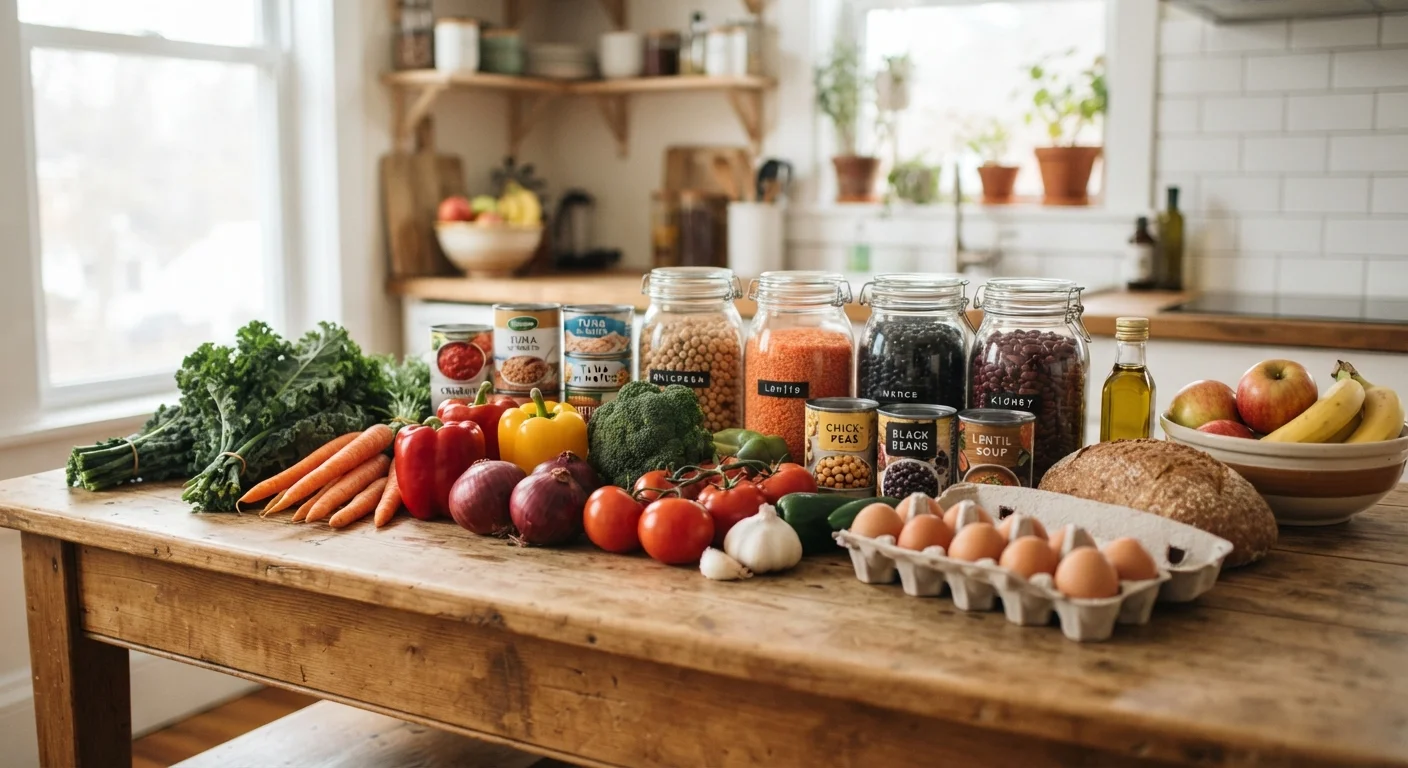
Key Takeaways
- Prioritizing cost per nutrient - not cost per item - is the foundation of budget-healthy eating.
- Dried legumes, whole grains, eggs, and frozen vegetables consistently deliver strong nutrition at low cost.
- Reducing food waste is one of the fastest ways to stretch a grocery budget without cutting quality.
- Frozen and canned produce can be as nutritious as fresh when selected without added sodium or sugar.
- Meal planning before shopping reduces impulse purchases and the likelihood of unhealthy convenience food spending.
- Cooking more at home is strongly linked to better dietary quality and lower per-meal food costs.
Why Budget Eating Often Goes Wrong
Eating nutritiously on a tight budget is genuinely achievable - but most people stumble on the same predictable missteps. Relying on the cheapest processed convenience foods trades short-term savings for long-term nutritional gaps. Conversely, chasing every "health food" label can drain a grocery budget faster than expected without meaningfully improving diet quality.
The core problem is a mismatch between perceived value and actual nutritional return. Highly processed snacks, sugary cereals, and fast food often feel affordable upfront but deliver little protein, fiber, or micronutrient density for the money spent. Understanding this trade-off is the first mental shift budget-conscious shoppers need to make.
Common shopping patterns also quietly undermine the effort - see our look at grocery shopping habits that quietly undermine a healthy diet for a detailed breakdown of what to avoid at the store level.
Cheap Calories Are Not the Same as Affordable Nutrition
Ultra-processed foods - chips, sugary cereals, packaged snacks - can appear budget-friendly by calorie count but often lack meaningful protein, fiber, and micronutrients. Over time, a diet heavy in these items can contribute to nutritional gaps even when total food spending seems controlled. Evaluating foods by nutritional return, not just price or calorie count, leads to meaningfully better outcomes.
Build Your Shopping List Around Nutritional Value Per Dollar
The most effective framework for budget nutrition isn't focusing on cheap calories - it's evaluating cost per nutrient. A bag of dried lentils, for example, delivers substantial protein, iron, and dietary fiber at a fraction of the cost of many packaged protein products.
Before shopping, map your weekly meals around two or three affordable protein sources, a whole grain base, and a mix of vegetables (fresh, frozen, or canned based on what's in season and on sale). This approach naturally limits the budget bleed that comes from unplanned purchases.
~$1,500
Annual household food waste cost per family
The USDA estimates the average US family of four discards $1,500 or more worth of food each year.
3-4x
Cost difference: processed vs. whole food protein
Registered dietitians and USDA food cost data consistently show dried legumes deliver protein at a fraction of the per-gram cost of many packaged protein products.
50%+
Less per meal when cooking at home vs. dining out
Research in the Journal of Nutrition Education and Behavior found home-cooked meals cost substantially less per serving than restaurant or takeout equivalents.
For a practical starting point, our weekly grocery checklist for a balanced, budget-conscious pantry outlines the staple categories that support nutritional variety without overspending.
When planning meals, build around one or two dried legume varieties per week - they function as protein, fiber, and a flavor base all in one, reducing the need for multiple expensive ingredients.
Dried beans and lentils are among the most nutrient-dense foods per dollar available in US grocery stores, according to analyses of USDA food cost databases.
Buy whole grains and dried legumes in larger bag sizes when storage allows - the per-pound cost drops noticeably compared to smaller packages, and shelf life is long.
Unit price comparisons consistently show bulk whole grains and dried legumes offer among the lowest per-nutrient costs in the store, with shelf lives often exceeding one year when stored properly.
Smart Staples: The Nutrient-Dense Foundation
Certain foods reliably provide strong nutritional returns at consistently low cost. Incorporating these into regular rotation gives a budget diet its nutritional backbone:
- Dried beans and lentils: Among the most cost-effective sources of plant protein and fiber available. They also provide iron, folate, and potassium.
- Eggs: A complete protein source containing all essential amino acids, plus choline and B vitamins, at low per-serving cost.
- Whole oats: Rich in soluble fiber (particularly beta-glucan), filling, and inexpensive per serving. A well-documented choice for heart health support according to nutrition research.
- Frozen vegetables: Flash-frozen shortly after harvest, retaining most vitamins and minerals. Often less expensive than equivalent fresh produce, especially out of season.
- Canned fish (e.g., sardines, tuna, salmon): Provides omega-3 fatty acids and protein at accessible price points. Choose options packed in water with lower sodium where possible.
- Brown rice and whole wheat pasta: More fiber and micronutrients than refined versions, at comparable or lower cost when purchased in larger quantities.
Interested in a more plant-focused approach? Our guide on plant-based eating on a budget covers the real trade-offs worth knowing before committing.
Cooking Habits That Reduce Waste and Stretch Ingredients
The USDA estimates that US households waste roughly 30-40% of the food supply. At the household level, food waste is essentially money thrown away - and it compounds the challenge of eating well affordably.
A few evidence-backed habits make a meaningful difference:
- Cook in batches: Preparing a large pot of grains or beans at the start of the week provides a ready ingredient base for multiple meals, reducing reliance on expensive convenience options.
- Use the whole ingredient: Vegetable scraps can become broth; slightly overripe fruit works well in oatmeal or smoothies. These practices extend ingredient utility without additional spending.
- Plan before you shop: Meal planning is consistently associated with reduced food waste and fewer impulse purchases, according to nutrition behavior research.
- Practice FIFO (first in, first out): Move older perishables to the front of the refrigerator so they get used before newer items.
Our companion piece on cooking at home more often provides evidence-backed strategies for making home cooking a consistent habit rather than an occasional effort.
The Weekly Batch-Cook Habit Pays Off Fast
Set aside one to two hours on a consistent day each week to cook a large batch of grains and legumes. Store portioned servings in the refrigerator or freezer. This single habit reduces weeknight dependence on costly convenience meals and makes healthy eating the path of least resistance when time is short.
Navigating the Store Without Overspending
The grocery store environment is engineered to encourage spending beyond your list. Strategic navigation significantly reduces unplanned purchases:
- Shop with a written list organized by store section to minimize backtracking and browsing time near high-margin displays.
- Check unit prices (price per ounce or pound) rather than package price. Larger sizes are frequently - but not always - cheaper per unit.
- Store-brand products (often called private-label) frequently contain identical or comparable ingredients to name-brand equivalents at lower prices. This is especially true for staples like canned goods, oats, and frozen vegetables.
- Avoid shopping hungry - a straightforward behavioral finding that consistently links pre-shopping hunger to increased impulsive, often less nutritious purchases.
“The most powerful nutrition tool available to most households isn't a supplement or a superfood - it's a written grocery list built around whole, minimally processed foods.”
— Academy of Nutrition and Dietetics, Leading US professional organization for registered dietitian nutritionists
For those also managing travel food budgets, our piece on eating well on the road without draining your daily budget applies similar principles in a different context.
When to Prioritize Fresh Versus Frozen or Canned
A persistent misconception is that fresh produce is always more nutritious than frozen or canned alternatives. Research, including studies published in nutrition science journals, generally finds that frozen vegetables retain comparable levels of most vitamins and minerals to fresh, since freezing occurs close to harvest. Canned vegetables can be nearly equivalent too, though sodium content warrants attention - rinsing canned beans and vegetables can reduce sodium by a meaningful margin.
A practical rule of thumb: choose fresh when it's in season locally and priced accordingly. Choose frozen or no-added-salt canned when fresh is out of season, expensive, or likely to go to waste before use.
Fresh fruit and vegetables that tend to remain affordable year-round include bananas, apples, cabbage, carrots, and sweet potatoes - worth building into weekly plans regardless of season.
For broader guidance on aligning food spending with smarter everyday financial decisions, the Smart Spending hub and Budgeting Basics hub offer frameworks that extend well beyond the grocery aisle.
This article provides general nutrition information for educational purposes only and is not a substitute for personalized advice from a registered dietitian or qualified healthcare professional. Individual dietary needs vary - consult a healthcare provider before making significant changes to your diet.