

Key Takeaways
- Over-tightening pipe fittings is one of the most common causes of hairline cracks and future leaks.
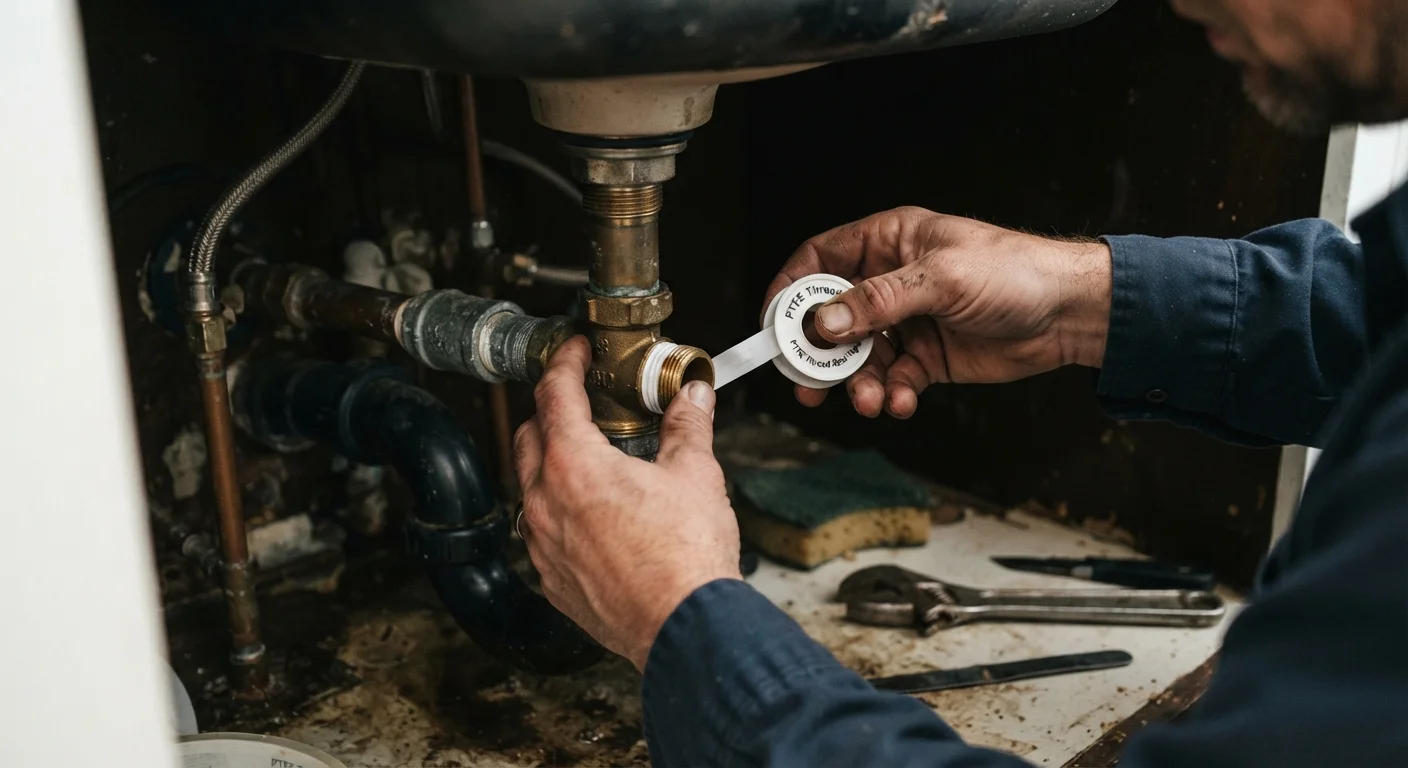
- PTFE tape belongs on threaded fittings only - applying it to compression fittings can prevent a proper seal.
- Drain-clearing chemicals can corrode older pipes and may worsen blockages if misused.
- Some plumbing repairs require a permit; skipping inspection can create liability when you sell.
Why Plumbing Folklore Costs Homeowners Money
DIY plumbing advice travels fast - through neighbors, online forums, and half-remembered instructions from decades-old repair manuals. Some of it is sound. Much of it is not. The problem is that bad plumbing habits rarely cause instant failure; they create slow damage that surfaces months later as a costly repair or water-stained ceiling.
The myths below are the most widely repeated, and each one has a real potential to make a leak worse rather than fix it. Understanding why they fail is more useful than a simple "don't do that" - it helps you make better decisions on the fly, especially when the hardware store is closed and water is dripping.
For a broader look at which home fixes suit confident beginners and which carry more risk, see our guide to DIY repairs worth doing yourself.
Myth
Wrapping PTFE (thread seal) tape on every fitting guarantees a leak-free joint.
Fact
PTFE tape is designed for threaded pipe fittings only. Using it on compression or push-fit fittings can actually prevent the mechanical seal from seating properly.
PTFE tape fills the microscopic gaps between tapered male and female threads, helping them form a pressure-tight seal. Compression fittings work differently - the ferrule (a small ring) bites into the pipe when the nut is tightened, creating a seal through mechanical deformation. Adding tape under a compression nut can make the ferrule sit unevenly, introducing the very leak you were trying to prevent.
When in doubt, identify your fitting type before reaching for the tape roll. Threaded fittings: tape is appropriate. Compression or push-fit fittings: clean surfaces and correct torque are what matter.
Myth
Tighten a fitting until it stops moving - the tighter, the better the seal.
Fact
Over-tightening is a leading cause of cracked fittings, stripped threads, and delayed leaks that appear days or weeks after the repair.
Plastic fittings (PVC, CPVC, ABS) are especially vulnerable. Brass and copper fittings are more forgiving but not immune - overtorqued brass can deform the seating surface. Most fittings reach their design seal at "hand tight plus one to two turns" with a wrench. Going further does not improve the seal; it stresses the material.
If a fitting leaks after proper tightening, the issue is usually a damaged seat, incorrect tape application, or a mismatched fitting type - not insufficient force. Adding more torque at that point will likely cause a crack that forces a full fitting replacement.
Myth
Chemical drain cleaners are the fastest, safest way to clear a clog.
Fact
Caustic drain chemicals can soften PVC, corrode older metal pipes, and create hazardous heat and fumes - often without fully clearing the blockage.
The active ingredients in most chemical drain cleaners (lye or sulfuric acid) work by generating heat to dissolve organic matter. In older homes with iron or steel drain pipes, repeated use accelerates corrosion. In PVC systems, high heat can warp pipe walls over time. If the chemical sits on a partial blockage without clearing it, you're left with a clogged drain and a pipe full of corrosive liquid that's difficult to remove safely.
A manual drain snake or a cup plunger used correctly handles most common clogs without chemical risk. For persistent blockages, a plumber's auger or professional hydro-jetting is safer for your pipes long-term.
Myth
A slow drip is harmless - it only becomes a real problem when it turns into a stream.
Fact
Even a slow drip can waste thousands of gallons annually and cause hidden mold, rot, and structural damage over time.
A faucet dripping once per second can lose more than 3,000 gallons of water per year, according to general estimates used by water conservation programs. More importantly, drips under sinks or inside walls create persistent moisture - ideal conditions for mold growth and wood rot that may not be visible until significant damage has already occurred.
Fixing a dripping faucet is usually a straightforward repair: a worn washer, O-ring, or cartridge. Addressing it promptly avoids the secondary damage that turns a small fix into a major one.
Myth
You can use any plumber's putty on all fixture types, including plastic.
Fact
Standard plumber's putty can stain porous materials and degrade certain plastics; silicone sealant or putty labeled "stain-free" is required for stone, composite, and some plastic fixtures.
Traditional oil-based plumber's putty works well on porcelain and metal but contains oils that leach into granite, marble, and some composites, leaving permanent discoloration. It can also cause some plastic drain baskets to crack over time. Many modern fixtures - especially those with cultured marble or acrylic surfaces - specify silicone sealant or a stain-free putty formulation in their installation guides.
Always check the fixture manufacturer's guidance before applying any sealant. The fix takes seconds; the stain lasts indefinitely.
Getting the Repair Right the First Time
Most plumbing myths share a common thread: they feel intuitive but ignore how the materials actually behave under pressure, temperature cycling, and constant moisture. Pipe joints expand and contract. Plastic fittings crack under torque. Chemical drain cleaners generate heat and gas.
Know When to Stop and Call a Professional
Any repair involving your home's main shutoff, gas-adjacent lines, or pipes inside walls or under a slab carries elevated risk. If you open a fitting and find corroded pipe, black water, or evidence of previous amateur repairs, stop work and consult a licensed plumber. Continuing without understanding what you're dealing with can turn a minor fix into an emergency.
A repair that holds for three weeks before failing inside a wall cavity is far more expensive than calling a plumber on day one. That said, many small plumbing fixes - replacing a flapper, swapping a supply line, clearing a simple trap - are genuinely within reach for a careful homeowner. Our article on fixing a running toilet walks through one of the most common and manageable repairs in detail.
Before starting any repair, check whether a permit is required in your area. Replacing a fixture is typically permit-free; altering supply lines or drain configurations sometimes is not. See which home repairs require a permit to understand the rules and the consequences of skipping them.
~3,000 gal
Water wasted per year by one dripping faucet
Based on general estimates from U.S. water conservation programs, assuming one drip per second continuously.
~10%
Of homes have leaks wasting 90+ gallons daily
The U.S. Environmental Protection Agency's WaterSense program estimates roughly 1 in 10 homes has leaks that collectively waste significant water year-round.
This article is for general informational purposes only. For plumbing work involving gas lines, structural changes, or your home's main supply, consult a licensed plumber and verify local permit requirements before proceeding.