

Key Takeaways
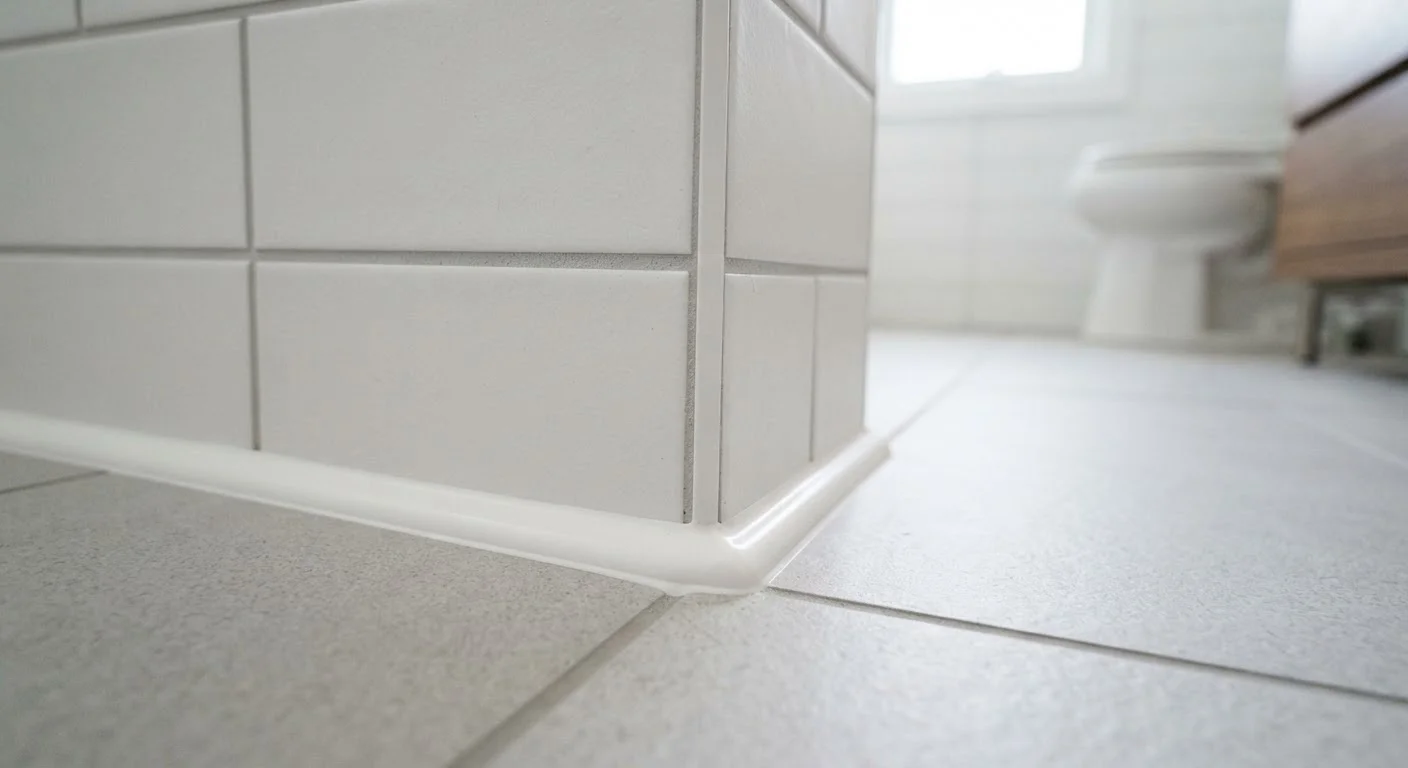
- Grout belongs between tiles on the same plane; caulk belongs at corners, transitions, and changes in plane.
- Grout is rigid and will crack at movement joints - caulk flexes and absorbs that movement.
- Wherever two different surfaces meet (wall-to-floor, tile-to-tub), caulk is the correct material.
- Using grout at change-of-plane joints is one of the most common causes of cracked tile work.
- Caulk requires proper surface prep and the right formulation to bond and last in wet areas.
Option A
Grout
The rigid filler that locks tiles in place.
Best for: Filling gaps between tiles on flat, same-plane surfaces where no movement or flexing occurs.
Option B
Caulk
The flexible sealant built to absorb movement.
Best for: Sealing joints where two surfaces meet at an angle, change plane, or are subject to thermal expansion or vibration.
If you're filling the joints between tiles on a flat wall or floor
Grout
Same-plane tile joints experience no differential movement, so grout's rigid bond is appropriate and provides a consistent, finished look.
If you're sealing where a tiled wall meets a bathtub, shower pan, or floor
Caulk
These joints undergo constant movement from weight, vibration, and thermal expansion - caulk flexes with that movement instead of cracking.
If you're finishing an inside corner where two tiled walls meet
Caulk
Inside corners are change-of-plane joints. Grout here will eventually crack as the structure shifts; caulk maintains a watertight seal.
If you're tiling around a floor drain or a pipe penetration
Caulk
Fixtures and penetrations move slightly relative to the surrounding tile field; caulk accommodates that micro-movement and prevents water infiltration.
The Core Difference: Rigidity vs. Flexibility
Grout and caulk are both gap-fillers, but they behave in fundamentally opposite ways - and that difference determines exactly where each one belongs.
Grout is cement-based (or epoxy-based in specialty applications). Once cured, it is hard and dimensionally stable. That rigidity is exactly what you want between tiles on the same flat surface - the material resists crumbling under foot traffic or tile weight and creates a consistent, cleanable joint.
Caulk is an elastomeric sealant. It cures to a flexible, rubber-like consistency that can stretch and compress slightly with movement. That flexibility is worthless between same-plane tiles - it would compress unevenly under load - but it's essential anywhere two surfaces move relative to each other, even by fractions of a millimeter.
The structural logic is simple: rigid materials belong at rigid joints; flexible materials belong at movement joints. Mismatching them doesn't just look bad - it causes water infiltration and accelerating damage.
| Criterion | Grout | Caulk |
|---|---|---|
| Composition | Cement or epoxy-based | Elastomeric sealant (silicone or latex) |
| Flexibility when cured | Rigid, hard | Flexible, rubber-like |
| Best joint type | Same-plane tile-to-tile gaps | Change-of-plane or movement joints |
| Tub/shower wall base | Will crack - wrong material | Correct choice - absorbs flex |
| Inside wall corners | Will crack over time | Correct choice - stays sealed |
| Flat wall tile joints | Correct choice - uniform finish | Not appropriate - uneven compression |
| Resistance to movement | None - rigid bond only | High - designed for micro-movement |
| Typical lifespan at wet joints | Months before cracking | Years with proper prep and application |
Where Each Material Actually Goes
Understanding the rule in theory is easy. Applying it in a real bathroom or kitchen requires knowing the specific locations that count as movement joints.
Use Grout Here
- Between tiles on any flat wall surface - vertical tiles don't flex, so grout joints stay intact.
- Between floor tiles - as long as the substrate is properly prepared and doesn't flex, grout works correctly here.
- Backsplash tile fields - same-plane joints along a kitchen backsplash are grout territory throughout.
Use Caulk Here
- Where the tiled wall meets the bathtub or shower pan - tubs flex under body weight, pulling away from the wall slightly. Grout at this joint will crack within months.
- Inside corners where two tiled walls meet - building movement causes these planes to shift; caulk absorbs that without breaking.
- Where tile meets a countertop or vanity top - the counter and the wall tile are on different planes and different materials, meaning different expansion rates.
- Around toilet bases, floor drains, or pipe penetrations - these fixtures move independently of the tile field.
If you've had grout crack repeatedly at the tub line no matter how carefully you apply it, the material is simply wrong for that joint - not the technique. Proper application technique matters once you've chosen the right material, but choosing the wrong material guarantees failure regardless of skill.
#1
Cause of cracked tub-line grout
Using rigid grout at flexible tub-to-wall joints - rather than caulk - is widely cited by tile industry professionals as the primary reason this joint fails repeatedly.
2 surfaces
Key rule for caulk placement
Any joint where two different surfaces, materials, or planes meet is a movement joint and requires caulk, not grout, according to the Tile Council of North America's installation guidelines.
Choosing the Right Caulk for Wet Tile Areas
Once you've confirmed a joint needs caulk, the next decision is which type. In wet areas - showers, tub surrounds, bathroom floors - the caulk must be both waterproof and mold-resistant. Standard paintable latex caulk is not appropriate for continuous wet exposure.
Look for caulk labeled specifically for tile and bath use, with mold and mildew resistance built in. Color-matching to your grout is also possible with most lines of sanded or unsanded caulk formulated to mimic grout's appearance, helping the joint blend visually even though the material is different.
For guidance on how silicone and latex caulk formulations compare in wet environments, see our breakdown of silicone vs. latex caulk - the differences in adhesion, cure time, and paintability matter for tile work.
Color-Matching Caulk to Your Grout
Many manufacturers produce sanded and unsanded caulk in colors designed to match their grout lines. This allows movement joints - like inside corners and tub lines - to blend visually with the rest of the tile field. The joint may look like grout, but it's performing the correct job of a flexible sealant. When shopping, bring a grout sample or note the color name so you can find a close match.
One practical tip: when removing old grout from a joint that should actually be caulked, clean the surface thoroughly and allow it to dry completely before applying new caulk. Any residual grout dust or moisture will compromise adhesion and shorten the sealant's lifespan.