

| Minimum hand tools for general repairs | 7-10 items |
| Most-used single power tool | Cordless drill-driver |
| Common repairs covered by a core kit | Drywall patching, hinge fixes, caulking, shelving, minor plumbing |
| Safety gear required | Safety glasses + work gloves (minimum) |
| Toolkit storage recommendation | Toolbox or pegboard within easy reach of work areas |
Why a Core Toolkit Pays for Itself
Most common household repairs - a dripping faucet, a loose hinge, a nail hole in drywall - require only a handful of tools. The problem is that homeowners without a reliable set on hand either pay a service call fee for a 10-minute fix or make repeated hardware store trips mid-project. Neither is a good use of money or time.
Building a core toolkit is a one-time investment that covers the vast majority of everyday repairs. Before you start any project, it's equally important to review a safety and prep checklist to make sure utilities are safe and risks are identified upfront. And if you're ever unsure whether a job suits a DIYer, this breakdown of which repairs are worth doing yourself can help you decide before you start.
| Minimum hand tools for general repairs | 7-10 items |
| Most-used single power tool | Cordless drill-driver |
| Common repairs covered by a core kit | Drywall patching, hinge fixes, caulking, shelving, minor plumbing |
| Safety gear required | Safety glasses + work gloves (minimum) |
| Toolkit storage recommendation | Toolbox or pegboard within easy reach of work areas |
The Essential Hand Tools
These are the tools that show up in nearly every repair scenario. Prioritize quality on items you'll reach for constantly, but you don't need top-of-the-line everything to be effective.
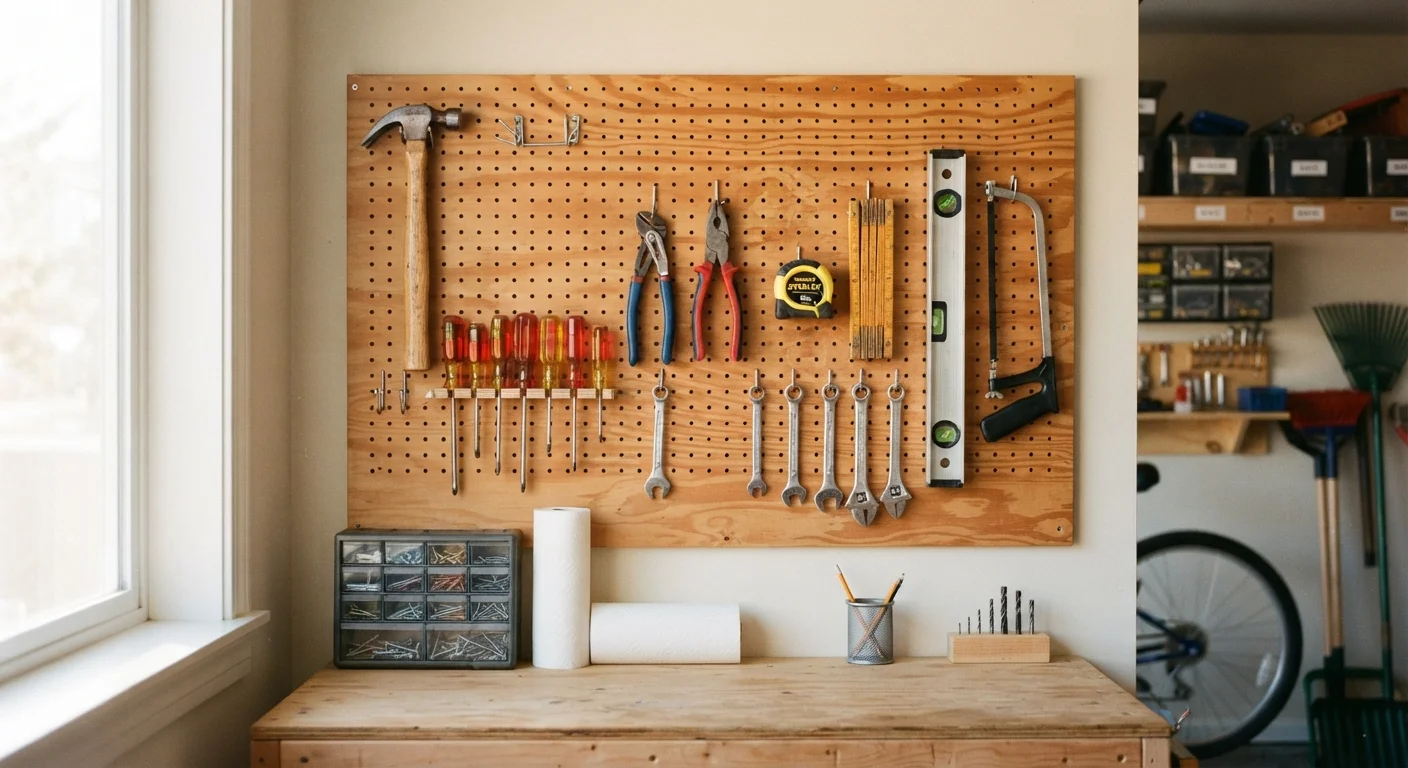
- Hammer (16 oz. claw): The standard weight for general framing, hanging, and demo work. The curved claw doubles as a nail puller.
- Flathead and Phillips screwdrivers (multiple sizes): A set covering small, medium, and large heads handles the overwhelming majority of household fasteners.
- Adjustable wrench: Replaces a full set of fixed wrenches for most plumbing and assembly tasks.
- Needle-nose pliers and slip-joint pliers: Needle-nose reaches into tight spaces; slip-joint pliers handle gripping and bending tasks.
- Tape measure (25 ft.): The 25-foot length works for both small furniture assembly and larger room measurements.
- Utility knife: Used for scoring drywall, cutting caulk, opening packaging, and trimming materials cleanly.
- Level (24-inch): A bubble level keeps shelves, frames, and fixtures genuinely straight - not just visually close.
Clutch (drill)
An adjustable mechanism on a drill-driver that limits torque, preventing screws from being driven too deep and stripping fasteners or materials.
Slip-joint pliers
Pliers with an adjustable pivot point that allows the jaw width to expand, making them versatile for gripping pipes, nuts, and other objects of varying sizes.
Spackling compound
A lightweight paste used to fill small holes, cracks, and surface imperfections in drywall or plaster before priming and painting.
Wall anchor
A fastener inserted into drywall that distributes load across a wider area, allowing screws to hold shelves or hardware securely where there is no stud behind the wall.
Random-orbit sander
A power sander that moves in small, random ellipses to remove material and smooth surfaces without leaving visible swirl marks.
Power Tools Worth Adding Early
A cordless drill-driver is the single most impactful upgrade from a hand-tool-only kit. It drives screws faster, bores holes for hardware installation, and dramatically speeds up most assembly tasks. Look for one with variable speed and a clutch - features common across most modern options regardless of brand.
Beyond the drill, a circular saw becomes useful once you're tackling projects that involve cutting lumber or sheet goods. However, some structural or electrical work requires permits regardless of who does it - power tools don't change that requirement. Always check local codes before beginning any significant repair or improvement.
When to Call a Licensed Professional
A well-stocked toolkit handles a wide range of cosmetic and minor structural repairs, but electrical panel work, gas line repairs, and load-bearing structural changes typically require a licensed contractor - and often a permit. Attempting these without proper credentials can void home insurance coverage and create liability issues. When in doubt, consult a qualified tradesperson before starting.
Rounding out a practical power tool set: a random-orbit sander handles surface prep and finish work; a jigsaw cuts curves that a circular saw cannot. These two are lower priority but genuinely useful once your core kit is established.
Supplies That Belong in Every Toolkit
Tools alone don't complete repairs - consumables and hardware fill the gaps. Keep these stocked at all times:
- Assorted screws, nails, and wall anchors: A mixed hardware organizer means you rarely need a special trip for fasteners.
- Painter's tape and masking tape: Protects surfaces during painting and holds things temporarily during layout.
- Wood filler and spackling compound: Wood filler repairs damaged trim; spackling fills nail holes and minor drywall dings before painting.
- Caulk and caulk gun: Silicone caulk seals around tubs and sinks; paintable latex caulk fills gaps at trim and baseboards.
- Sandpaper (various grits): Coarse grits remove material; fine grits smooth before finishing.
- Safety glasses and work gloves: Non-negotiable. Eye protection and cut-resistant gloves cost little and prevent real injuries.
A well-stocked toolkit also connects to broader smart spending habits. Spreading tool purchases over time rather than buying everything at once keeps costs manageable without leaving you unprepared. For more structured guidance on allocating home maintenance funds, budgeting basics offers straightforward strategies.
~35%
Share of home repairs homeowners handle themselves
According to U.S. Census Bureau American Housing Survey data, roughly a third of home maintenance and repair work is completed by homeowners rather than hired contractors.
$50-$150
Typical minimum service call fee for basic repairs
Service call minimums vary widely by region and trade, but even minor visits commonly carry a baseline fee before labor is counted.