

Key Takeaways
- Composting kitchen and yard waste eliminates the need for purchased fertiliser and improves soil over time.
- Sheet mulching with cardboard suppresses weeds effectively without chemicals or expensive landscape fabric.
- Saving seeds from open-pollinated plants can significantly reduce what you spend on next season's garden.
- Dividing perennials and trading plants with neighbors multiplies your garden for free.
- Watering deeply and less frequently encourages deeper roots and reduces your overall water use.
More Garden, Less Spending
Gardening is often sold as an expensive hobby - bags of amendments, new tools every season, endless plant tags at the nursery. But most of what makes a garden thrive has nothing to do with how much you spend. Healthy soil, attentive watering, and a few well-timed habits do more than any premium product.
Whether you're growing food, improving curb appeal, or just trying to spend more time outside, these practical strategies help you get more from your outdoor space without draining your wallet. If you're weighing your overall garden layout, our guide on raised beds vs. in-ground planting can help you make a cost-effective choice from the start.
Start a compost pile with what you already have
Composting converts kitchen scraps and yard trimmings into a rich soil amendment - at no cost beyond a bit of effort. Fruit and vegetable peels, coffee grounds, dried leaves, and grass clippings are all compostable. Layering green (nitrogen-rich) materials with brown (carbon-rich) ones and turning the pile periodically speeds breakdown.
Finished compost improves drainage in clay soils, adds moisture retention in sandy soils, and feeds soil microbes that make nutrients available to plants. It's a direct substitute for purchased fertiliser in most home garden situations. For a deeper comparison, see our article on compost vs. store-bought fertiliser.
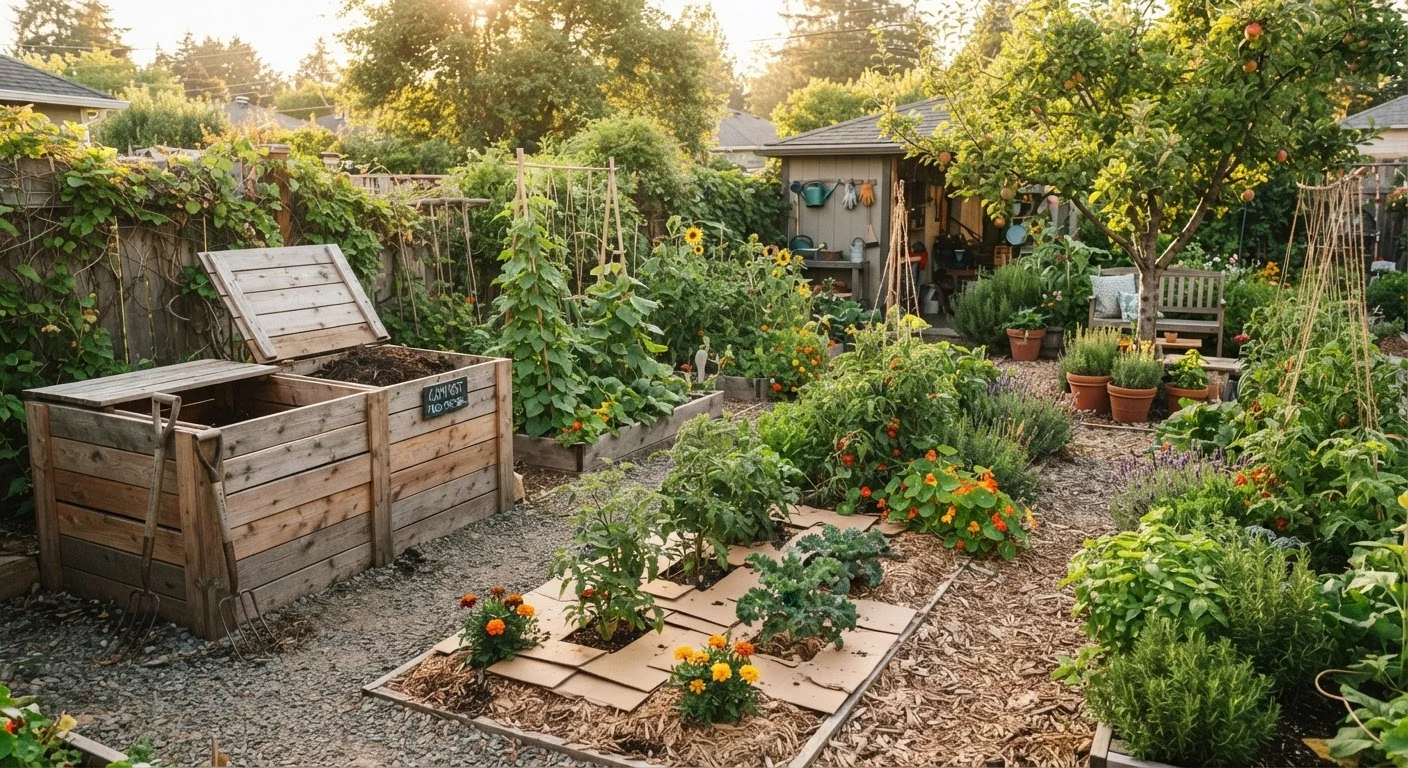
Compost turns kitchen scraps into free fertiliser that improves soil structure season after season.
Suppress weeds with sheet mulching and cardboard
Cardboard - the kind that comes with appliance deliveries or moving boxes - makes an effective weed barrier when laid directly on soil and topped with a few inches of wood chips or straw. This technique, called sheet mulching or lasagna gardening, smothers existing weeds and prevents new seeds from germinating, all without herbicides.
Remove any tape and staples first, and overlap the cardboard edges by several inches so weeds can't sneak through gaps. Over time, the cardboard breaks down and adds organic matter to the soil. Our detailed guide on mulching your garden beds covers what to apply and how deep to go.
Cardboard sheet mulching smothers weeds effectively and costs nothing if you save your shipping boxes.
Save seeds from open-pollinated plants
Many common vegetables and flowers - tomatoes, beans, lettuce, zinnias, and marigolds among them - are open-pollinated, meaning seeds saved from mature fruits will grow true to the parent plant. Let a few specimens go to full seed at the end of the season, harvest those seeds when fully dry, and store them in a cool, dark place in labeled paper envelopes.
This practice can meaningfully reduce what you spend at the nursery each spring. It also gradually adapts your seed stock to your local climate and soil, which can improve germination rates over time. Note that hybrid varieties (labeled F1) don't reliably produce true-to-type seeds, so look for heirloom or open-pollinated designations on seed packets.
Open-pollinated seeds saved properly can supply next year's garden at essentially no cost.
Divide perennials to multiply your planting stock
Established perennials - hostas, daylilies, ornamental grasses, coneflowers, and many others - benefit from being dug up and divided every few years. Division prevents overcrowding, rejuvenates the parent plant, and gives you multiple new plants to fill gaps or trade with neighbors.
Early spring or fall are generally the best times to divide most perennials, when temperatures are cooler and plants are not in active bloom. Use a sharp spade to separate root clumps, replant divisions promptly, and water them in well. A single overgrown clump can easily yield four to six new transplants - all free.
Dividing an overgrown perennial can yield half a dozen transplants that would otherwise cost you at the nursery.
Water deeply and less often to build resilient roots
Frequent shallow watering encourages roots to stay near the surface, making plants more vulnerable to drought and heat stress. Watering less often but more deeply - allowing moisture to penetrate six to eight inches - trains roots to grow downward, where soil stays cooler and moister longer.
A simple way to check whether you're watering deeply enough is to push a wooden dowel or stick into the soil after watering; it should slide easily through moist soil. This approach also reduces your overall water use, which matters both for your utility bill and for water conservation. Gardeners in drier climates can find additional strategies in our guide to drought-tolerant gardening.
Deep, infrequent watering grows stronger root systems and cuts your water use at the same time.
Use companion planting to reduce pest pressure naturally
Positioning certain plants near each other can deter common pests, attract beneficial insects, or improve growing conditions - reducing the need for purchased pest controls. Marigolds planted near tomatoes, for example, are widely used by gardeners to deter certain nematodes and aphids. Basil near peppers and nasturtiums as trap crops for aphids are other frequently cited pairings.
The evidence behind companion planting varies by pairing, but the cost of trying it is essentially zero if you're already growing those plants. Our article on companion planting logic explores what the research actually supports and which pairings are worth prioritizing.
Strategic plant pairings can reduce pest pressure without any chemical inputs or added expense.
Small Habits, Lasting Results
None of these strategies require major time commitments or a steep learning curve. Most of them simply ask you to pay closer attention to what your garden is already doing - and work with it rather than against it.
Connect with a local seed library or plant swap
Many public libraries and community gardens host free seed libraries or seasonal plant swaps where gardeners exchange divisions, seedlings, and saved seeds. These are excellent sources of locally adapted plants at no cost. Search for community garden groups in your area or ask at your local cooperative extension office for leads.
For gardeners looking to cut lawn costs as well, it's worth understanding what a conventional lawn actually costs and which alternatives may suit your yard and budget. Pair these low-cost habits with a low-maintenance garden layout and you'll spend less time and money maintaining your outdoor space every season.