

Key Takeaways
- Choosing plants adapted to your local climate dramatically reduces watering, feeding, and pest management.
- Ground covers and mulch suppress weeds and retain moisture, cutting routine maintenance by hours each season.
- Grouping plants by water and sun needs makes care more efficient and reduces waste.
- Replacing high-effort lawn areas with hardscaping or perennial beds lowers weekly mowing time.
- A well-designed garden layout does most of the work - less replanting, less intervention, more enjoyment.
Start With the Right Plants
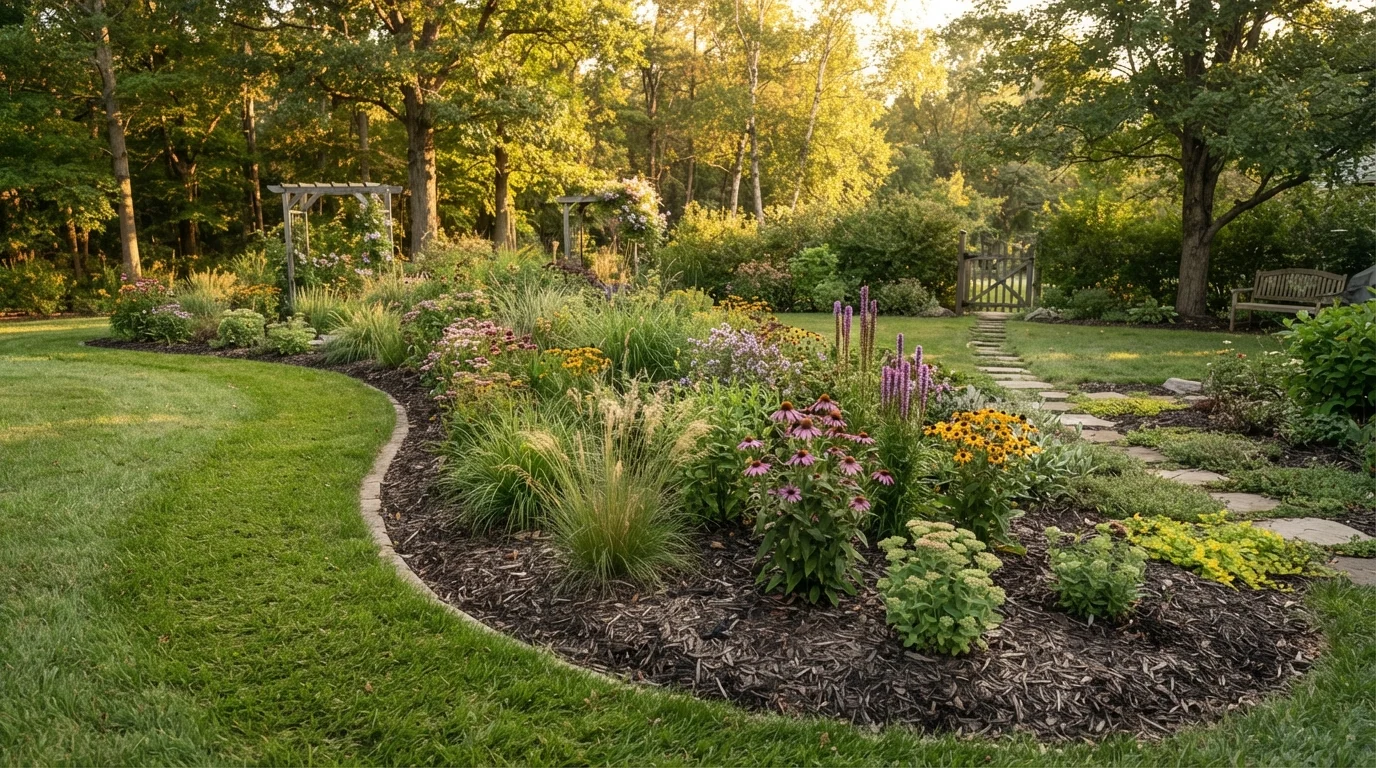
The single biggest driver of garden maintenance is plant selection. Plants that are naturally suited to your region's rainfall, soil type, and climate need far less intervention - less supplemental watering, fewer pest treatments, and little or no extra fertilizing. Native species and regionally adapted perennials are the practical foundation of any low-maintenance garden.
For most US homeowners, perennials offer a strong return on effort: plant once, and they return each year without replanting costs or labor. Consider ornamental grasses, coneflowers, black-eyed Susans, and sedums - all widely available, hardy, and visually striking across seasons. For a deeper look at how native species compare to ornamental choices, see native plants vs. ornamental exotics.
If you're working with limited water or live in a drier climate, drought-tolerant gardening principles can help you design a yard that thrives on reduced irrigation.
Use Mulch and Ground Covers to Do the Heavy Lifting
Bare soil is an open invitation for weeds and moisture loss - two problems that multiply your workload fast. A 2-3 inch layer of organic mulch over your beds addresses both simultaneously, smothering weed seeds before they sprout and slowing evaporation so you water less often.
For detailed guidance on types, depth, and application technique, our mulching guide walks through the full process. Low-growing ground covers - such as creeping thyme, liriope, or clover - add a living layer that performs the same function while adding texture and color.
Refresh Mulch Every Spring
Organic mulch breaks down over winter, so a fresh top-up each spring keeps weed suppression effective and moisture retention optimal. You don't need to remove old mulch first - simply add to the existing layer, keeping total depth at 2-3 inches. Avoid piling mulch directly against plant stems or tree trunks, which can cause rot.
Design the Layout to Reduce Ongoing Work
Layout choices made at the planning stage pay dividends for years. Group plants by their water and light requirements so every watering session serves the whole bed efficiently - no plant is over- or under-watered because it was placed next to an incompatible neighbor.
Reducing lawn area is one of the highest-impact changes a homeowner can make. Turf grass is among the most maintenance-intensive surfaces in any yard - it needs mowing, edging, fertilizing, aerating, and seasonal overseeding. Replacing even a modest section with a mulched perennial bed, a gravel path, or a simple patio can meaningfully cut weekly effort. For a practical comparison of bed structures, see raised beds vs. in-ground planting.
Planning ahead in autumn also pays off - autumn garden prep tasks like cutting back perennials, adding compost, and planting spring bulbs set up a yard that practically runs itself come warmer months.
Keep Costs Low Without Cutting Corners
A low-maintenance garden doesn't require a large upfront investment. Starting small - one or two redesigned beds per season - spreads costs and lets you refine your approach before committing to the whole yard. Dividing established perennials, saving seeds, and swapping divisions with neighbors are all practical ways to expand plantings for little or no cost.
For more ideas on stretching your garden budget, low-cost garden improvements covers practical, budget-friendly strategies that don't require purchasing much. Every dollar saved on weekly inputs - water, fertilizer, pest controls - is a return on your planning investment.
Up to 70%
Water savings with native plant landscaping
The EPA estimates that switching from conventional turf to native plantings can reduce outdoor water use by up to 70% in some regions.
3 hrs/week
Average homeowner time spent on yard maintenance
The US Bureau of Labor Statistics has found that American homeowners spend an average of several hours per week on lawn and garden tasks during the growing season.