

Key Takeaways
- Planting spring bulbs in autumn is one of the highest-return tasks a gardener can do.
- Cutting back perennials and clearing debris now reduces pest and disease pressure next year.
- Adding compost or mulch in autumn lets organic matter break down slowly over winter.
- Dividing and relocating overcrowded perennials is easier in cooler autumn soil.
- A thorough autumn cleanup means less emergency scrambling when spring planting season arrives.
Summary
18 items · 2-4 hours spread across several weekends
Why Autumn Garden Work Pays Off in Spring
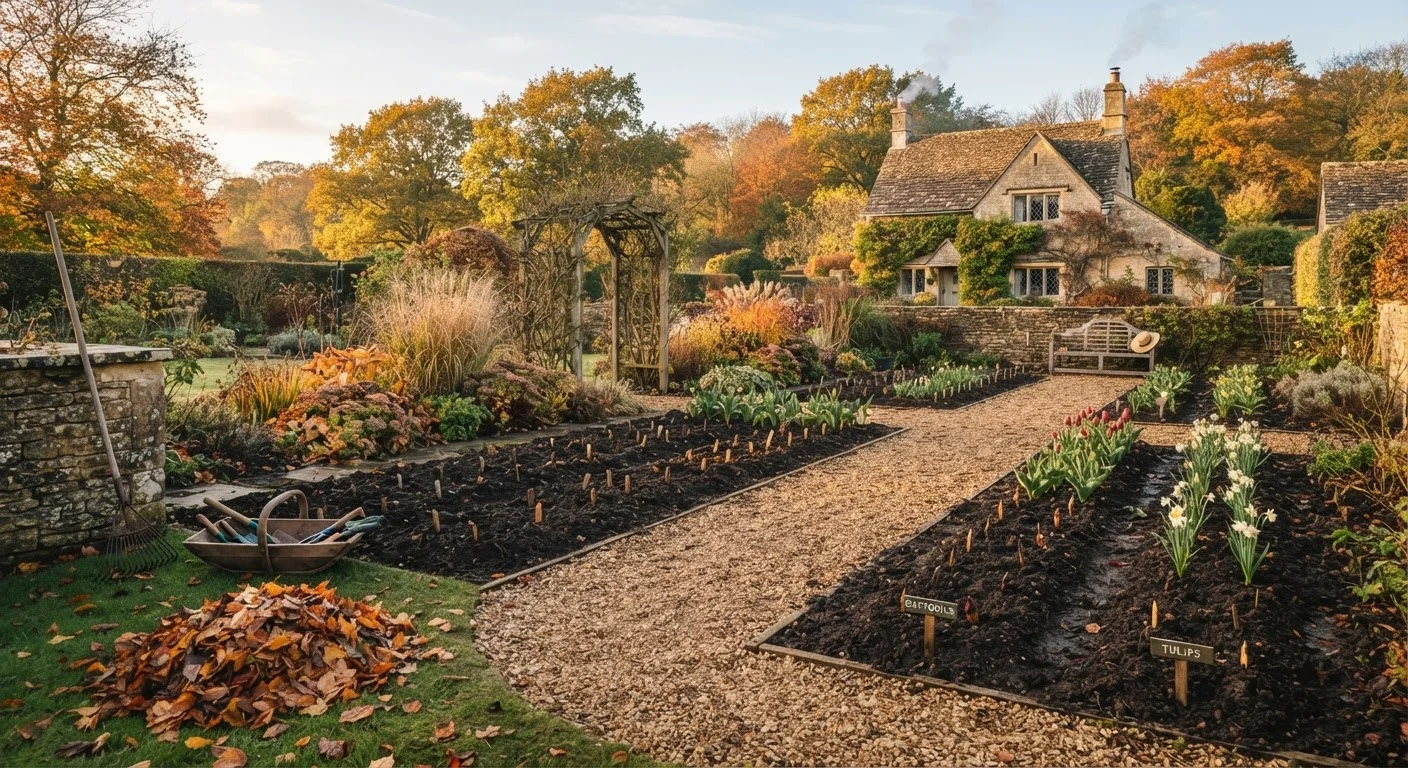
Autumn is the gardening season that most homeowners undervalue. While the instinct is to pack up tools and wait for warmer weather, the hours you invest now directly reduce the workload - and cost - of getting your garden going in spring. Soil amendments break down more completely over a long winter. Bulbs establish strong root systems before the ground freezes. Weeds left to seed now become thousands of problems in March.
This checklist is organized so you can work through it in stages - a weekend afternoon here, an hour there - without feeling overwhelmed. You don't need expensive products or specialized equipment. Most of these tasks cost nothing beyond your time and a few basic tools.
For year-round context on timing your outdoor tasks, the year-round lawn maintenance calendar is a useful companion guide.
Garden fork or spade
Turning compost into beds and dividing perennial clumps.
Pruning shears
Cutting back perennial stems and removing dead or crossing branches from shrubs.
Leaf rake
Clearing fallen leaves from lawn and garden beds before they mat down.
Bulb planting trowel or bulb planter
Digging planting holes at consistent, correct depths for spring bulbs.
Soil test kit
Measuring soil pH so you can apply lime or sulfur adjustments while you still have winter time for them to work.
Compost or aged manure
Improving soil structure and feeding soil biology as it breaks down over winter.
The Autumn Garden Checklist
Work through these groups roughly in order. Soil and cleanup tasks are most time-sensitive; bulb planting has a narrower window that closes once the ground freezes hard.
Soil & Bed Preparation
Bulb Planting
Pruning & Cutting Back
Lawn Care
Cleanup & Tool Storage
Don't Compost Diseased Plant Material
Home compost piles typically don't reach temperatures high enough to kill fungal spores or bacterial pathogens reliably. If any of your plants showed signs of powdery mildew, blight, or other disease this season, bag that foliage and dispose of it in household trash rather than the compost bin. Returning diseased material to your beds is one of the most common ways gardeners inadvertently set up a repeat problem the following year.
Making the Most of What You Already Have
Many autumn tasks generate useful materials you'd otherwise throw away. Fallen leaves can be shredded with a lawn mower and used directly as mulch or added to a compost pile. Pulled annuals that aren't diseased break down quickly in a compost bin. Saved seeds from this year's vegetables and flowers cost nothing and can be used next spring - see our guide on low-cost ways to improve your garden for practical seed-saving steps.
If you're planning to expand your growing space next year, autumn is also the ideal time to sheet-mulch a new bed using cardboard and compost layers - the materials break down over winter and you'll have workable ground ready by planting time. That approach pairs well with the advice in our beginner vegetable garden guide.
Protect Outdoor Plumbing Before First Freeze
Draining outdoor faucets and disconnecting hoses isn't just a garden task - it's a home protection task. Water left in hose bibs or supply lines can freeze and crack pipes inside your home's walls, leading to significant repair costs. Check your local forecast and complete this step well before your area's average first hard freeze date. If you're unsure whether your outdoor faucets are frost-proof models, consult a licensed plumber.
Finally, a tidy autumn garden reduces overwintering sites for pests. If you've struggled with aphids, slugs, or other common problems, clearing plant debris removes the shelter they rely on. The garden pest identification guide can help you recognize damage patterns so you know which areas to prioritize during your cleanup.