

| Best time to fertilize (cool-season grass) | Early autumn and late spring (University Cooperative Extension guidance) |
| Ideal mowing height (summer) | 3-4 inches |
| Recommended weekly watering depth | 1 inch per week (General turf management consensus) |
| Soil temperature for overseeding | 55°F or above |
| Aeration timing | Early autumn for most climates |
| Thatch threshold requiring action | More than ½ inch deep |
Why a Seasonal Lawn Calendar Saves You Money
Most lawn problems - patchy growth, compacted soil, disease, pest damage - stem from doing the right thing at the wrong time. Fertilizing in late autumn, for example, can push tender growth just before a frost, wasting both product and effort. A simple seasonal calendar removes that guesswork.
The goal here is efficiency: spend less on inputs, do less remedial work, and still end up with a yard you're proud of. If you've ever wondered whether a conventional lawn is even worth the expense, it's worth reading what a green lawn actually costs before committing to the full routine below.
| Best time to fertilize (cool-season grass) | Early autumn and late spring (University Cooperative Extension guidance) |
| Ideal mowing height (summer) | 3-4 inches |
| Recommended weekly watering depth | 1 inch per week (General turf management consensus) |
| Soil temperature for overseeding | 55°F or above |
| Aeration timing | Early autumn for most climates |
| Thatch threshold requiring action | More than ½ inch deep |
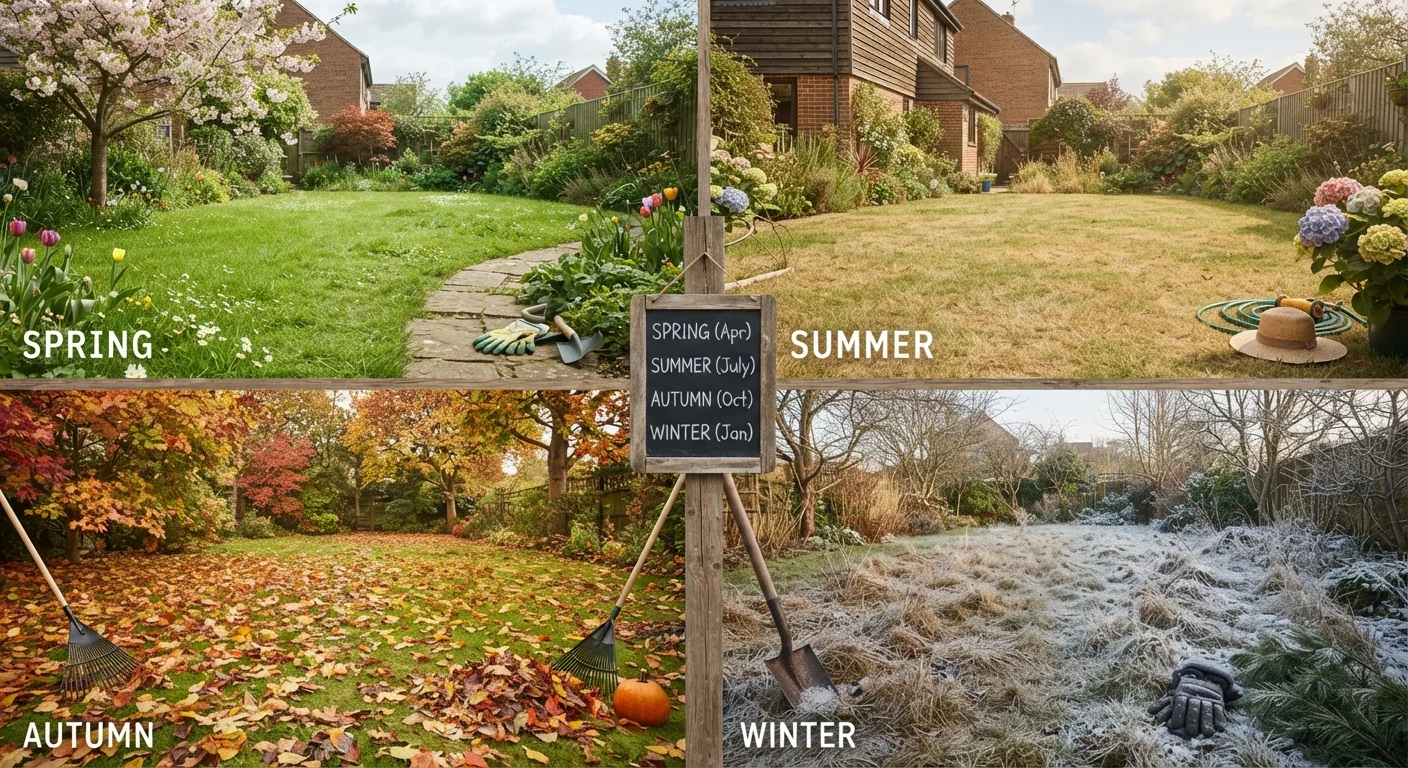
Spring: Wake the Lawn Up Gently
Early spring is about assessment and preparation, not aggressive action. Before you do anything, wait until the soil is no longer waterlogged and daytime temperatures are consistently above 50°F. Working wet soil compacts it and damages new root growth.
- Rake lightly to remove matted dead grass (thatch) and winter debris. This improves air circulation and reduces disease risk.
- Test your soil before adding fertilizer. A basic pH test from a garden center costs a few dollars and tells you whether your lawn actually needs amendment - lime for acidic soil, sulfur for alkaline. Skipping this step is a common money-waster.
- Overseed bare patches once soil temperature reaches around 55°F. Seed-to-soil contact is critical; rake bare areas lightly before sowing.
- Apply a slow-release nitrogen fertilizer only after grass has greened up on its own. Feeding too early encourages leaf growth at the expense of root development.
Spring is also the right time to plan ahead. See our guide on autumn tasks that make spring easier to understand how fall prep shapes your spring results.
Summer: Protect, Don't Push
Heat and drought stress are the biggest summer threats. Resist the urge to over-manage - a lawn under heat stress needs protection more than stimulation.
Thatch
A layer of dead grass stems, roots, and debris that accumulates between the soil surface and living grass blades. A thin layer is normal, but buildup beyond half an inch restricts water and air movement.
Core Aeration
A mechanical process that removes small plugs of soil from the lawn to relieve compaction, improve drainage, and allow nutrients to penetrate the root zone more effectively.
Winterizer Fertilizer
A late-season fertilizer formulated with higher potassium content designed to strengthen grass roots and improve cold tolerance before dormancy - without stimulating leafy growth.
Dormancy
A natural period of reduced or halted growth that grasses enter in response to cold temperatures or drought stress. Dormant turf appears brown but is not dead.
Overseeding
Spreading grass seed over an existing lawn to fill thin or bare patches without completely removing the existing turf. Most effective when done in conjunction with aeration.
- Mow high. Raise your mower blade so grass stays at 3-4 inches. Taller blades shade the soil, reduce moisture evaporation, and crowd out weeds naturally.
- Water deeply and infrequently. One inch of water per week - applied in one or two sessions rather than daily sprinkles - encourages deep root growth. Early morning watering reduces fungal risk.
- Hold off on fertilizer during peak heat unless using a product specifically formulated for summer. Nitrogen applied in high heat can burn stressed grass.
- Watch for pests. Grubs, chinch bugs, and sod webworms are common summer visitors. Our field guide to garden pests can help you identify damage early, before population numbers make control harder.
30-60%
Residential outdoor water used on lawns and gardens
According to the U.S. Environmental Protection Agency, outdoor water use accounts for roughly 30-60% of household consumption in many regions.
3-4 inches
Mowing height that reduces weed pressure
Turfgrass research consistently shows that taller grass canopies shade the soil sufficiently to suppress many common broadleaf weeds without herbicide use.
If summer water bills are a concern, drought-tolerant gardening principles offer practical ways to reduce irrigation dependence long-term.
Autumn and Winter: Set the Foundation
Autumn is the highest-value season for lawn investment. Cool-season grasses are actively growing; warm-season grasses are preparing to go dormant. Either way, fall effort pays dividends the following year.
- Aerate compacted soil in early autumn. Core aeration - pulling small plugs of soil - relieves compaction and allows water, air, and nutrients to reach roots. Rent a core aerator rather than buying one.
- Overseed thin areas after aerating. The open soil channels give seed direct soil contact and improve germination rates significantly.
- Apply a winterizer fertilizer - one higher in potassium - in late autumn before the ground freezes. This strengthens roots and improves cold hardiness without pushing vulnerable new growth.
- Keep mowing until the grass stops growing. Leaving grass too long over winter invites snow mold; cutting it too short stresses roots before dormancy.
- Clear leaves promptly. A thick layer of wet leaves blocks light and promotes fungal disease. Mulch-mowing shredded leaves back into the turf adds free organic matter.
Winter requires almost no active lawn work in most US climates. Avoid walking on frozen or frost-covered grass - foot traffic on dormant turf can damage crowns and create bare patches come spring. Use the off-season to sharpen mower blades, service equipment, and plan any larger projects like building lower-maintenance garden areas that reduce your workload year-round.
Grass Type Affects Your Calendar
Cool-season grasses (Kentucky bluegrass, fescues, ryegrass) thrive in northern US climates and do most of their growing in spring and autumn. Warm-season grasses (Bermuda, zoysia, St. Augustine) are suited to southern climates and peak in summer. The timing of nearly every task in this calendar - fertilizing, overseeding, aeration - shifts depending on which type you have. If you're unsure, your local Cooperative Extension office can identify your grass type and provide region-specific timing free of charge.