

| Minimum functional width | 18-24 inches of wall space |
| Recommended hook height (adults) | 60-66 inches from floor |
| Recommended hook height (children) | 36-42 inches from floor |
| Average shoe pairs per person | 3-5 pairs in active rotation (General household organization guideline) |
| Ideal drop surface depth | 10-14 inches (narrow console) |
| Catch-all containers per zone | One maximum |
What Makes an Entryway a Drop Zone?
The drop zone is the transition point between outside life and home life - the place where keys land, bags get dropped, and shoes pile up. When it works, it acts as a quiet filter that prevents clutter from spreading deeper into your home. When it doesn't, it becomes a daily source of friction.
A functional drop zone doesn't require a large foyer or expensive furniture. It requires intentional placement of a few key elements that match how your household actually moves. Think of it as a mini-system: every item that comes through the door has a designated spot, and returning it there takes no more effort than dropping it on the floor.
This guide covers the core components, layout logic, and terminology you'll encounter when setting up or improving your entryway. For a broader look at how zones work throughout the home, see The Zone Method: Organizing Your Home Room by Room.
| Minimum functional width | 18-24 inches of wall space |
| Recommended hook height (adults) | 60-66 inches from floor |
| Recommended hook height (children) | 36-42 inches from floor |
| Average shoe pairs per person | 3-5 pairs in active rotation (General household organization guideline) |
| Ideal drop surface depth | 10-14 inches (narrow console) |
| Catch-all containers per zone | One maximum |
Core Components and What They Do
Most effective entryways rely on a consistent set of functional elements. Not every home needs all of them - choose based on your space and the number of people using the area.
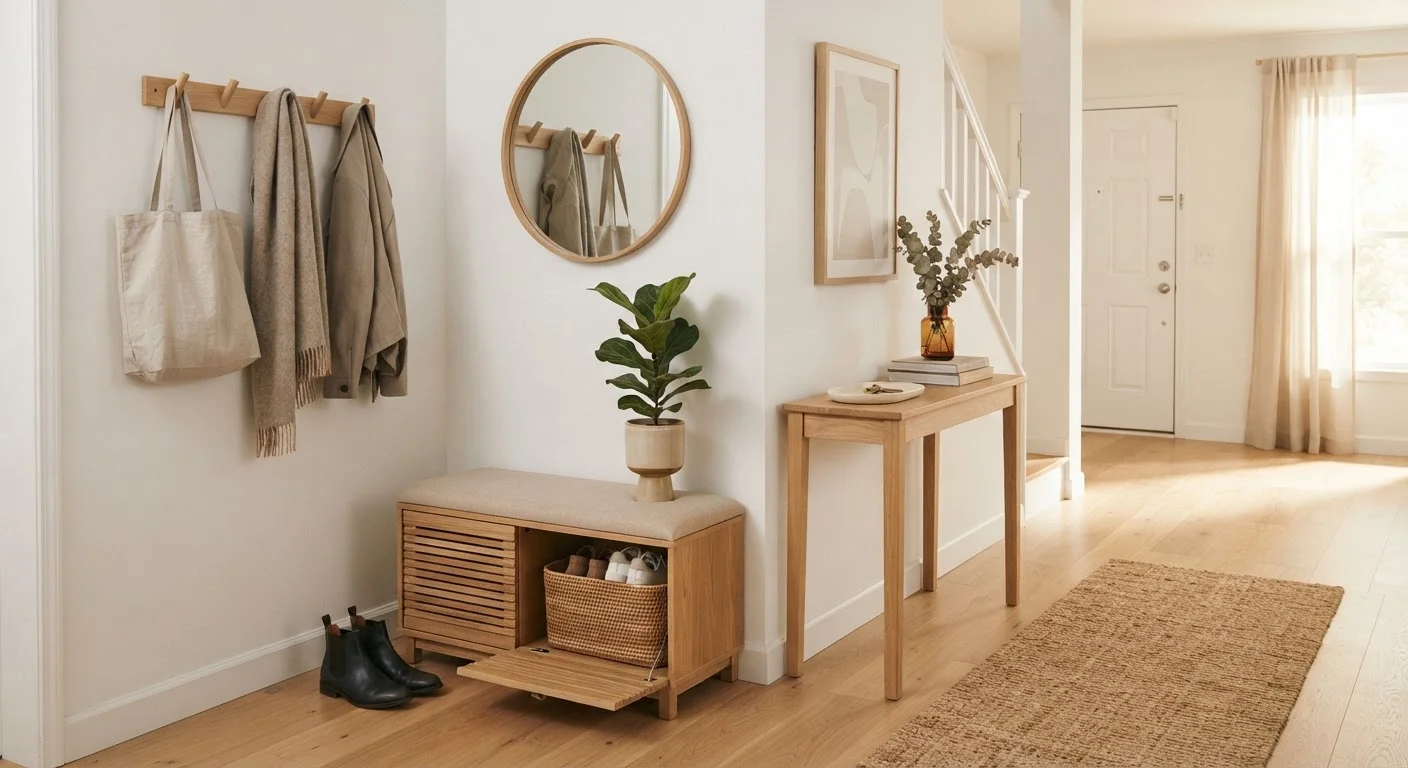
- Wall hooks: The single highest-impact addition. Mount at eye level for adults and lower if children use the space. Hooks should handle bags, coats, and light gear without requiring a hanger or door.
- Shoe storage: Options range from open trays and cubbies to closed benches with interior compartments. Closed storage looks tidier but requires more discipline to maintain. Open trays work well for households that cycle through shoes quickly.
- Key station: A small hook, magnetic strip, or shallow dish mounted near the exit point. Positioning matters - it needs to be the last thing you pass on the way out, not an afterthought.
- Drop surface: A narrow console table, floating shelf, or top of a storage bench. This is where mail, wallets, and miscellaneous items land. Keep it clear of permanent items so it can function as a true landing pad.
- Catch-all container: A basket, bin, or drawer for items that don't have another home - sunglasses, charging cables, seasonal accessories. One container; everything beyond that is overflow and signals a system problem.
Households with multiple people will benefit from strategies designed for shared spaces where habits vary between residents.
Drop Zone
A designated area near the home's entry point where regularly used items - keys, bags, shoes, mail - are stored and retrieved daily. The goal is to contain transitional clutter before it spreads through the home.
Catch-All
A single container (basket, tray, or bin) that holds miscellaneous small items without a fixed home. Effective catch-alls are limited to one per zone and cleared periodically.
Vertical Storage
Organization solutions that use wall height rather than floor area - hooks, floating shelves, pegboards, over-door organizers. Critical in small entryways where floor space is limited.
Key Station
A fixed, easy-to-reach spot - hook, dish, or magnetic strip - specifically designated for keys and fobs. Positioned near the exit path so retrieving keys becomes automatic.
Console Table
A narrow, shallow table typically placed against a wall. In entryways, it serves as a drop surface for mail, bags, and everyday items. Depth of 10-14 inches is typical for tight spaces.
Cubby System
A storage unit divided into individual open compartments, often used for shoes or assigned household-member storage. Works well in shared entryways where items need clear separation.
Layout Logic for Tight Spaces
Most US homes don't have a dedicated mudroom - the drop zone has to function within a hallway, corner, or the six feet just inside the front door. The core principle: use vertical space before floor space.
A simple layout that works in roughly 24 inches of wall width: one row of hooks at coat height, a floating shelf just below for small items, and a shoe tray or low bench directly underneath. This stacks three functional layers without extending into the walkway.
If floor space is extremely limited, over-the-door organizers on the interior of the entry door can hold bags, small items, and accessories. Wall-mounted key rails take up zero surface space. These solutions cost little and can be installed without tools in many cases.
Avoid overcrowding the zone. A system that holds ten items but regularly has twenty in it isn't a system - it's a pile with infrastructure. When the zone feels full, the first step is editing what's stored there, not adding more storage. For foundational decluttering principles, this guide to decluttering from scratch is a practical starting point.
Permits and Installations: When to Check First
Most entryway organization - hooks, shelves, trays - involves only basic wall anchors and requires no permits. However, if you're considering structural changes like built-in benches, wall niches, or electrical additions (such as a charging station), check your local building codes or consult a licensed contractor. Rented homes may also require landlord approval before wall-mounting anything. Always verify your specific situation before drilling into walls.