

Key Takeaways
- Shared homes function better when organization systems are agreed upon together, not imposed by one person.
- Assigning personal storage zones reduces conflict by giving everyone ownership of their own clutter.
- Low-cost tools like labels, bins, and hooks can dramatically improve shared space functionality.
- Regular brief check-ins keep systems working as household needs change over time.
- Design organization around how people actually behave, not how you wish they would.
Why Generic Tidying Advice Fails Shared Homes
Most home organization advice assumes a single set of habits and one decision-maker. In households with partners, roommates, or children, that assumption breaks down fast. One person's "put it away immediately" is another's "I'll deal with it later" - and neither is wrong by nature.
The goal in a shared home isn't to enforce a single standard. It's to build systems that are easy enough for everyone to use consistently, without constant negotiation. That means designing for the lowest-friction behavior, not the ideal behavior. See our myths about minimalism that work against practical tidiness for more on why rigid systems backfire.
Different Standards Aren't a Character Flaw
Research in environmental psychology suggests that people's tolerance for visual clutter varies significantly and is influenced by personality, upbringing, and stress response - not laziness or carelessness. Acknowledging this in shared households prevents blame and makes it easier to find practical middle ground. The most durable systems accommodate the range of habits present, rather than demanding everyone conform to the tidiest person's standard.
Core Practices for Organizing With Multiple People
These practices are grounded in what actually works in real multi-person households - no expensive overhauls required.
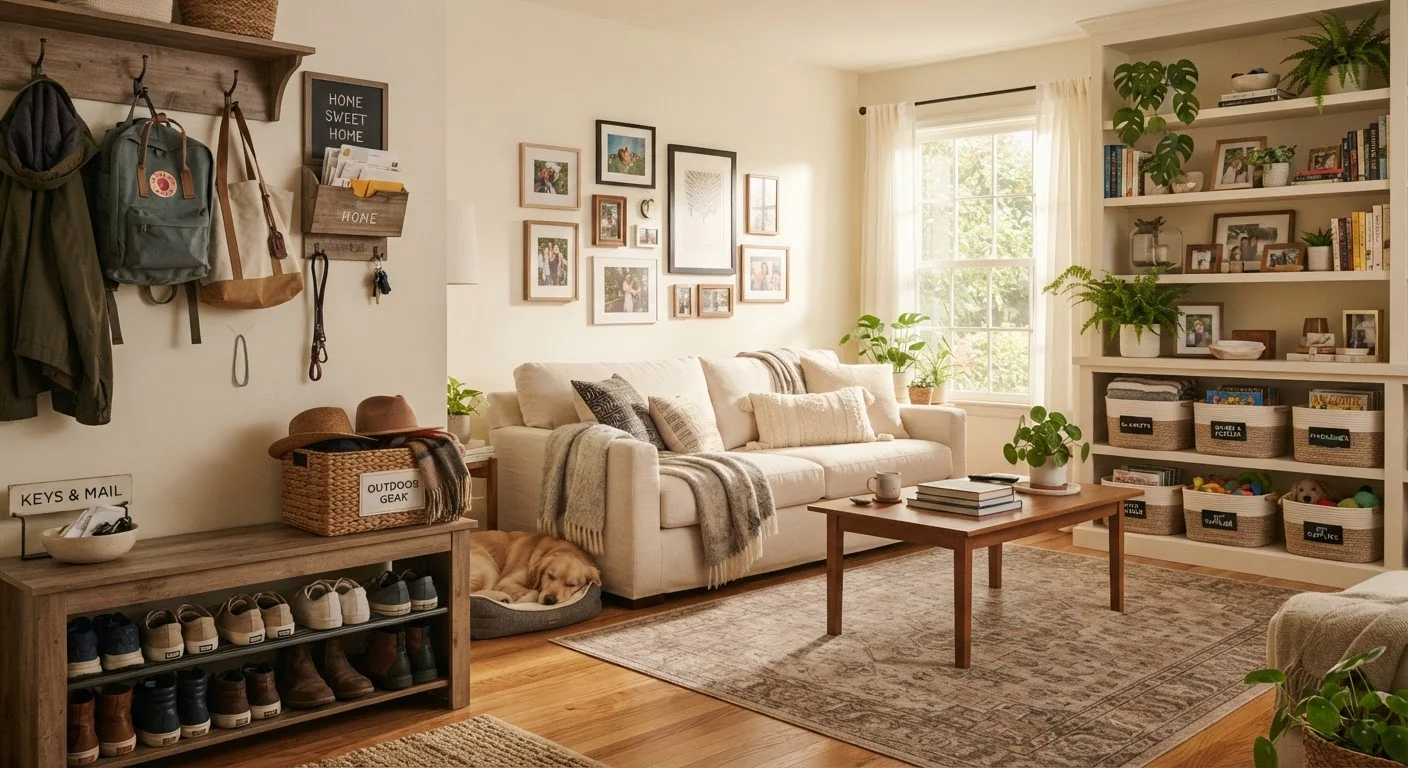
Establish personal storage zones within shared spaces
When everyone has a clearly defined spot for their own belongings, clutter becomes localized rather than sprawling. It removes ambiguity about where things should go and reduces disputes about whose mess belongs to whom.
Label shared storage so expectations are visible
Labels eliminate the guesswork that causes items to land in the wrong place. They're especially useful when household members have different mental maps of where things belong.
Design drop zones at every entry point
People drop things where they stop moving - at the door, beside the couch, at the desk. Placing hooks, trays, or bins at these natural stopping points channels clutter into a contained area rather than fighting human instinct.
Hold a brief household conversation before setting up new systems
Organization systems that one person imposes on others tend to collapse. When everyone has input, they're more likely to use - and maintain - the system, because it reflects their actual workflow.
Use repurposed containers to build organization without extra cost
Shared homes often mean more stuff and tighter budgets. Reusing jars, boxes, and trays you already own provides functional storage without requiring purchases, which also makes it easier to adjust the system without feeling like a sunk cost.
Quick Wins You Can Act On Today
You don't need a full weekend reorganization to start making shared spaces work better. A few small actions can shift how your household functions almost immediately.
For a room-by-room approach to building lasting systems, explore the zone method for organizing your home.
Maintaining Order Without Constant Policing
The most common failure point in shared home organization isn't setup - it's maintenance. Systems drift when life gets busy, when new items enter the home, or when one person leaves and another joins. A short monthly reset, where everyone spends 15 minutes returning items to their designated spots, is far more effective than occasional major cleanouts.
If shared finances factor into your organization decisions - buying storage furniture, splitting cleaning supplies - the same principles apply. Managing a shared household budget works best when expectations are transparent and agreed upon together, not assumed.
Schedule a 15-Minute Monthly Reset
Pick a recurring day - first Sunday of the month, for example - when everyone spends 15 minutes returning items to their zones and flagging anything that no longer has a home. This prevents gradual drift and keeps the system honest without turning tidiness into a source of tension. Consistency matters more than duration.
And when individual rooms feel chaotic despite shared-space systems, small bedroom organization strategies can help each person keep their own space manageable without affecting communal areas.