

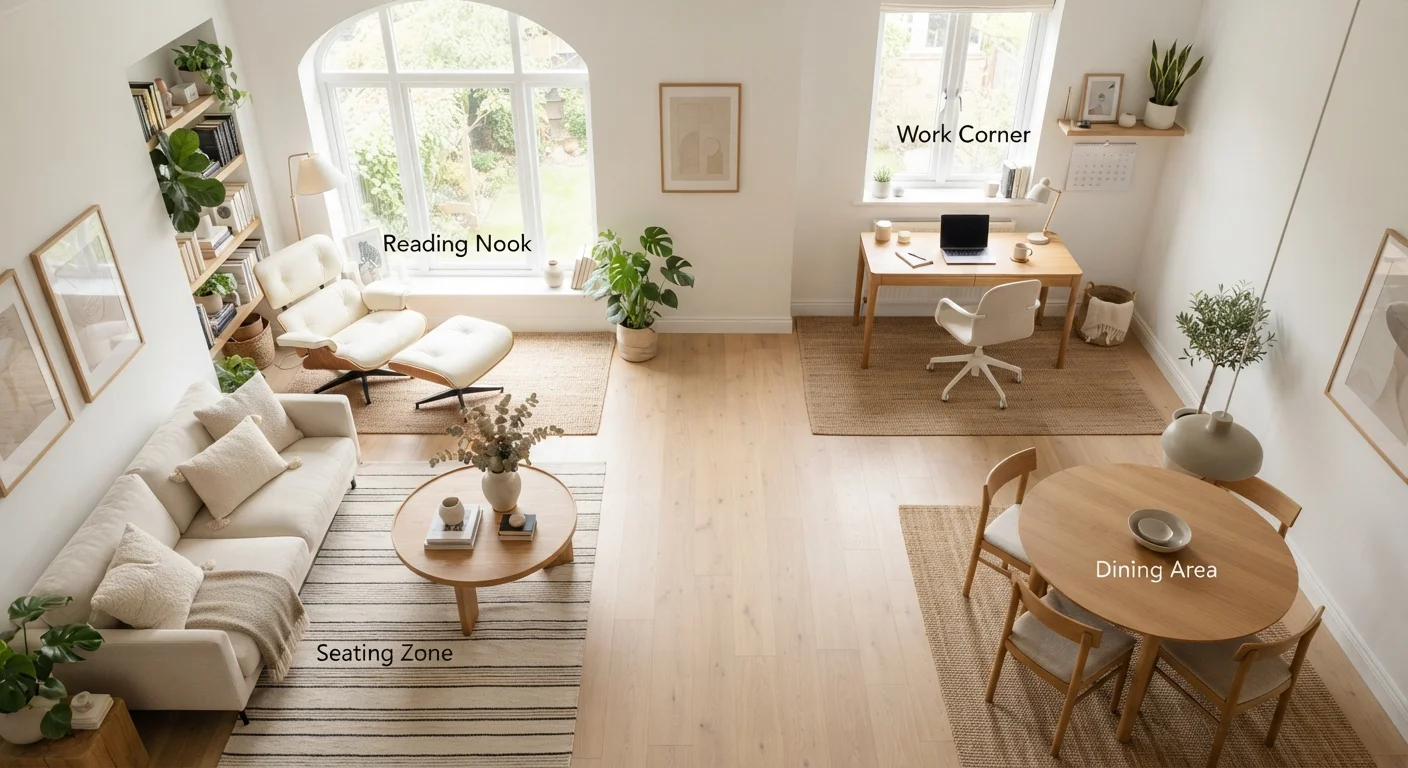
Key Takeaways
- Zones are defined by activity, not by room name - one room can contain multiple zones.
- The method works without buying storage products first; mapping comes before purchasing.
- Labeling zone boundaries, even mentally, reduces household clutter significantly over time.
- Shared homes benefit most when all occupants agree on zone definitions upfront.
- The zone method pairs naturally with seasonal decluttering to keep systems current.
The Zone Method
The zone method is a home organization approach that divides each room into distinct areas based on how you actually use them - cooking, homework, hobbies, sleep, and so on. Rather than organizing randomly, you assign every item a permanent home within the zone where it gets used. This reduces the time spent searching for things and makes it easier to put items back where they belong.
In professional organizing, zones are sometimes called 'activity centers' or 'use areas.' The underlying logic mirrors workplace ergonomics: proximity to point of use reduces friction and cognitive load.
What the Zone Method Actually Means
At its core, the zone method treats every room as a collection of activities rather than a single-purpose space. A kitchen, for example, isn't just a place to cook - it may also be where kids do homework, where mail lands, and where medications are stored. Ignoring that reality is why counters stay cluttered.
By mapping what actually happens in a room, you create named areas - a food prep zone, a paperwork zone, a morning routine zone - and then store only items related to each activity within that footprint. Everything has a designated home tied to where it gets used, which makes both tidying and finding things dramatically faster.
This approach is part of a broader set of systems covered in our comprehensive home organization guide. If you're still working through basic clutter before setting up zones, start with the decluttering fundamentals first - zones work best when there's less to organize.
Map Before You Shop
Resist the urge to buy bins, baskets, or shelving before you've defined your zones. Shopping first almost always leads to containers that don't fit the actual need. Spend 20 minutes sketching your zones, then identify only the storage gaps that genuinely exist.
How to Map Zones in Each Room
Start by standing in a room and listing every activity that happens there - not what's supposed to happen, but what actually does. Write it down. Then group similar activities and ask: where in this room does each activity naturally occur?
Draw a rough sketch (even on a napkin) and mark where each activity cluster lives. Common kitchen zones include: food prep near the counter and sink, cooking near the stove, pantry storage near the fridge, and a communication zone - mail, keys, calendars - near the entry point. Each zone gets only the items tied to its purpose.
Repeat this in every room. A bedroom might have a sleep zone (nightstand, lamp, phone charger), a dressing zone (closet, mirror, hamper), and a reading zone (chair, lamp, bookshelf). For small bedrooms especially, clear zoning prevents the whole room from becoming one undifferentiated storage area - see our guide to small bedroom organization strategies for room-specific tactics.
23 min
Average daily time spent searching for misplaced items
Research cited by professional organizers suggests disorganized environments cost households significant time each day locating everyday items.
80%
Of clutter stems from disorganization, not lack of space
According to organizing industry estimates, most household clutter accumulates because items lack designated homes, not because storage is genuinely insufficient.
Applying Zones to High-Traffic Shared Spaces
Living rooms and entryways are where the zone method delivers the most immediate payoff because these spaces absorb clutter from every direction. The entryway in particular benefits from a clearly defined drop zone - a spot where shoes, bags, keys, and outerwear land consistently instead of spreading through the house. Our entryway drop zone guide walks through how to set this up efficiently.
In shared homes, zone definitions need household-wide agreement to stick. If one person's "junk drawer zone" overlaps with another person's "charging station zone," the system breaks down quickly. Mapping zones together - even a brief conversation - prevents the silent friction that builds when everyone organizes differently. Our article on organizing homes with multiple people addresses this directly.
When floor space is limited, zones can expand vertically. Wall-mounted hooks, shelves above eye level, and door-back organizers all extend a zone's storage without expanding its footprint. Weigh those options carefully using the logic in our vertical vs. floor space guide.
Zones Don't Require Visible Labels
Physical labels are useful in some households - especially with children or multiple occupants - but they're not required. A dedicated tray, a specific drawer, or even a consistent basket can signal a zone boundary just as clearly. Use whatever cue your household will actually respect and maintain.
Keeping Zones Functional Over Time
The most common reason zone systems fail is that they're set up once and never revisited. Zones need occasional maintenance - not deep reorganization, just a quick check to confirm items are still in the right place and the zone still matches how the space is being used.
A seasonal review works well for most households. Walking through each zone every few months lets you catch drift early - the craft supplies that migrated to the kitchen, the tools that ended up in the living room - before it becomes overwhelming. Our seasonal declutter checklist is a practical companion for this reset.
Zones also evolve with life changes. A nursery zone in a bedroom may become a study zone within a few years. A home office zone may expand or contract depending on work arrangements. Treating zones as flexible structures rather than permanent fixtures keeps the system useful rather than rigid.