

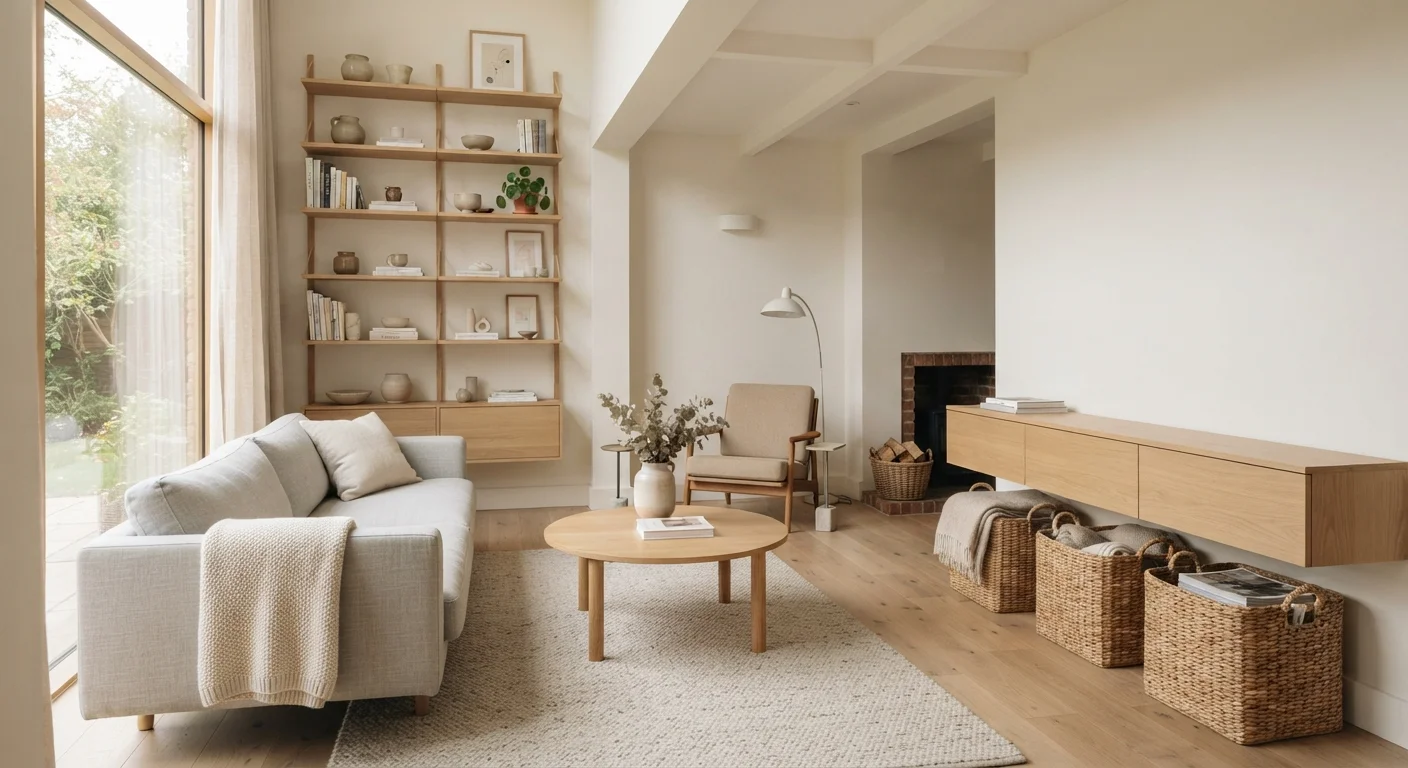
Key Takeaways
- Vertical storage reclaims unused wall height and keeps floor plans open, but may require wall anchoring.
- Floor storage is immediately accessible, flexible to reposition, and requires no installation.
- The right choice depends on your room size, wall material, household members, and rental restrictions.
- Many homes benefit from a deliberate mix of both approaches rather than committing to one exclusively.
- Safety anchoring is essential for tall freestanding units, especially in homes with young children.
Option A
Vertical Storage
The space-multiplying, wall-focused approach.
Best for: Best for small rooms, renters looking to preserve walkable area, and anyone with unused wall height.
Option B
Floor Storage
The accessible, flexible, no-drilling alternative.
Best for: Best for families with children, renters who can't mount hardware, and rooms where mobility and flexibility matter most.
If you have a small room and want to preserve floor area
Vertical Storage
Wall-mounted shelves and tall units draw the eye upward and keep the floor clear, making compact spaces feel larger and more walkable.
If you rent and cannot drill into walls
Floor Storage
Freestanding bins, trunks, and cube organizers require no installation and move with you when your lease ends.
If you have young children or mobility concerns
Floor Storage
Low, accessible storage puts frequently used items within reach and avoids the need to climb or stretch, reducing the risk of falls.
If you want the most capacity per square foot of room
Vertical Storage
Stacking storage from floor to ceiling can multiply usable storage surface area several times over compared to spreading items across the floor.
If you need flexible storage you can reconfigure seasonally
Floor Storage
Modular bins, rolling carts, and stackable boxes can be rearranged or relocated without tools whenever your storage needs shift.
What Each Approach Actually Means
Vertical storage uses wall height - shelves mounted to walls, pegboards, over-door organizers, and tall freestanding units that reach toward the ceiling. Floor storage occupies ground-level footprint - bins, trunks, cube organizers, rolling carts, and low dressers that spread across available floor space.
Neither approach is universally superior. The decision turns on your specific room dimensions, how your household moves through the space, and whether your walls can actually support hardware. Before committing to either, it helps to measure both your room's square footage and its ceiling height - those two numbers together reveal where your real storage capacity lives.
For a broader framework on dividing any room into dedicated storage zones, see our zone-based organization guide.
| Criterion | Vertical Storage | Floor Storage |
|---|---|---|
| Floor space used | Minimal - frees up floor area | Occupies ground-level footprint |
| Installation required | Often yes - brackets, anchors, studs | No - freestanding, no tools needed |
| Accessibility | Items may require reaching or stepping | Items at easy reach, waist-level or lower |
| Flexibility | Fixed once mounted | Easy to reposition or move |
| Suitability for renters | Limited - wall damage restrictions apply | High - no permanent alterations |
| Capacity potential | High - scales with ceiling height | Limited by available floor area |
| Best room types | Small rooms, kitchens, home offices | Living rooms, children's rooms, garages |
When Vertical Storage Wins
Vertical storage shines in rooms where floor space is genuinely scarce. A narrow kitchen, a small bedroom, or a tight laundry area all have one thing in common: they offer more wall surface than floor surface. Mounting shelves or pegboards converts that idle vertical plane into usable storage without consuming a single square foot of walking area.
Wall-mounted systems also tend to stay more organized over time. Because items are visible and at eye level, it's harder to let clutter quietly accumulate behind a closed door. If your walls are drywall over wood studs, basic shelf brackets installed into studs can carry meaningful weight at low cost. Concrete or plaster walls require appropriate anchors - always check your wall type before drilling.
~8 ft
Standard US residential ceiling height
Most US homes built since the mid-20th century feature 8-foot ceilings, leaving significant vertical storage potential above standard furniture height.
3-4×
Storage surface multiplier with full-height shelving
A single wall unit spanning floor to ceiling can provide three to four times the storage surface of a comparable low floor unit in the same footprint.
One important safety note: tall freestanding shelving units must be anchored to a wall stud to prevent tipping, particularly in homes with children or pets. This is a non-negotiable step, not an optional finishing touch. For guidance on identifying wall structure before you install anything, our wall identification article explains how to locate studs and assess what your walls can safely support.
For small bedrooms specifically, vertical approaches - a tall bookcase, a pegboard above a desk, floating nightstand shelves - can dramatically increase usable storage without crowding the room. Our small bedroom organization guide covers low-cost ways to put this into practice.
When Floor Storage Makes More Sense
Floor storage offers one advantage vertical storage simply cannot match: zero installation. For renters, people who move frequently, or anyone uncomfortable with drilling, freestanding units are the practical default. A well-chosen set of stackable bins or a storage ottoman costs little, requires no tools, and travels with you.
Floor-level storage is also the right call when accessibility matters. If household members include young children, older adults, or anyone with limited reach or mobility, keeping everyday items at waist height or below reduces the physical effort of retrieval and minimizes fall risk. Rolling carts and wheeled bins add another layer of flexibility - they can be pulled out for use and tucked away when not needed.
The trade-off is that floor storage can make rooms feel smaller if units sprawl across the floor plan without a clear layout. Containing floor storage to corners, alcoves, or under-furniture zones - under a bed, beneath a bench - keeps the visual field tidier. If you're organizing a shared household where different people have different access needs, our shared-space organization guide offers practical strategies for balancing competing preferences.
Renter Considerations Worth Knowing
Many leases prohibit wall drilling or require holes to be patched before move-out. If you want to explore vertical storage as a renter, look into freestanding shelf towers, tension-rod systems, and over-door organizers - these attach without permanently altering walls. Always review your lease terms and check with your landlord before installing anything that contacts walls, ceilings, or floors permanently.
Making Both Approaches Work Together
In most rooms, the strongest storage system combines both strategies deliberately rather than defaulting to one. A common pattern: use vertical storage for items accessed less frequently - seasonal gear, reference books, rarely used equipment - and floor storage for daily-use items that need to be grabbed and replaced quickly without effort.
Start by auditing your room: note how high your ceilings are, how much clear wall space you have, and how much floor area you're willing to dedicate to storage. Then assign storage types to items based on frequency of use, not just available space. This open vs. closed storage comparison can also help you decide whether items stored vertically should be visible or concealed.
The goal isn't a perfectly symmetrical system - it's a functional one that reduces the daily friction of finding and returning things. Both vertical and floor storage can achieve that, as long as placement decisions are intentional rather than improvised. For a comprehensive look at storage logic across every room, our full home organization resource covers the complete picture.